
WattPower launches 506KTL grid-forming inverter for utility-scale solar
WattPower has introduced the 506KTL, a 506 kW grid-forming string inverter designed for utility-scale solar projects. The company says shipments and full production will begin in January, targeting weak-grid stability and higher-voltage system integration.
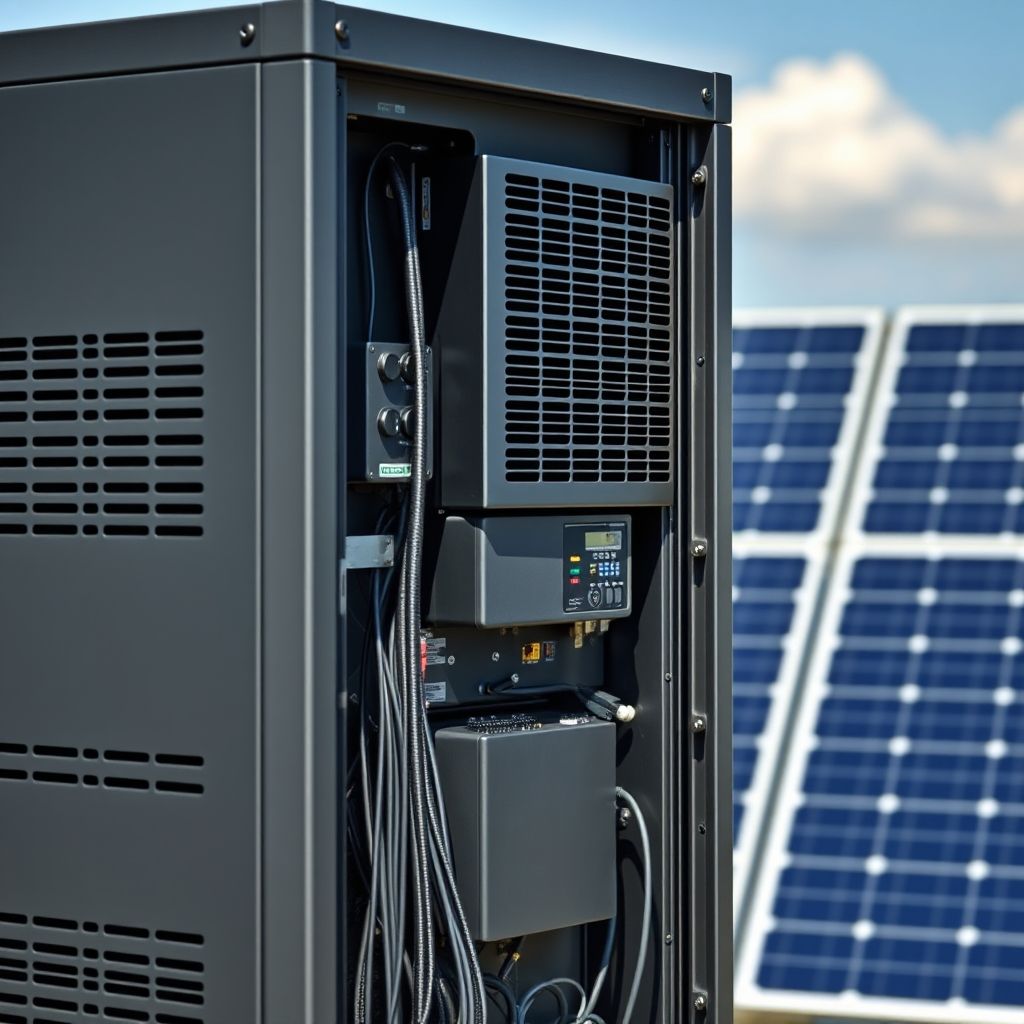
WattPower has introduced the 506KTL, a grid-forming string inverter designed for utility-scale solar projects. The company says the unit has a capacity of 506 kW.
According to the company, full production and shipments of the 506KTL are set to begin in January.
Technical Specifications
The 506KTL offers 1000V AC and 1600V DC capabilities, which WattPower says significantly reduce power loss and lower balance-of-system (BoS) costs. The company also claims 40% more power density, which it says cuts the overall inverter count needed for a plant, lowering lifetime operating costs and maximising energy generation over the project’s life. WattPower has not said what the 40% is measured against.
Other listed features are AI-enabled monitoring, a hybrid cooling system and an anti-icing fan for thermal management and dependable operation across extreme and diverse climates, and what the company calls SSLD2 protection technology. WattPower did not give an efficiency figure, weight or dimensions in the launch material reported by pv magazine India.
Grid Stability Features
WattPower says the inverter is meant to help EPCs and developers build grid-ready plants that stay stable in weak-grid conditions and during severe grid disturbances, reducing project risk and solar curtailment. The company lists four grid-support functions:
| Function | What WattPower says it does |
|---|---|
| Virtual Inertia Support and Power Oscillation Damping | Stability and frequency regulation for weak-grid environments |
| Black Start | During construction, supplies AC power for plant commissioning, reducing reliance on diesel generators |
| Low SCR Operation | Continuous, stable operation in grids with heavily compromised short circuit ratios |
| Night Reactive Power Recovery | After a nighttime outage, the AC-side relay resets automatically and the inverter resumes supplying reactive power |
Virtual inertia is the grid-forming feature most often asked for: the inverter imitates the stored rotating energy of a conventional generator, so it can help slow a sudden change in grid frequency rather than simply following it. Note that WattPower’s “black start” here is a construction-stage function for commissioning a plant, not restarting a dead grid after a blackout.
Strategic Positioning
- Pavit Gandhi, EVP – Sales at WattPower Systems, says the company began preparing for grid-forming technology about three years ago.
- Shipments start in January, with production in full swing the same month.
- The 506KTL targets utility-scale projects; the 150KTL targets commercial and industrial (C&I) installations.
- Grid-forming inverters are an emerging requirement in India.
“We began preparing for grid-forming technology approximately three years ago, drawing on our understanding of international markets and projects where the technology has already been deployed,” Gandhi told pv magazine. WattPower believes that international experience will help it respond to evolving technical standards and grid-code requirements in India.
With the 506KTL for utility-scale plants and the 150KTL for C&I sites, the company says it wants to broaden its market presence while adapting its portfolio to higher-voltage systems, changing grid requirements and the growing integration of storage.
Market Context
The launch comes as India’s utility inverter market starts to move. India has historically favoured central inverters because of its very large projects, but Luminity reported on 20 October that some developers are moving to string layouts because central inverters are harder to maintain, risk long downtime and face a shortage of skilled technicians. In that report Harshul Kanwar estimated 2025 demand at roughly 60% central and 40% string, and expected the shift to string to be gradual. Most inverters used in India are still imported.
In the same utility segment, FIMER this week launched the PVS990-2000, a 2 MW central inverter platform for the same utility segment.
What to watch
WattPower has not disclosed pricing, customers or order volumes. The first named utility-scale projects using the 506KTL, and whether its grid-forming functions are used to meet Indian grid-code requirements as they firm up, are the next things to look for after shipments begin in January.
Source: pv magazine India. This article is an original Luminity report based on the linked source.