
Ember report: Home batteries cut Indian rooftop solar exports by up to 90%
An Ember report finds that pairing 3-kW rooftop solar with 5-kWh batteries could reduce daytime grid exports by 85-90%, shifting 1,600-1,800 units to evening use. The analysis highlights a payback period of 9 years without subsidies, which drops to 6.3 years with a proposed 50% battery subsidy.
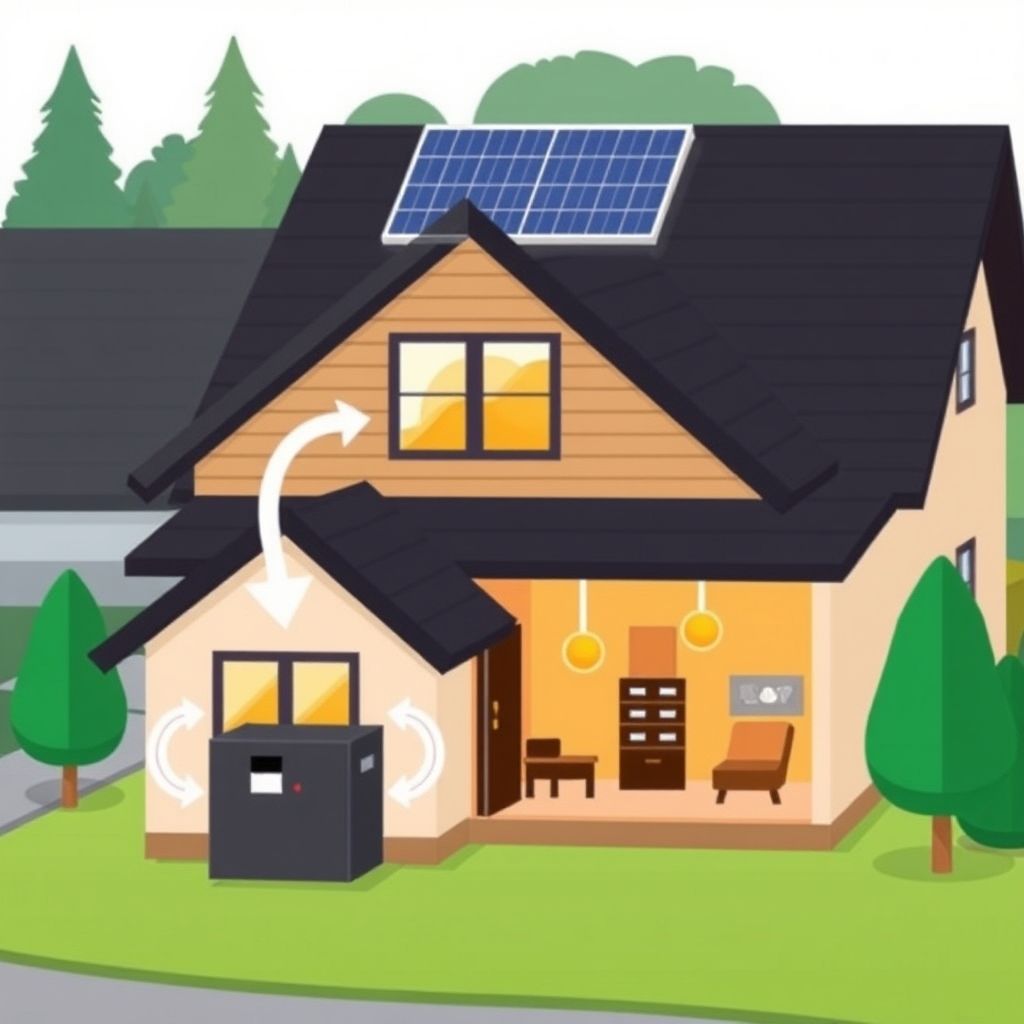
A new report by Ember indicates that integrating home batteries with rooftop solar can reduce daytime electricity exports to the grid by 85-90%. The analysis focuses on a modeled system consisting of a 3-kW solar array paired with a 5-kWh battery. According to the report, this configuration shifts approximately 1,600-1,800 units of annual electricity from daytime grid exports to evening household consumption.
The findings highlight how storage alters the timing of solar energy use. By storing power generated during the day, households can utilize that energy later in the evening rather than feeding it into the grid. This shift represents a substantial change in the profile of solar output, as the majority of generated electricity is retained for on-site use instead of being exported. The report’s modeling suggests that such systems significantly limit the amount of solar power available to the grid during peak daylight hours.
Economic viability
| Configuration | Cost (₹) | Payback Period |
|---|---|---|
| Solar-only (post-subsidy) | 87,000 | 3.3 years |
| Solar + Battery | 2,27,000 | 9 years |
The financial trade-off for adding storage is stark. A standard 3-kW solar array costs ₹1.65 lakh before government support, dropping to ₹87,000 after the ₹78,000 PM Surya Ghar subsidy. This baseline yields a payback period of just 3.3 years. However, integrating a 5-kWh battery raises the total capital cost to ₹2.27 lakh. According to the Ember report, this increased investment extends the payback period to nine years.
This nearly tripled timeframe reflects the higher upfront expense relative to the savings generated. For homeowners, the decision hinges on whether the convenience of evening self-consumption justifies the longer wait for the system to break even. The battery does not merely add hardware; it fundamentally alters the economic horizon of the project. While solar-only systems recover costs quickly, the hybrid setup requires almost three times as long to reach profitability, shifting the value proposition from rapid return on investment to extended energy independence.
Subsidy impact
A proposed 50% subsidy on battery costs would shorten the payback period from nine years to 6.3 years, according to the Ember report. This financial support significantly lowers the barrier to entry for hybrid systems, making the extended energy independence more accessible. While the solar-only configuration remains cheaper upfront, the subsidized battery option narrows the economic gap between the two setups.
The broader fiscal implications are substantial. The report estimates that implementing this battery subsidy for five million households would cost ₹28,000 crore. This figure underscores the scale of public investment required to shift consumer behavior from grid export to self-consumption. For policymakers, the cost represents a major commitment to accelerate storage adoption, balancing immediate capital outlays against long-term grid stability and reduced daytime export volumes.
Market price dynamics
The value of stored solar energy hinges on the timing of electricity consumption. According to the Ember report, the day-ahead market price in July 2026 was ₹1.56 per unit during periods of high solar generation. In contrast, prices surged to ₹10 per unit during evening hours. This significant disparity illustrates why shifting consumption from day to night is economically advantageous for households with batteries. By avoiding the grid during cheap daylight hours and drawing from stored energy during expensive evening peaks, users capture the higher price differential. The data suggests that the financial benefit of self-consumption is driven by this temporal price spread rather than the absolute cost of generation.
Background
- Uttar Pradesh has exceeded 9 lakh rooftop solar installations, adding over 3,000 MW of capacity as of 16 Oct 2026.
- The PM Surya Ghar scheme has connected nearly 6 million homes to solar power as of 16 Oct 2026.
- India added 51 GW (DC) of new solar capacity in 2025, a 55% increase over 2024 records.
- Ember proposes subsidising hybrid systems for 5 million households, half of the 10 million PM Surya Ghar target, to add 15–25 GWh storage.
- Tamil Nadu and Bihar currently provide state-level top-ups to the central PM Surya Ghar subsidy.
- The PM Surya Ghar: Muft Bijli Yojana aims to install rooftop solar on one crore homes.
- The PM Surya Ghar scheme provides up to 300 units of free or low-cost electricity per month to participating households.
- The Grid Connected Rooftop Solar Phase II programme was folded into the PM Surya Ghar scheme.
- Applications for PM Surya Ghar subsidies must be made through the pmsuryaghar.gov.in portal.
- Households adding capacity to existing subsidised plants can claim subsidies for the additional capacity up to a 3 kW total.
The scale of India’s rooftop solar rollout provides the context for the recent analysis on battery integration. As of 16 October 2026, the PM Surya Ghar scheme had connected nearly 6 million homes to solar power, with Uttar Pradesh alone accounting for over 9 lakh installations and more than 3,000 MW of capacity. This rapid expansion follows a national surge in 2025, when India added 51 GW (DC) of new solar capacity, marking a 55% increase over the previous year’s records. The scheme, which absorbed the earlier Grid Connected Rooftop Solar Phase II programme, targets one crore homes and offers participating households up to 300 units of free or low-cost electricity per month.
Current subsidy structures vary by region, with Tamil Nadu and Bihar providing state-level top-ups to the central support. Applications are processed through the pmsuryaghar.gov.in portal, and households can claim subsidies for additional capacity up to a 3 kW total on existing plants. Against this backdrop of widespread adoption, an earlier Luminity report noted that Ember proposes subsidising hybrid systems for 5 million households—half of the scheme’s total target—to add 15–25 GWh of storage. This proposal sits within a broader market context where solar deployment is accelerating faster than the grid infrastructure and policy mechanisms designed to manage the resulting shift in energy flow.
What to watch
The primary open question concerns the timeline for potential solar banking rule changes, which the Ember report does not specify. Without clarity on when these regulatory adjustments might occur, households and policymakers lack a concrete schedule for how stored energy will be valued against grid exports. The report highlights a potential distributed storage capacity of 15–25 GWh, contingent on the PM Surya Ghar scheme reaching its target of 10 million households. Monitoring whether this storage capacity materializes is essential, as it directly influences the scale of evening self-consumption versus daytime exports. Until the banking rules are clarified, the economic viability of hybrid systems remains tied to the proposed subsidy structures and current market price disparities, leaving the full impact of widespread battery adoption uncertain.
Source: ETEnergyWorld Renewables. This article is an original Luminity report based on the linked source.