
Sri Lanka Investigates Rooftop Solar Role After October Blackout
A nationwide blackout in Sri Lanka on October 17, 2026, triggered by a coal plant trip, has prompted officials to examine the grid’s stability under high solar loads. The National System Operator requested rooftop solar owners disconnect during restoration, a measure also taken during a previous blackout.
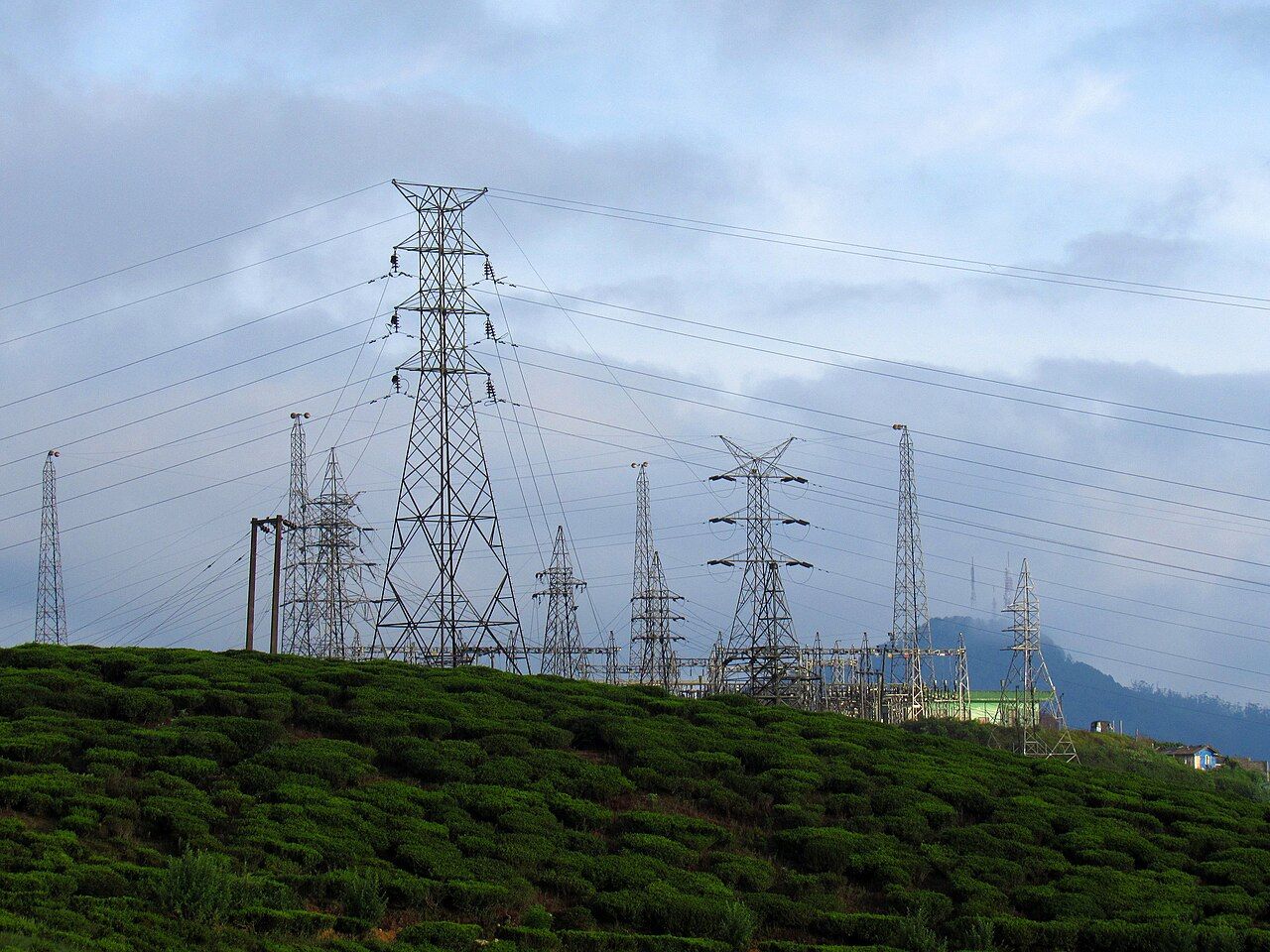
A nationwide power outage struck Sri Lanka on October 17, 2026, causing significant disruption across the island. The incident was triggered when a generating unit at the Norochcholai coal-fired power plant tripped during maintenance activities.
Energy Minister Aruna Karunathilaka stated that the sudden loss of generation destabilized a system already carrying substantial amounts of solar power. In response, the National System Operator requested rooftop solar owners to disconnect their systems during the restoration process.
Regulatory Context
The Public Utilities Commission’s March 2026 report highlighted significant gaps in how rooftop solar systems integrate with the national grid. A core issue identified was that less than half of the installed rooftop solar capacity had adopted updated protection settings. These settings are critical technical parameters that allow inverters to detect grid instability and disconnect safely, preventing damage to the wider network during fluctuations.
Compliance with these standards has proven difficult for several practical reasons. Many existing installations rely on older inverter models that simply lack the hardware capability to support the required firmware updates. Even when hardware is compatible, software updates may not be available or supported by manufacturers. The commission noted weak enforcement mechanisms, meaning there is limited regulatory pressure to ensure all systems meet current safety protocols. This combination of aging equipment and inconsistent oversight leaves the grid vulnerable when large numbers of distributed solar assets operate without standardized protection logic.
Technical Limitations
Beyond hardware compliance, the national grid faces a structural blind spot: the grid operator lacks real-time monitoring or control of distributed generation. Without direct visibility into individual rooftop systems, the network cannot actively manage how millions of small-scale assets respond to sudden frequency shifts or voltage drops. This opacity complicates restoration efforts, as operators cannot verify which systems have safely disconnected or reconnected.
To address these stability challenges, industry standards increasingly distinguish between grid-following and grid-forming inverters. Grid-following units sync with the existing grid frequency but cannot support it during outages. In contrast, grid-forming inverters can stabilize the network independently, acting as a virtual synchronous generator. This technical evolution is critical for maintaining power quality as distributed solar penetration rises. During the October blackout, the National System Operator had to request rooftop solar owners to manually disconnect their systems to aid restoration, a manual workaround that highlights the current absence of automated, coordinated protection.
Earlier Developments
- A similar nationwide blackout occurred on February 9, 2025, triggered by a fault at the Panadura grid substation at noon.
- During that event, solar PV supplied more than 50% of Sri Lanka’s electricity demand.
- A Ceylon Electricity Board investigation published in April 2025 identified high solar PV penetration as a major contributing factor to the February 2025 outage.
- The National System Operator issued a similar request for rooftop solar disconnection during the February 2025 incident.
- Sri Lanka’s rooftop PV capacity reached 1.94 GW by the end of 2025, according to pv magazine India.
The February 2025 incident provides a direct precedent for the operational challenges seen in October. According to pv magazine India, the outage began at midday when a fault struck the Panadura grid substation, a time when solar generation is at its peak. At that moment, distributed photovoltaic systems were supplying over half of the national electricity demand. The Ceylon Electricity Board’s subsequent investigation, released in April 2025, pinpointed this high level of solar penetration as a primary factor in the system’s collapse. The grid operator’s response then mirrored its actions in October: it asked rooftop owners to manually disconnect their systems to facilitate restoration.
This recurrence underscores a persistent structural vulnerability in the power network. With rooftop capacity expanding to 1.94 GW by the end of 2025, the proportion of distributed generation on the grid has grown substantially. The fact that the operator had to rely on manual disconnection requests in both 2025 and 2026 indicates that automated protection mechanisms remain insufficient to handle the dynamic loads created by large-scale solar integration. The February event was not an isolated anomaly but a warning sign that the current grid architecture struggles to maintain stability when solar output dominates the generation mix.
What to watch
The immediate focus shifts to the technical investigation currently underway regarding the October 17 outage. While Energy Minister Aruna Karunathilaka attributed the destabilization to the interaction between the tripped coal unit and existing solar load, the precise role played by inverter behavior in that sequence remains unconfirmed. Investigators are still working to determine how distributed assets responded during the frequency drop, a detail that will clarify whether the manual disconnection requests were a necessary stopgap or a symptom of deeper control failures. No timeline has been provided for when this official inquiry will conclude, leaving the regulatory response to the findings in a state of suspension.
For now, the grid continues to operate within the parameters established in March 2026, when daily electricity demand hovered between 58 GWh and 60 GWh. At that time, the average continuous power requirement settled around 2,400 MW to 2,500 MW, according to pv magazine India. These figures provide the baseline against which future stability assessments will be measured. As the investigation progresses, attention will turn to whether the Public Utilities Commission moves to enforce the protection settings identified in its earlier report, or if the gap between installed capacity and compliant hardware persists. Until the technical review is complete, the network remains reliant on operator coordination rather than automated safeguards to manage the growing share of distributed generation.
Additional reporting: pv magazine India.
Source: Saur Energy. This article is an original Luminity report based on the linked source.