
Tesla seeks Texas tax break for $3.1 billion polysilicon plant
Tesla has applied for a property tax limitation in Nueces County, Texas, to support a $3.1 billion polysilicon refinery. The facility is designed to produce ultra-high-purity silicon for solar cells, aiming to reduce reliance on Chinese imports.
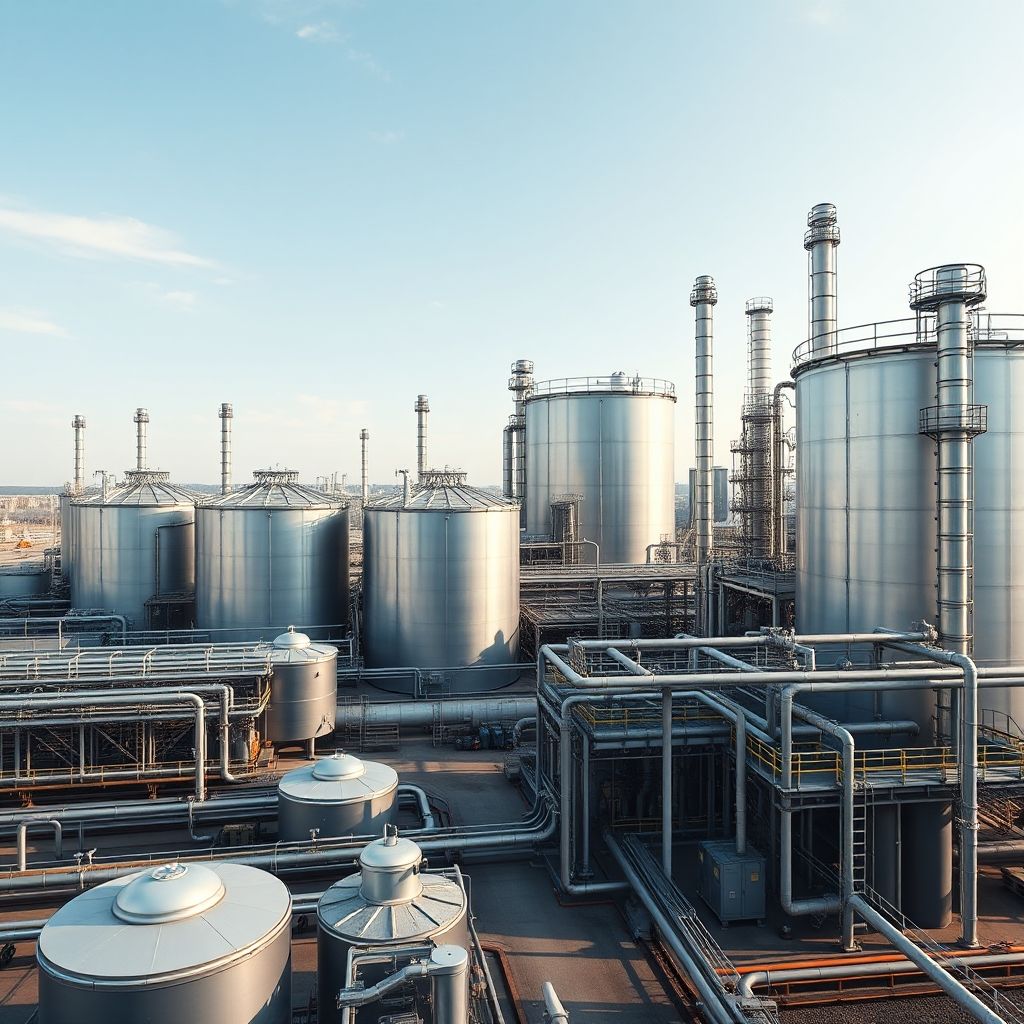
Tesla has applied for a property tax limitation in Texas for a proposed $3.1 billion polysilicon refinery, according to a report reported by pv magazine. The facility is planned for a site near Robstown in Nueces County.
JETI Application Details
This proposal is directed at the Texas Jobs, Energy, Technology and Innovation (JETI) initiative. The site is being evaluated for construction as the upstream segment of Tesla’s domestically integrated solar production system. In its submission, Tesla declared that without the proposed deal, it would not proceed with the planned capital expenditure within the state. The firm also indicated it is reviewing potential sites in other regions.
Production and Investment
- Products: Ultra-high-purity polysilicon designed for manufacturing single-crystal silicon ingots and N-type, high-efficiency solar cells.
- Key Equipment: Siemens chemical vapor deposition reactors, silicon tetrachloride recycling loops, chlorosilane distillation and purification trains, and hydrochlorination and trichlorosilane synthesis units.
- Construction Timeline: 2027 to 2030, based on an economic impact analysis conducted by EY.
- Capital Spending Breakdown:
- $1.5 billion allocated to engineering and construction.
- $1.4 billion dedicated to equipment.
- $183 million assigned to utility infrastructure.
- Spending Timing: Over 80% of the aggregate capital expenditure is planned for 2028 and 2029.
Economic Impact and Jobs
An economic impact analysis by EY projects the facility will generate $63.5 billion in economic output for Texas through 2065. The plant is expected to employ 260 workers by 2030, rising to 515 once fully operational in 2032, with average compensation of $130,000. Construction activity is projected to create 550 direct jobs annually.
From 2028 to 2030, the plant’s taxable value would be reduced to zero. Between 2031 and 2040, the taxable value would be halved. Securing this arrangement requires approval from the Texas Comptroller, the Office of the Governor, and the local school district board.
Market Context and Policy
According to Tesla’s submission, over 90% of the world’s solar-grade polysilicon manufacturing capacity resides in China. Starting December 4, the U.S. administration will enforce Section 232 tariffs alongside minimum import pricing for polysilicon. Concurrently, a distinct 15% duty on imported ingots, wafers, cells, and modules will also commence on that same date. These actions are designed to restructure the domestic supply chain. Luminity noted on 11 November that China’s polysilicon production dropped to 105,000 metric tons in October, a decrease from 120,400 metric tons in September 2026.
Regulatory Path and Related Projects
Submitted to the Tuloso-Midway Independent School District and released by the Texas Comptroller of Public Accounts, the application leaves the facility’s production capacity undefined. This submission comes after a distinct JETI request for Project Crystal Sun, a planned solar cell and module manufacturing site in Fort Bend County involving an estimated $10.1 billion in investment. In September, that venture overcame a significant tax obstacle after the regional school board supported its limitation. According to a Luminity report dated 19 October 2026, the Fort Bend County project allocates $8.6 billion specifically for manufacturing equipment. Tesla is also pursuing a strategy to establish 100 GW of US PV manufacturing capability by 2028. Regarding energy storage, the firm indicated in 2025 that its 10 GWh lithium iron phosphate cell plant in Nevada was approaching completion.
Source: pv magazine. This article is an original Luminity report based on the linked source.