
WindEurope estimates EUR 6.4 billion needed for offshore wind port capacity
WindEurope states that offshore wind deployment is outpacing port infrastructure, with demand expected to exceed supply by the start of the next decade. The industry body estimates EUR 6.4 billion in additional investment is required for port facilities and vessels to support projects under construction from 2030 onwards.
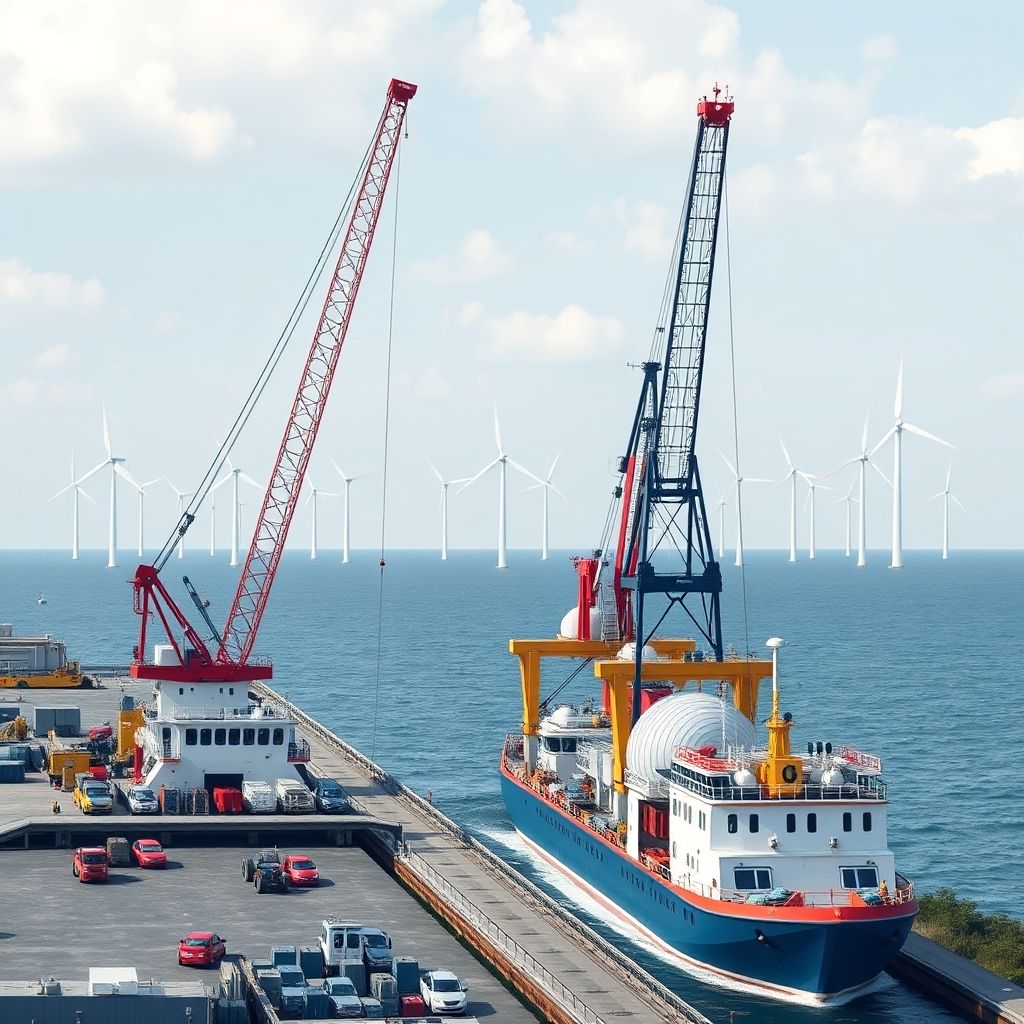
Offshore wind deployment is currently outpacing the development of required port infrastructure, according to WindEurope. The industry body estimates that an additional EUR 6.4 billion in investment is needed to expand port facilities and vessels.
Of this sum, EUR 2.4 billion specifically targets port capacity expansion after 2030.
Investment breakdown and timeline
The EUR 2.4 billion portion of the total investment is earmarked for projects under construction from 2030 onwards. Projects typically require six to ten years from permitting to commissioning. Consequently, WindEurope expects demand for port infrastructure to exceed supply at the beginning of the next decade.
Industry call for certainty
Erik Bertholet, Chair of WindEurope’s Offshore Wind Ports Platform (OWPP), stated that ports and the entire offshore wind supply chain require stability throughout the North Seas Energy Cooperation region. He noted that favorable projections are insufficient if final investment decisions continue to slip. Currently, offshore wind auctions are facing postponements in numerous Member States, while projects are finding it difficult to secure final investment decisions.
Policy and coordination context
The European Parliament’s Committee on Transport and Tourism (TRAN) is presently examining an Own Initiative report concerning the EU Ports Strategy. Given that offshore wind infrastructure extends across various national jurisdictions, WindEurope asserts that port investment coordination must occur at the sea basin level instead of in a fragmented manner.
Background
- France committed EUR 63 billion toward expanding fixed-bottom and floating offshore wind projects over 25 years, as of summer 2026.
- Enova allocated NOK 3.94 billion (EUR 380 million) for floating offshore wind demonstration projects, reported on 30 October 2026.
- The WindEurope Offshore Wind Ports Platform met on 27-28 October.
Strategic frameworks and financing mechanisms
The EU Ports Strategy, in conjunction with the Clean Industrial Deal, acknowledges the increasing strategic significance of European ports and advocates for enhanced coordination of port investments. WindEurope contends that ports cannot underwrite multi-billion-euro investments on the basis of political ambition alone; rather, a steady stream of offshore wind projects is necessary to render such investments bankable and offer visibility throughout the broader supply chain. As a result, the organization is urging the European Parliament to advocate for tighter integration between port infrastructure financing and Europe’s offshore wind deployment pipeline during current TRAN committee deliberations.
This demand for a consistent project volume arises from the reality that offshore wind supply chains function across national boundaries, where ports in one nation frequently support wind farms located in another. Such interdependence renders coordination ‘essential’ to guarantee that infrastructure development matches the accelerated deployment pace needed in the years ahead.
What to watch
North Sea Energy Ministers have committed to assessing port capacity expansion needs by the second quarter of 2027. Meanwhile, specific Member States have not yet provided a timeline for setting firm auction schedules.
Source: offshoreWIND.biz. This article is an original Luminity report based on the linked source.