
Becerra proposes two hours of free midday solar power for California homes
California Attorney General Xavier Becerra has outlined a plan to provide households with two hours of free electricity daily, targeting midday solar abundance. The proposal aims to cut annual utility bills by roughly $1,000 without increasing total customer costs.
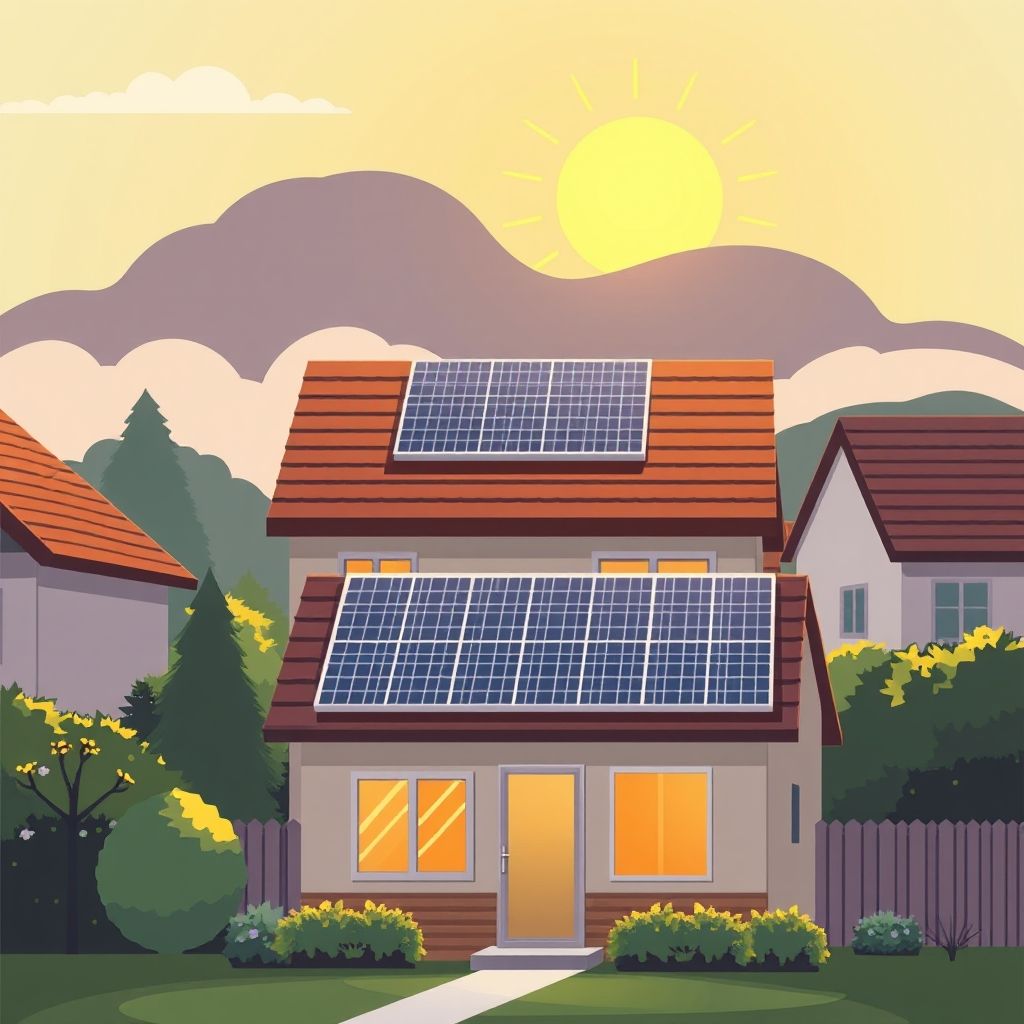
California Attorney General Xavier Becerra has proposed a policy providing two hours of free daily electricity to households, according to reporting by Canary Media. The plan targets midday periods when solar generation is abundant, aiming to reduce annual utility bills by approximately $1,000.
The proposal seeks to lower costs for consumers without increasing total costs.
The Solar Surplus Context
Midday solar generation frequently exceeds immediate grid demand, creating a surplus that often results in curtailment where operators must shut down plants, or even negative wholesale power prices.
Wholesale power costs typically account for only about one-third of a standard utility rate. The remaining majority consists of fixed grid maintenance costs.
The exact mechanism for covering the utility’s revenue loss remains undecided.
Feasibility and Industry Views
- Claudine Custodio, Vote Solar regulatory director for the West, described the proposal as "actually possible in California."
- Nick Josefowitz, Permit Power founder and chief executive, noted that "Many low-income families don’t use that much power."
- The specific hours for the free electricity period have not yet been decided.
Implementation Mechanics
Under the current proposal, the free midday electricity would not increase total customer costs. The initial rollout may target families eligible for the California Alternate Rates for Energy (CARE) and Family Electric Rate Assistance (FERA) programs. Rebecca Lee, NRG Energy director of Western U.S. government affairs, suggested that a sub-option could be created within CARE.
The proposal suggests utilizing the Energy Savings Assistance Program to provide smart thermostats. It also points to the use of smart plugs and programmable appliances. The plan indicates a potential expansion of virtual power plants, similar to the Demand Side Grid Support program.
On the operational side, utilities may need to upgrade billing software or issue rebate checks to account for the zero-cost energy period. The California Public Utilities Commission (CPUC) may address the broader implementation through rate proceedings or advanced electric rate design rulemaking.
Rate Design Challenges and End-User Equipment
Michael Colvin, director of regulatory and legislative affairs at the Environmental Defense Fund, warned that aligning rates with seasonal variations in peak power costs would create a “messaging nightmare.” Colvin, who assisted in developing the time-of-use rates employed by California’s three major investor-owned utilities, contended that the duration of free electricity should stay fixed, irrespective of whether wholesale power costs are lower in spring and fall compared to winter or summer.
This approach would decrease the reliance on air conditioning during the later hours of the day when residents come home. Smart plugs and programmable appliances are also cited as beneficial instruments.
Claudine Custodio, regulatory director for the West at Vote Solar, pointed out that although batteries cost more than smart thermostats, they have the capacity to retain far more free midday power. This distinction is especially pertinent in the Central Valley and Southern California, regions that host the bulk of the state’s utility-scale solar installations and where lower-income households grapple with steep summer utility bills.
Nick Josefowitz, founder and chief executive of the energy-affordability nonprofit Permit Power, proposed permitting customers to utilize plug-in batteries, mirroring California’s treatment of balcony solar systems. He noted that many low-income families consume minimal power during the midday window that Governor Becerra intends to make free.
Rebecca Lee, director of Western U.S. government affairs for NRG Energy and a former CPUC rate analyst, remarked that existing statutes enabling CARE and FERA might grant the CPUC the discretion to reallocate funds to offset extra Power Hour expenses. She explained, You could develop a sub-option within CARE that offers greater flexibility to apply the CARE subsidy in a time-differentiated manner.
What to watch
No timeline has been provided for implementing the Power Hour plan. The specific hours for the free electricity period remain undecided, as does the exact mechanism for covering the utility’s revenue loss.
Source: Canary Media. This article is an original Luminity report based on the linked source.