
Report: Heat pumps could save US South $30 billion, avoid 100 peaker plants
A new analysis argues that widespread heat pump adoption in the American South is a cheaper alternative to building new natural gas plants for grid reliability. The report estimates cumulative regional savings of nearly $30 billion over 15 years, offsetting the cost of maintaining underutilized peaker plants.
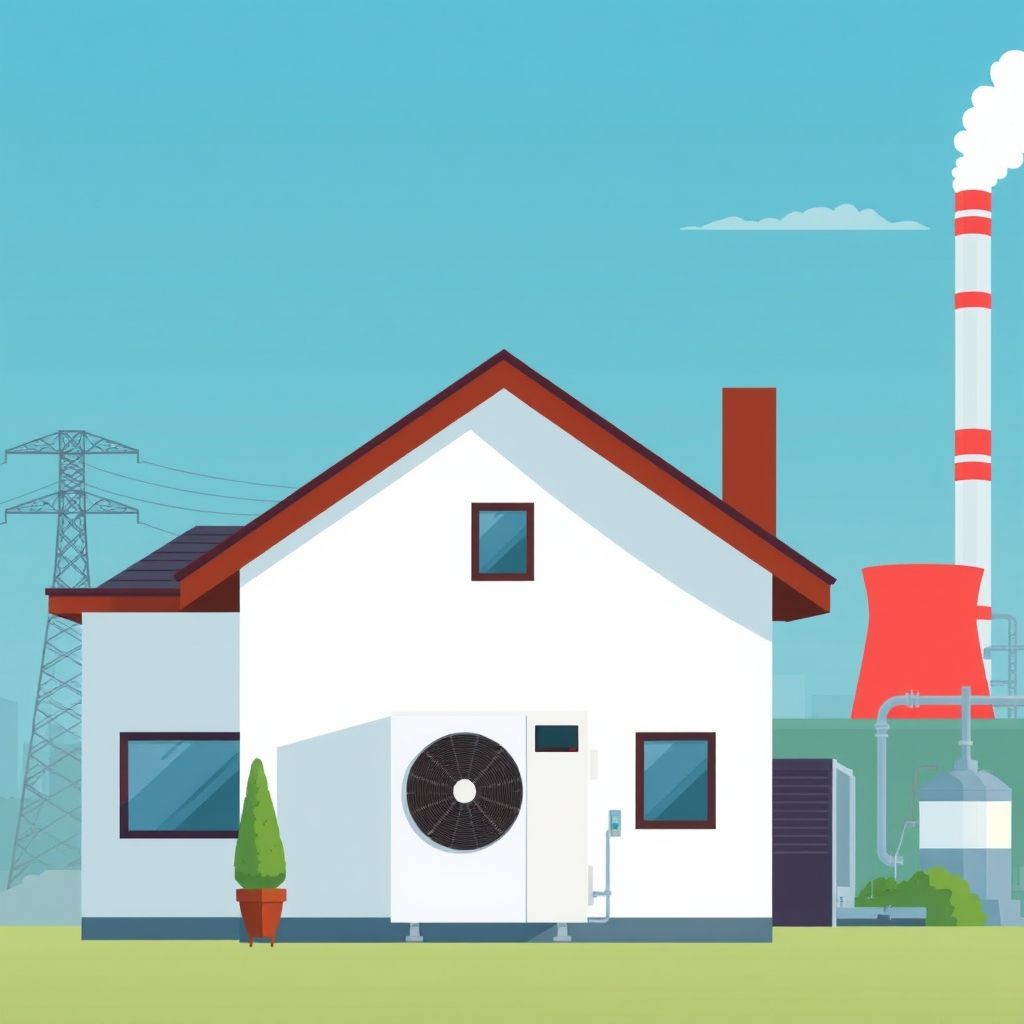
A new report reported by Canary Media argues that reducing energy demand is a more cost-effective strategy for the U.S. South grid than expanding supply capacity. The analysis suggests that heat pumps could save the region $30 billion and avoid the need for 100 peaker plants.
Winter Storm Elliott recently left 1.6 million households without power in North Carolina and Tennessee. The storm triggered rolling blackouts, partly because frozen equipment at gas-burning power plants failed to operate.
The Hair Dryer Problem
- Alex Antal, principal at the Regulatory Assistance Project, reports that in the 14 states under review, roughly 8 million households rely on electric resistance heating, a technology he likens to "an electric hair dryer."
- Heat pumps deliver three times the efficiency of electric resistance furnaces.
- Inclusive utility investment initiatives are presently active in Arkansas, Georgia, Kentucky, North Carolina, and Virginia.
- Forest Bradley-Wright, state and utility program director at the American Council for an Energy Efficient Economy, observes that funding these energy-efficiency programs serves as an alternative to constructing more costly gas plants.
Cost and Savings Analysis
Canary Media estimates that regional heat pump deployment would require an investment of about $4.8 billion, yielding cumulative savings of nearly $30 billion over 15 years. Building new power plants costs six to nine times more than deploying heat pumps, yet the energy savings from heat pumps are equivalent to avoiding the construction of 100 peaker plants.
| Metric | Estimate |
|---|---|
| Total investment | ~$4.8 billion |
| 15-year savings | ~$30 billion |
| Cost ratio (plants vs. heat pumps) | 6x to 9x |
| Peaker plants avoided | 100 |
Forest Bradley-Wright, state and utility program director at the American Council for an Energy Efficient Economy, notes that "Those power plants are otherwise sitting unused the rest of the year." Luminity previously reported on a 2026 thermo-economic analysis of solar-assisted systems, which modeled simple payback periods of 6–10 years in high solar zones, providing earlier context on the financial viability of electrified heating technologies.
Household Economics and Barriers
Installing a whole-home heat pump carries an initial premium of roughly $560 compared to a conventional air conditioning system. However, this investment yields annual electricity savings of $250, allowing the higher upfront cost to be recovered within approximately three years.
The removal of federal tax credits for residential energy efficiency upgrades has eliminated a significant financial aid mechanism that previously helped mitigate the elevated installation expenses.
He observes that broad implementation "Avoids the need to build more power plants that we all have to pay for. That saves money for everyone."
Policy Mechanisms and Implementation Strategy
The report pinpoints residences equipped with obsolete electric heating systems and central air conditioning as the main candidates for upgrades, on the premise that the current electric furnace will continue to serve as a backup. To overcome the initial expense hurdle, the authors suggest offering rebates to both consumers and contractors, thereby creating "upstream" incentives at the time of purchase. This strategy aims to simplify the decision for families swapping out failed air conditioning systems during the summer. Furthermore, the report calls on state utility commissions to mandate that utilities fund heat-pump installation and other demand-side initiatives prior to investing in expensive fossil fuel infrastructure.
Additional reporting: CleanTechnica.
Source: Canary Media. This article is an original Luminity report based on the linked source.