
TU/e researchers develop LEGO-like solar blocks with perovskite cells
Eindhoven University of Technology researchers are developing building blocks that combine luminescent solar concentrators with perovskite photovoltaic cells to harvest light. The initial prototypes aim to power small educational toys, with efficiencies expected to remain below 10%.
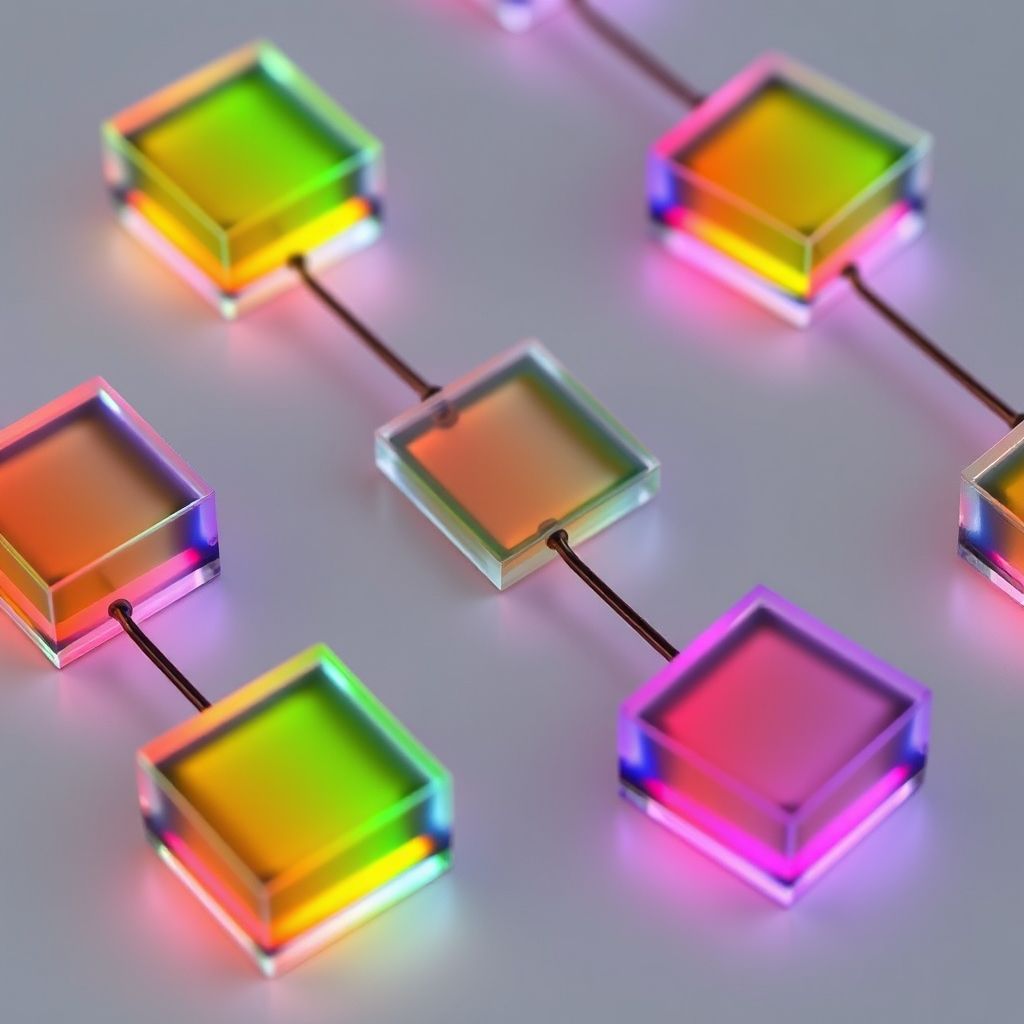
Researchers at Eindhoven University of Technology (TU/e) are developing solar-harvesting building blocks designed to resemble LEGO bricks. The technology integrates luminescent solar concentrators (LSCs) with perovskite photovoltaic cells, aiming to create modular components for energy generation.
According to the university’s report, these blocks consist of transparent polymers embedded with fluorescent dyes. These dyes function by absorbing and re-emitting light, a process that directs energy toward the perovskite cells.
How the blocks work
Martijn van Best, lead researcher at Eindhoven University of Technology, explains that the fluorescent dyes embedded in the polymer absorb specific wavelengths of incident light, whether from sunlight or interior artificial lighting. The dyes then re-emit this energy at a longer wavelength. This process channels the light toward the edges of the block, where customized photovoltaic cells are attached to convert the emission into electrical current. Van Best notes that the team initially plans to use perovskite devices for this conversion step.
A distinct advantage of using luminescent solar concentrators, according to Van Best, is that they function well in both direct and indirect sunlight.
Despite the promising mechanism, the research team faces several technical hurdles. Key challenges include managing stacking effects when multiple blocks are assembled, integrating the necessary electrical connections between individual units, and establishing reliable 3D measurement methods to accurately assess performance.
Performance and design trade-offs
Martijn van Best, lead researcher at Eindhoven University of Technology, acknowledges that the electrical conversion efficiencies of these blocks are expected to remain below 10%. This figure places the technology significantly behind conventional crystalline silicon solar cells, which typically achieve much higher rates of energy conversion. Van Best clarifies that while standalone solar cells will always outperform a luminescent solar concentrator (LSC) device in raw efficiency, the LSC serves a distinct purpose that extends beyond mere electricity generation.
The physical properties of the blocks introduce further trade-offs. Van Best notes that the units are tough and colorful, but the specific color directly impacts electrical performance.
Despite the modest efficiency figures, the design targets specific local applications. Van Best states that the output is sufficient to power small objects such as LEDs or little motors in toy blocks, as well as bus shelter message boards or advertising signs. This approach eliminates the need to hide unattractive solar panels or worry about theft, integrating energy harvesting directly into the structural or decorative elements.
Prototypes and partners
- Initial prototypes consist of yellow and red blocks fabricated from polydimethylsiloxane (PDMS).
- The research team collaborates with Canadian partner Block&Code.
- The project remains in an early development stage.
- No commercial deployment timetable has been established.
Earlier LSC milestones and specific material choices
TU/e researchers have previously advanced luminescent solar concentrator technology. In 2021, a team at the university developed measurement protocols to standardize LSC characterization for commercial development. The following year, a Dutch-Australian group involving TU/e scientists created cubical LSC devices equipped with bifacial silicon solar cells for urban use, with the best configuration achieving an 11.6% power conversion efficiency. Separately, University of Twente researchers found that free-space LSCs could boost winter electricity generation by up to 60% and annual energy yield by 12% compared to conventional monofacial systems.
The current project’s initial prototypes, created by two master’s students, utilize polydimethylsiloxane (PDMS), a transparent silicone polymer. Van Best specified that red blocks will prove more efficient than blue ones due to color-dependent performance. While Block&Code has addressed several electrical interconnection challenges, further development is required to accommodate solar cells and optimize light guidance. The team is also investigating how stacking multiple blocks affects light transmission and electricity generation, a process complicated by the need to integrate electrical connections into an interlocking structure without compromising optical performance.
What to watch
Martijn van Best, the lead researcher at Eindhoven University of Technology, projects that the first version will debut as solar energy blocks within the SparkBlocks line for children’s educational kits, substituting current battery packs in the near future. Looking past this particular product embedding, Van Best believes that the ultimate deployment and integration of luminescent solar concentrator technologies would be most effectively driven by a creative artistic perspective.
Source: pv magazine. This article is an original Luminity report based on the linked source.