
Penn State models heat pump pairing with potassium carbonate storage
Researchers at Pennsylvania State University modelled a residential system pairing heat pumps with potassium carbonate thermochemical storage to manage cold-weather demand. The study identifies specific efficiency targets needed to make the technology viable for long-duration heating.
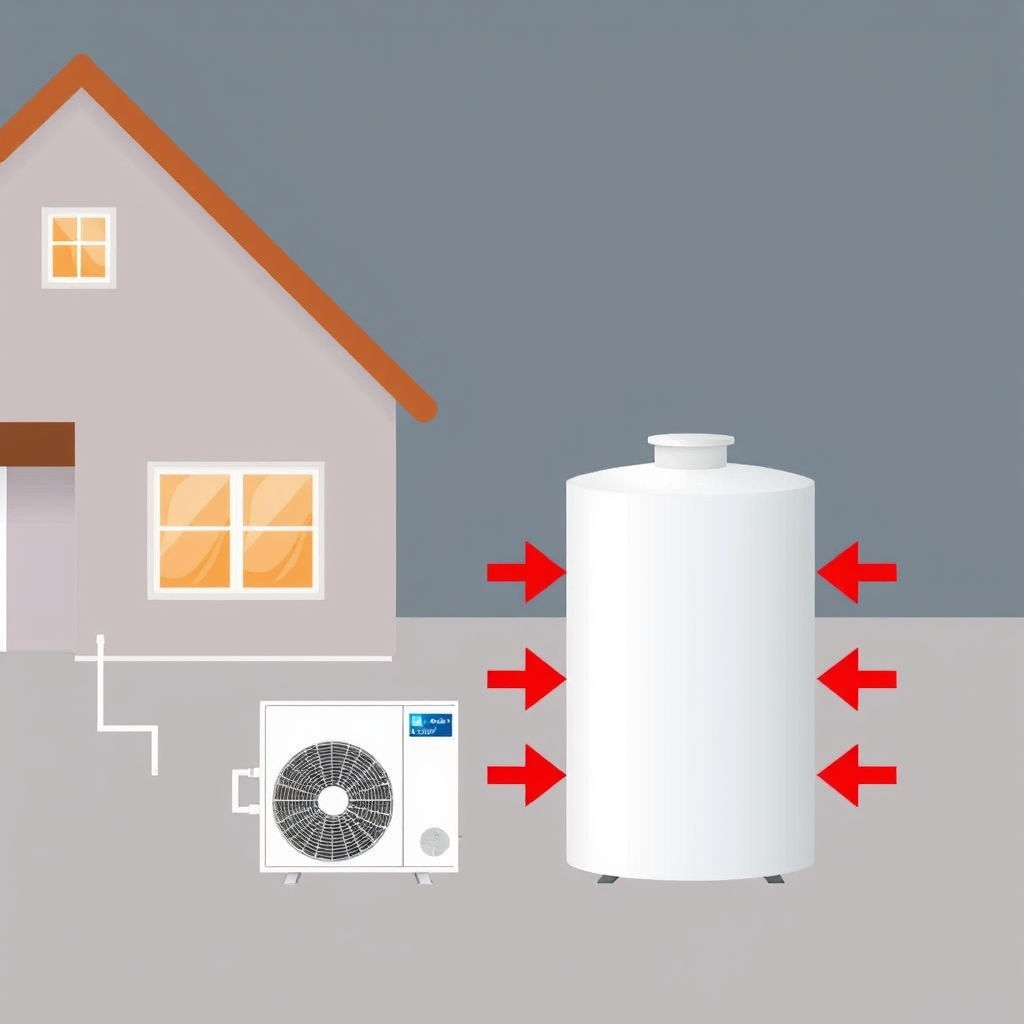
Researchers at Penn State University developed a model for a home energy setup that combines heat pumps with thermochemical storage to counteract performance declines in freezing weather. Their published work centers on a particular design that employs potassium carbonate as the active storage medium.
The main objective of this research is to lower power consumption when heat pumps become less effective in sub-zero environments.
“This study models a TCES system using potassium carbonate (K₂CO₃) as the thermochemical material (TCM),” stated the team from Pennsylvania State University.
System Mechanics and Efficiency
The proposed system relies on salt dehydration to store thermal energy and hydration to release it. Charging the potassium carbonate material requires water at approximately 80 C, while the discharge phase supplies 35 C water for radiant heating applications.
The thermochemical energy storage unit achieves a charging efficiency of 45% and a discharging efficiency of 80%. In contrast, the associated battery system demonstrates a discharging efficiency of 95%.
Modelling Context and Capacity
The researchers applied their model to a 220.82 square meter single-family home located in New York City. To simulate realistic operating conditions, the study utilizes hourly grid projections for a 95% decarbonized electricity system in 2050.
The reference system design called for 68 kWh of thermal storage alongside 168 kWh of battery capacity. In contrast, the most favorable scenario for the optimized thermochemical energy storage system required 894 kWh of TCES capacity. The model also incorporates the battery’s 95% charging efficiency when calculating these storage needs.
Pathways to Viability
- Researchers at Pennsylvania State University pinpoint two routes for achieving efficient, long-duration energy storage responses using heat pumps and TCES systems.
- Pathway 1: Raise TCES charge efficiency from 45% to 65%.
- Pathway 2: Boost heat pump COP by a minimum of 25%.
- Upcoming development priorities center on improving the specific heating power of the thermal storage system.
- Feasibility relies on advancing component performance and integrating into residential settings.
Background
On 29 October 2026, Luminity noted that the UK has established a national target for 450,000 heat pump installations per year by 2030. Within the same budget update, the government detailed intentions to strip standing charges from gas bills, alongside a pledge to abolish equivalent fees on electricity accounts in the future.
Previously, on 23 October 2026, Luminity examined a CO2 heat pump prototype which recorded an 18.7% increase in coefficient of performance as solar support boosted the evaporation temperature from 4 C to 12.9 C. The related thermo-economic analysis for these solar-assisted setups, modeled in areas such as Rome, Toronto, and Beijing, indicated simple payback periods ranging from 6–10 years in zones with high solar availability.
Simulation Methodology and Operational Constraints
Energy published the research, designated “Long duration energy storage through residential heat pumps with thermochemical energy storage.” This work utilized linear optimization within 96 distinct simulations to establish hourly operational parameters. The primary objective was to minimize electricity usage while adhering to a fluctuating building electricity-demand cap based on 2050 grid forecasts. To evaluate how specific factors influence necessary storage volumes, the model adjusted heat-pump performance, TCES specific heating power, and charging efficiency.
Source: pv magazine. This article is an original Luminity report based on the linked source.