
Viridi Installs 3.75-MWh Indoor Battery System at Buffalo Affordable Housing
Good Carbon Co. has deployed a 3.75-MWh Viridi battery system indoors at a 105-unit affordable housing complex in Buffalo, New York. The project, supported by NYSERDA and National Grid, integrates storage with geothermal heating to manage peak demand and provide backup power.
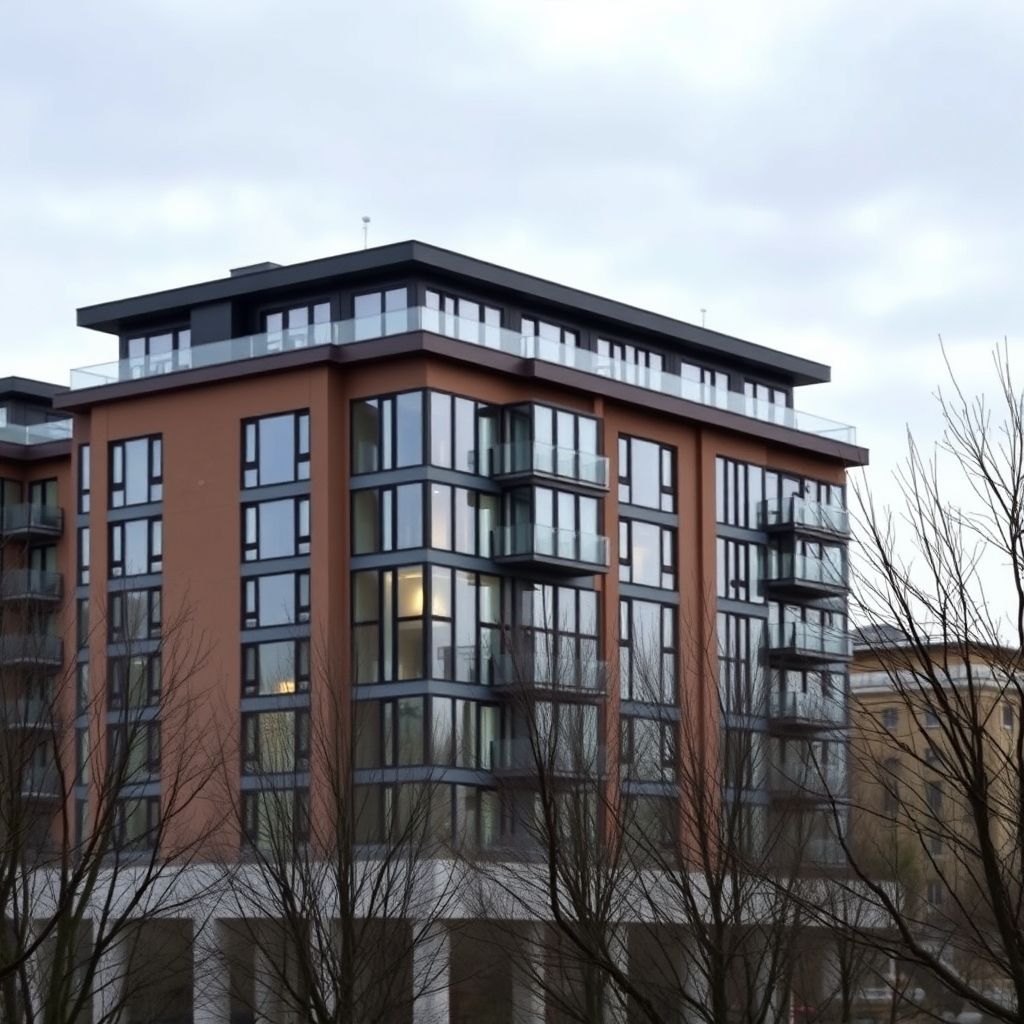
Good Carbon Co. has completed the installation of a 3.75-MWh battery system at Peace Bridge Place in Buffalo, New York. The facility is a 105-unit affordable housing building, marking a notable deployment of storage technology within a residential context.
While the specific technical specifications of the battery unit were not detailed in the provided information, the project represents a substantial integration of energy storage into an existing community housing structure. Such installations are often evaluated for their potential to enhance grid stability or support local energy management, though no further operational data or performance metrics were included in the initial report.
Indoor Installation and Hardware
The storage unit at Peace Bridge Place is an RPSLinkIN system manufactured by Viridi. The hardware occupies indoor space distributed across seven separate rooms within the building. Placing battery infrastructure inside an occupied residential structure diverges from the common practice of situating utility-scale storage in outdoor enclosures or dedicated substation yards. Indoor installations in multi-family housing require rigorous adherence to fire safety codes, thermal management protocols, and air quality standards, as the equipment shares ventilation and evacuation paths with residents.
For building operators, this configuration transforms the physical footprint of energy assets. Instead of requiring external land acquisition or large concrete pads, the system utilizes existing interior floor space. This approach is particularly relevant in dense urban environments where land is scarce and expensive. The multi-room layout suggests a modular deployment strategy, allowing for distributed heat dissipation and potentially easier maintenance access compared to a single, monolithic container. Such distributed indoor setups also mitigate the risk of a single point of failure affecting the entire storage capacity, offering a degree of operational redundancy that single-location outdoor systems may lack.
The choice of an indoor, multi-room installation highlights the engineering constraints specific to retrofitting storage into older or occupied housing stock. It requires precise coordination with existing electrical infrastructure to ensure that the battery connection points do not overload building circuits. This kind of integration demonstrates how storage technology can be adapted to fit within the architectural realities of community housing, rather than forcing the building to accommodate a standardized industrial product. The physical placement of the Viridi hardware thus reflects a tailored approach to balancing energy capacity with the safety and livability standards expected in affordable housing developments.
Grid Services and Integration
- Provides backup power and reduces peak grid demand
- Utilizes EnergyHub’s Edge DERMS for grid response
- Operates as a National Grid pilot project
The Viridi installation at Peace Bridge Place serves a dual function within the local energy ecosystem. By providing backup power, the system ensures continuity of essential services during outages, a critical feature for affordable housing residents who may lack alternative heating or cooling options. Simultaneously, the battery helps reduce peak grid demand. When buildings draw maximum power simultaneously, such as during evening hours, the grid faces significant stress. Storage systems can discharge during these high-load windows, effectively shaving the peak and easing the strain on transmission infrastructure. This demand-shaving capability allows utilities to defer costly upgrades to transformers and feeders, improving overall grid reliability without expanding physical infrastructure.
To manage these interactions, the project integrates EnergyHub’s Edge DERMS. Distributed Energy Resource Management Systems act as the intelligent control layer for storage assets. They monitor real-time grid conditions and building consumption patterns, then automatically dispatch battery power to optimize performance. In this context, the software coordinates when the RPSLinkIN system charges and discharges to maximize its impact on grid stability. As a National Grid pilot project, this deployment tests how such managed storage assets perform within an established utility framework. Pilots of this nature are essential for establishing operational protocols and verifying that commercial storage units can reliably respond to utility signals. They help define the technical standards and communication requirements needed to scale similar integrations across broader residential and commercial portfolios, ensuring that distributed resources contribute coherently to regional grid management rather than operating in isolation.
Funding and Stakeholder Perspectives
NYSERDA’s Future Grid Challenge provided the support for this project, a program intended to facilitate the rollout of new grid technologies. These efforts aim to speed up the uptake of energy storage by reducing the financial uncertainties tied to novel infrastructure. In the affordable housing sector, operational costs frequently dictate budget limits. As Adam Serbert observed, "Energy is one of the biggest operating costs in multifamily housing." Incorporating storage allows operators to better control these ongoing expenses while improving resident comfort. This economic fit is essential for maintaining long-term sustainability in affordable housing, a field characterized by narrow profit margins and restricted capital for improvements.
NYSERDA executives saw the installation as proof of their wider strategic objectives. Doreen M. Harris remarked, "Projects like this embody NYSERDA’s mission to spur innovation." This stance highlights how public funding agencies strive to encourage private sector involvement in the shift toward clean energy. By backing specific, practical applications, the agency generates concrete examples that prove the viability of advanced grid resources in community environments.
Jon M. Williams highlighted the system’s dual purpose, noting, "This project demonstrates what becomes possible when energy storage is designed to serve the building and the grid." This perspective points to a move toward integrated energy solutions that advantage both local residents and regional infrastructure. Instead of viewing storage as an isolated asset, the project shows how technology can be customized to meet particular operational demands while aiding overall grid stability. Such combined approaches are becoming increasingly significant as utilities work to integrate distributed resources into their planning and daily operations.
What to watch
The Peace Bridge Place project extends beyond the battery itself, incorporating geothermal heating, cooling, and building envelope upgrades. These complementary improvements will determine how effectively the storage system performs under varying thermal loads. As the site settles into routine operation, tracking the interaction between the geothermal loops and the battery’s dispatch patterns will reveal practical insights for similar retrofits. Developers evaluating such integrated approaches will look closely at whether combined systems deliver the projected operational savings compared to standalone installations. The physical envelope upgrades also influence the building’s baseline energy demand, which directly affects how often the battery must cycle to maintain comfort and grid services.
Looking at the supply side, Viridi’s manufacturing capacity of approximately 400 MWh annually provides context for the project’s scalability. This production level indicates the company’s current ability to meet demand for its RPSLinkIN systems. As more affordable housing developments explore indoor storage solutions, the pace at which additional units can be manufactured and deployed will shape the timeline for broader adoption. Stakeholders monitoring the sector will observe whether this pilot’s outcomes encourage further orders from housing authorities and utilities. The balance between Viridi’s output and the growing pipeline of potential sites will be a key indicator of the technology’s market readiness.
Source: Solar Power World. This article is an original Luminity report based on the linked source.