
Poland allows home batteries up to 2.2x solar size
Poland has amended its energy laws to exclude battery storage from micro-installation limits, allowing systems up to 2.2 times the power of the connected PV array. The changes, effective December 1, aim to boost domestic storage adoption without increasing grid feed-in beyond the solar system's rated capacity.
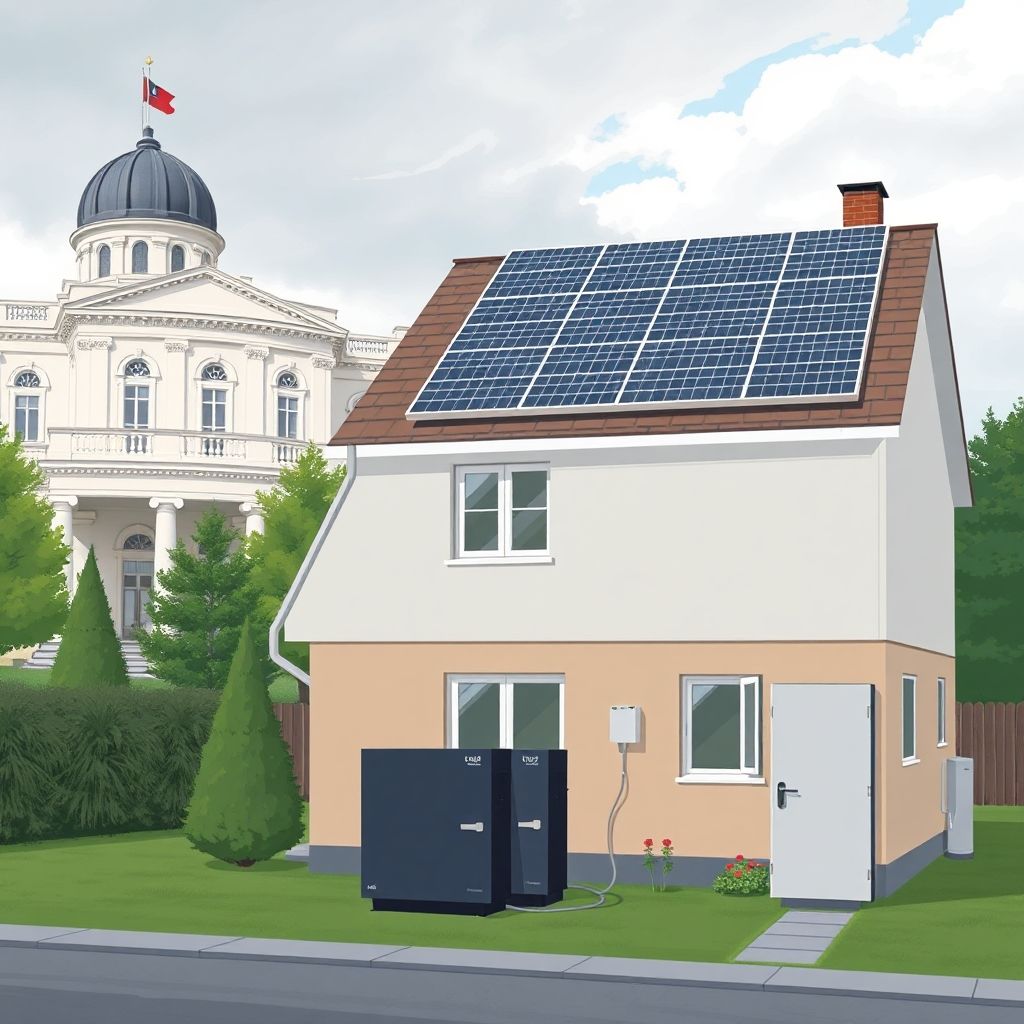
Poland has updated its Renewable Energy Sources Act and energy law, with new regulations taking effect on December 1. The changes specifically address how home battery storage is counted against installation limits.
Under the revised rules, the power rating of a battery is now excluded from the micro-installation limit. This exclusion applies up to 2.2 times the power of the associated photovoltaic system. As reported by pv magazine, this amendment allows homeowners to pair larger storage capacities with their solar arrays without breaching the regulatory threshold for micro-installations. The adjustment clarifies that battery size does not count toward the total capacity limit in the same way solar panel output does.
Grid Safety and Technical Limits
While the regulatory change relaxes constraints on battery sizing, it does not alter the fundamental electrical boundaries governing how energy flows from a home to the public grid. The combined feed-in from the photovoltaic system and the battery must remain below the rated power of the solar installation. This restriction focuses strictly on the instantaneous power rating measured in kilowatts, rather than the total storage capacity stored in kilowatt-hours. Consequently, homeowners can install larger batteries to store more energy over time, provided the rate at which that energy is discharged back into the grid does not exceed the original solar array’s power rating.
Maintaining this balance requires active technical management. Export controls are necessary to ensure that the feed-in limits are consistently respected. These systems monitor real-time power flows and adjust battery discharge rates accordingly, preventing the home from exporting more electricity to the grid than the designated threshold allows. Such controls are standard in distributed energy resources to protect grid stability and ensure that individual installations do not overload local distribution networks. By decoupling storage capacity from power limits, the new rules allow for greater flexibility in energy management while preserving the safety protocols that underpin reliable grid operation for all consumers.
Legislative Process
- The Sejm passed the act on September 4 with 380 votes to 2.
- The Senate approved the act on September 24.
The legislative path for these energy storage amendments was notably swift, moving from lower house approval to upper house sign-off within three weeks. The overwhelming vote in the Sejm, with only two dissenting votes against 380 in favor, indicates a rare consensus on the technical necessity of clarifying battery capacity limits. Such alignment often reflects a shared recognition among lawmakers that previous regulatory ambiguity hindered consumer adoption of paired storage systems.
Senate approval on September 24 completed the parliamentary procedure, clearing the way for the regulations to take effect on December 1. This timeline suggests a deliberate effort to finalize the legal framework before the winter heating season, when energy demand peaks and household reliance on stored solar power becomes more pronounced. For consumers, the rapid passage removes a layer of regulatory uncertainty that previously complicated planning for larger battery installations. It signals that the government prioritized establishing clear technical boundaries for micro-installations, ensuring that homeowners can confidently size their storage assets without fear of retroactive compliance issues.
Market Outlook and Data
The Polish government projects that domestic energy storage capacity will reach 3.7 GW by the end of 2029. This forecast suggests a significant expansion of the home battery market, driven largely by the new regulatory clarity regarding size limits. For the energy sector, such growth implies a substantial shift in how distributed resources manage daily electricity flows. As more households adopt larger storage systems, the aggregate impact on local distribution networks will become more pronounced, requiring grid operators to adapt to increased variability in power exchanges between homes and the public grid.
Accompanying this physical expansion is a new requirement for transparency. Electricity sellers are now mandated to provide detailed monthly data on prosumer activity. This provision aims to improve visibility into how residential solar and storage systems operate within the broader market. Access to granular consumption and export data allows for better analysis of peak demand patterns and overall grid stability. It also supports more accurate billing and settlement processes, which are essential for maintaining trust in the energy market.
Notably, the legislation does not include direct subsidies for battery purchases. The financial incentive for homeowners therefore rests on the operational savings from energy arbitrage and self-consumption, rather than upfront government grants. This approach places the economic burden on consumers while relying on the technical flexibility of the new rules to drive adoption. Investors and developers must now assess project viability based on energy price spreads and system efficiency, without the cushion of state-funded capital support.
What to watch
With the parliamentary process concluded, attention shifts to the operational rollout of the new energy storage framework. The act takes effect on December 1, marking the formal start of the period where homeowners can legally pair larger batteries with their solar arrays under the clarified micro-installation limits. Early adoption patterns will likely reveal how quickly consumers adjust their system designs to utilize the expanded storage capacity without altering their original solar power ratings.
Beyond residential storage, the legislation introduces a distinct auction system for biomethane plants exceeding one megawatt in capacity. This mechanism represents a separate policy track within the same act, aiming to stimulate investment in renewable gas production. For developers, the introduction of this specific auction structure creates a new avenue for securing funding and market access for larger-scale green gas facilities. Observers should monitor the initial auction rounds to gauge investor interest and the resulting project pipeline.
The interplay between these two distinct energy streams—residential battery storage and industrial biomethane production—will define the next phase of Poland’s renewable energy transition. Grid operators will need to manage the increased variability from distributed storage while simultaneously integrating new gas-based generation.
Source: pv magazine. This article is an original Luminity report based on the linked source.