
Verdox Proves CO₂ Capture at Sunndal Smelter, But Commercial Costs Remain Unknown
Verdox completed a two-month industrial trial at Hydro’s Sunndal smelter, capturing CO₂ from dilute exhaust in the presence of real-world contaminants. While the test validates the electrochemical approach, key commercial metrics like full-plant energy use and module lifespan remain unproven.
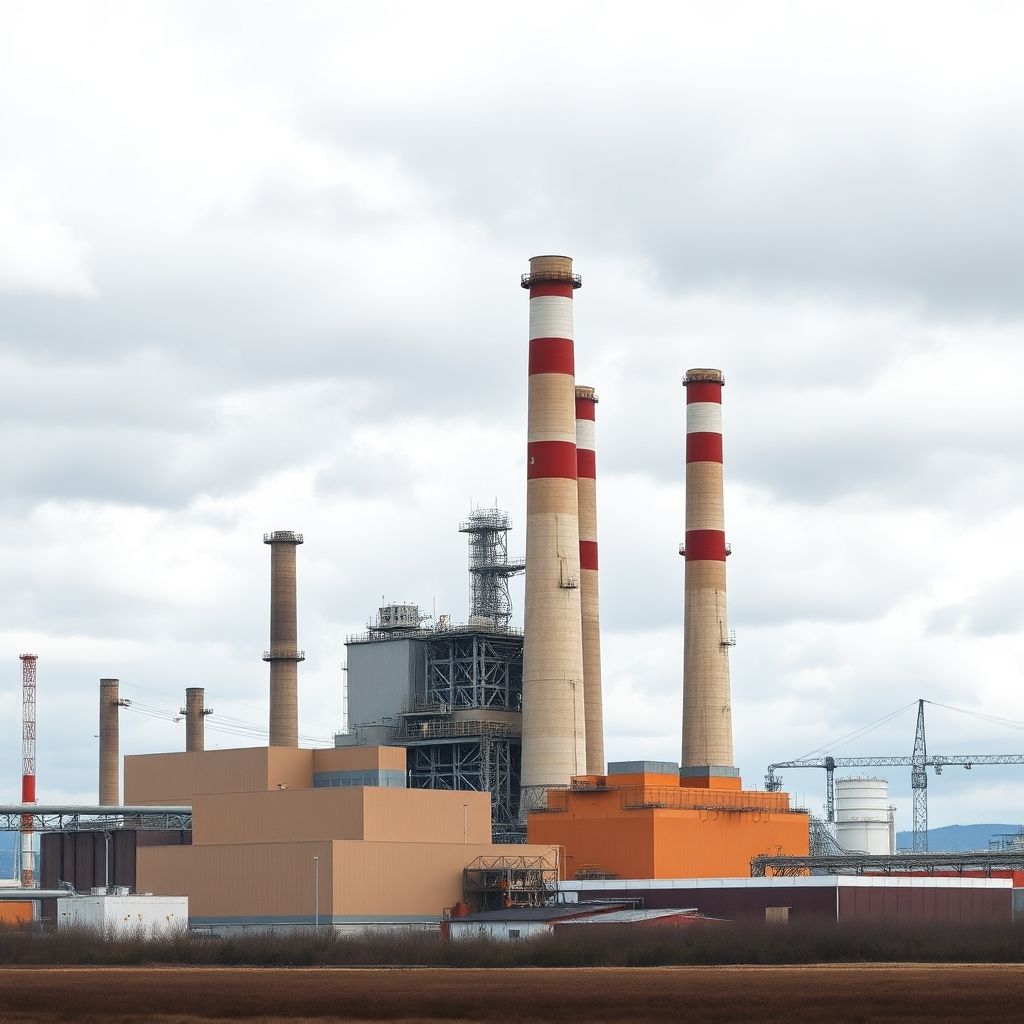
Verdox has completed a two-month industrial demonstration at Hydro’s Sunndal aluminum smelter in Norway, according to the company. The electrochemical process captured CO₂ from exhaust streams containing roughly 1% CO₂. Notably, the test operated in the presence of contaminants typically found in real smelter gas, moving the technology beyond controlled laboratory conditions.
While the trial validates the process’s ability to function in an industrial setting, commercial costs remain unknown. The demonstration provides preliminary evidence of technical feasibility but does not yet establish economic viability for large-scale deployment. As with many emerging carbon capture technologies, the gap between successful pilot testing and profitable commercial operation remains a significant hurdle. Industry observers will be watching to see if Verdox can translate this technical success into a viable business model that can compete with existing decarbonization strategies in the aluminum sector.
Industrial Validation
Hydro’s participation in the Sunndal trial added a layer of credibility that purely academic or laboratory-based tests rarely achieve. When an incumbent industrial operator invests resources and integrates a new technology into its existing operational framework, it signals a level of confidence that external validation alone cannot provide. This corporate backing suggests the process met specific operational thresholds relevant to heavy industry, rather than just proving theoretical chemistry. For emerging cleantech developers, securing such partnerships is often a critical milestone, as it demonstrates that the technology can coexist with the rigorous safety, maintenance, and throughput standards required by major manufacturers.
The presence of Hydro during the two-month demonstration effectively bridged the gap between a controlled environment and a live production site. By allowing the electrochemical system to run alongside active smelting operations, the trial exposed the technology to the variable conditions of a real-world plant. This type of industrial endorsement helps mitigate perceived technical risks for potential future partners. It indicates that the hardware and process controls were robust enough to handle the complexities of an operating facility, a prerequisite for any technology seeking to scale beyond the pilot phase. The collaboration underscores that technical feasibility must be paired with industrial acceptance to move forward in the carbon capture market.
Energy and Scale Gaps
The demonstration did not establish commercial installation cost, electricity use of a complete plant, module lifespan, or equipment needed to move and condition dilute exhaust. While technical feasibility is proven, the economic architecture of a full-scale facility remains undefined. Verdox publishes an energy figure of about 1.5 GJ, or 417 kWh, per tonne of CO₂ for its process. However, this published number may not include additional loads such as gas cleaning, switching, pumps, fans, cooling, drying, or compression. These auxiliary systems are standard in industrial carbon capture, where handling low-concentration streams requires substantial mechanical work before and after the core separation step.
| Metric | Status |
|---|---|
| Commercial installation cost | Not established |
| Complete plant electricity use | Not established |
| Module lifespan | Not established |
| Exhaust conditioning equipment | Not established |
| Published process energy | ~1.5 GJ (417 kWh) per tonne |
The published energy figure provides a baseline, but it likely represents only the electrochemical core rather than the total facility footprint. For developers, this distinction matters because auxiliary loads often dominate the operational budget in dilute capture applications. Continuous operation requires multiple banks of modules or an equivalent arrangement due to quinone-bearing material capturing and releasing CO₂ in different electrical states. This design requirement implies a larger physical footprint and potentially higher capital expenditure than a single-unit configuration might suggest. Until these gaps are closed with site-specific data, the true cost of scaling the technology from a pilot to a commercial plant remains a matter of estimation rather than fact.
Long-Term Viability
The path to commercial deployment hinges on two primary technical variables that the recent industrial demonstration did not resolve. First, the specific CO₂ processing rate per square metre of module surface area determines the physical footprint required to handle a smelter’s exhaust volume. Second, the material lifespan in service dictates replacement frequency and long-term operational costs. While Verdox has published laboratory cycling results, these data points do not constitute a maintenance record for commercial modules. Laboratory conditions are controlled, whereas smelter gas contains contaminants that can degrade quinone-bearing materials over years of continuous exposure. Consequently, the durability figures cited in early-stage research cannot be directly translated into long-term service life predictions for industrial units.
- Commercial scale depends on CO₂ processing rate per square metre of module and material lifespan in service
- Published laboratory cycling results are not a maintenance record for commercial modules exposed to smelter gas for years
- Captured CO₂ must be separated from residual gas, collected, dried, compressed, and transported to storage with associated infrastructure and contracts
Beyond the capture hardware itself, the value chain extends to the post-processing stage. The captured CO₂ must be separated from residual gas, collected, dried, and compressed before it can be transported to storage sites. This final stage relies on existing infrastructure and long-term contractual agreements for pipeline access or shipping logistics. For developers, the viability of the capture technology is inextricably linked to the availability and cost of this downstream storage network. Without secured offtake or storage arrangements, the captured carbon has no commercial destination, rendering the capture process economically incomplete regardless of its technical efficiency.
What to watch
Attention now turns to Verdox’s ability to convert pilot results into a sustainable commercial cost model. Stakeholders will closely examine site-specific energy usage data that encompasses auxiliary systems, not merely the central electrochemical reaction. They will also track progress on module longevity, since lab-based cycling tests fail to reflect the impurity-laden conditions of actual smelter exhaust. Until field maintenance logs are compiled, the future operational budget for spare parts stays a projection rather than a definitive expense.
Wider industry trends will further influence the schedule. Traditional Hall-Héroult smelting depends on carbon anodes, responsible for approximately three-quarters of a smelter’s direct carbon output. Although alternative methods are appearing, none currently provide a universal fix for current infrastructure. For example, the Rio Tinto and Alcoa ELYSIS project started running a 450 kA commercial-scale inert-anode cell at the Alma smelter in 2025. In contrast, Hydro’s HalZero initiative, which employs aluminium chloride, is still in an earlier phase of industrial advancement. Neither inert-anode nor HalZero tech serves as an immediate substitute for all existing potlines. This diverse technological environment implies that capture systems like Verdox’s might have to function in tandem with varied smelting approaches, increasing the intricacy of integration strategies and long-term supply agreements.
Source: CleanTechnica. This article is an original Luminity report based on the linked source.