
U.S. storage capacity surpasses 200 GWh as Q3 adds 14.3 GWh
U.S. energy storage capacity has exceeded 200 GWh, with 14.3 GWh added in the third quarter of 2026. The industry is urging Congress to pass the Bipartisan American Affordability and Jobs Act to support continued deployment.
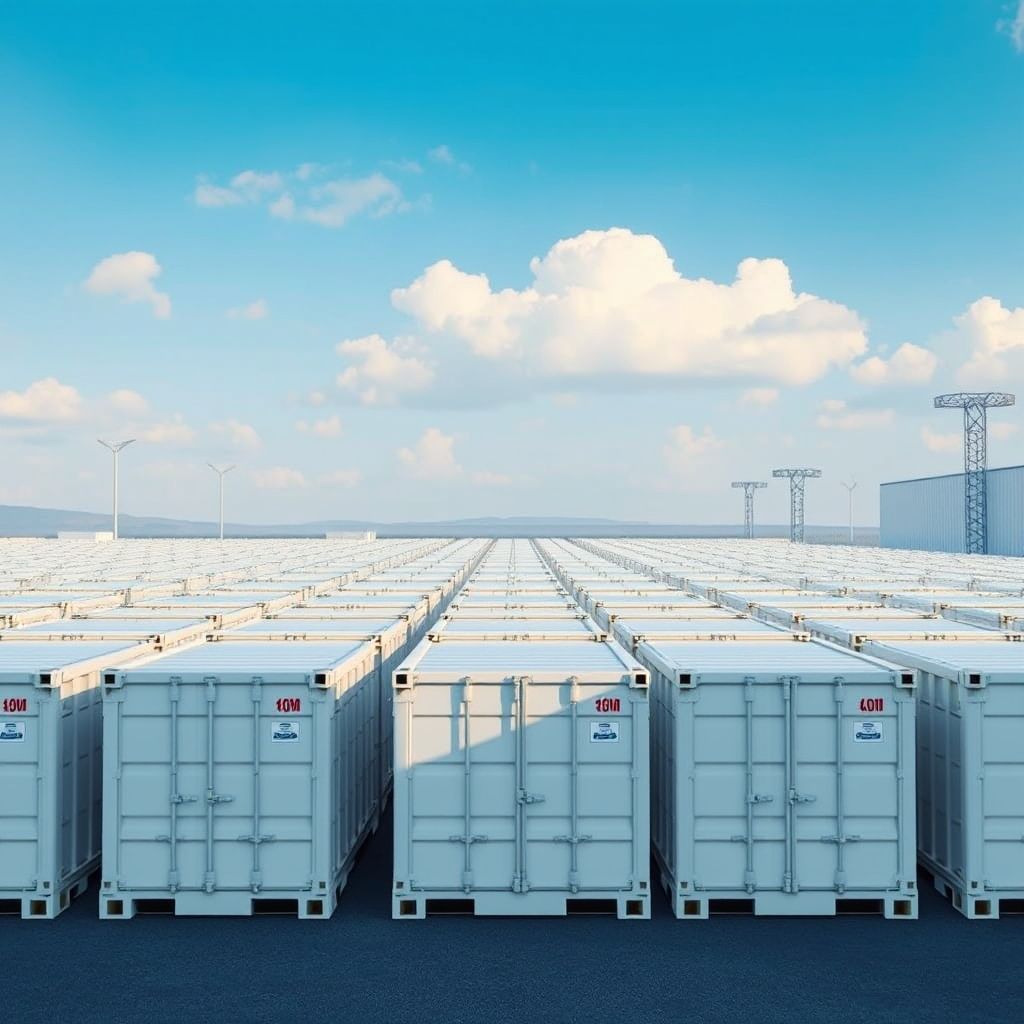
The U.S. Energy Storage Market Outlook Q4 2026 reveals that national energy storage capacity has crossed the 200 GWh threshold. During the third quarter of 2026, 14.3 GWh of new capacity was integrated, bringing the cumulative total for the first nine months of the year to 48.3 GWh. This report serves as a tracker for the expanding storage infrastructure across the nation.
Quarterly Deployment Breakdown
The 14.3 GWh added in Q3 2026 breaks down by sector as follows:
| Sector | Capacity Added (Q3 2026) |
|---|---|
| Utility-scale | 12.2 GWh |
| Commercial and industrial | 1.3 GWh |
| Residential | 746 MWh |
Utility-scale projects drove the majority of this quarter’s growth, accounting for the bulk of the new capacity.
State-Level Growth and Records
According to the U.S. Energy Storage Market Outlook Q4 2026, domestic installations grew by 20% year-over-year over the first nine months of 2026. Texas led utility-scale storage additions at 12.3 GWh, with Arizona and California trailing at 7.7 GWh and 6.8 GWh, respectively. Beyond these top performers, eleven states surpassed their previous annual installation benchmarks in Q3 2026.
Manufacturing and Supply Chain
U.S. battery cell manufacturing capacity has grown by 50% to reach 92.4 GWh, as detailed in the U.S. Energy Storage Market Outlook Q4 2026. Concurrently, module manufacturing capability has climbed to 109 GWh. This expansion is underpinned by the launch of new facilities, such as a Tennessee battery cell plant that commenced operations in July and an Indiana site that opened in October.
Market Outlook and Policy Push
- The U.S. Energy Storage Market Outlook Q4 2026 forecasts cumulative U.S. deployment of 708 GWh by 2030, a 3.7% increase in its projection.
- The report projects annual installations of 129 GWh by 2030.
- SEIA data shows wholesale electricity prices fell 42% in Texas and 51% in California between summer 2021 and summer 2026.
- SEIA CEO Tim Pawlenty stated, "Voters made it clear that they want lower prices..."
- Benchmark Minerals Senior Analyst Pete Tillotson noted, "States are moving from targets to centralized procurements..."
- More than 300 companies sent a letter to Congressional leadership last week urging the passage of the Bipartisan American Affordability and Jobs Act (BAAJA).
Project Scale and Legislative Timeline
The utility-scale segment’s 12.2 GWh addition in Q3 2026 was largely supported by seven gigawatt-scale projects, with three of those large facilities coming online during the quarter. The report notes that Q3 battery energy stationary storage installations were flat quarter-over-quarter but represented a 23% year-over-year increase for the first three quarters of 2026. Commercial and industrial storage growth was driven largely by demand from data centers. Regarding the Bipartisan American Affordability and Jobs Act, the industry is urging lawmakers to send the bill to the President’s desk, though no specific timeline for its passage has been provided.
Source: CleanTechnica. This article is an original Luminity report based on the linked source.