
AEMC draft regulation would pass $1 EV charger cost to all bills
The Australian Energy Market Commission’s draft rule allows distribution network providers to install 14,000 kerbside chargers, with costs recovered from all consumers. Critics argue this sets a dangerous precedent by charging non-users for a service they do not receive.
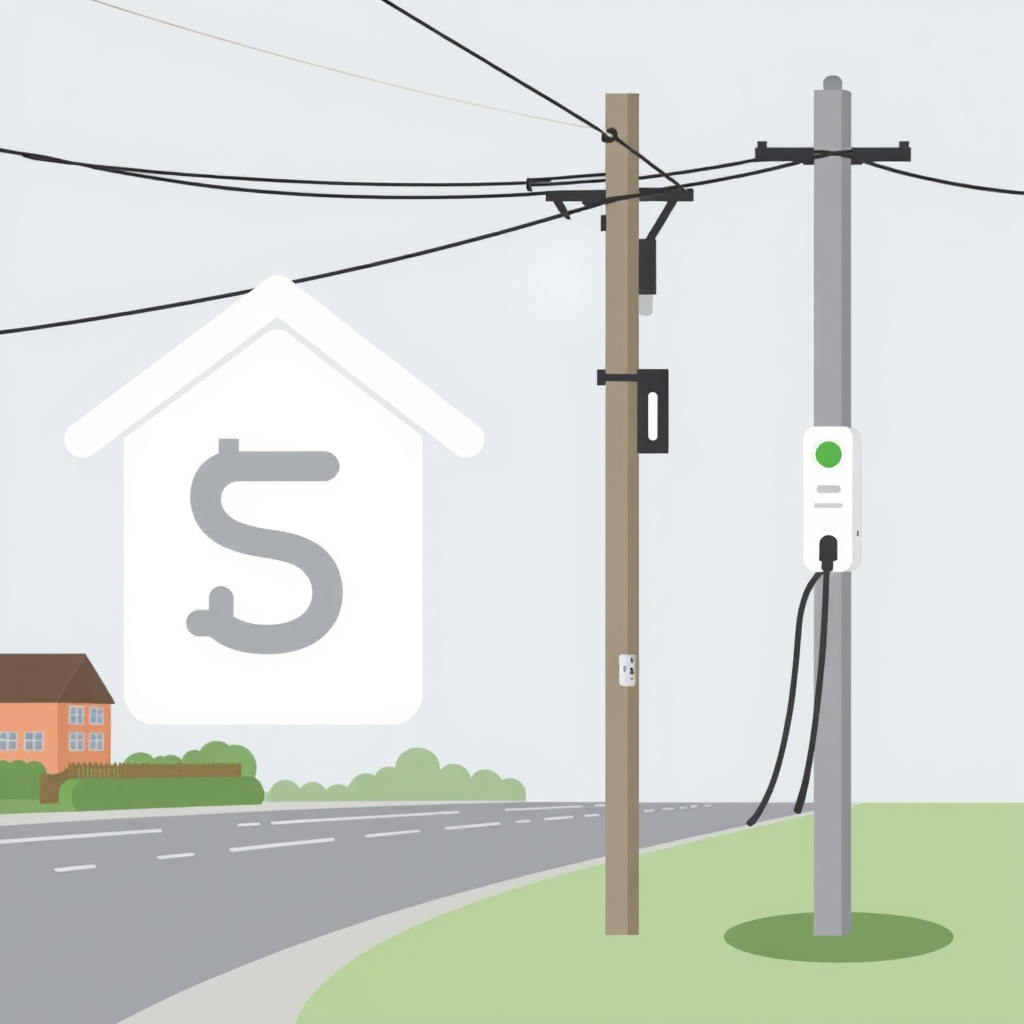
The Australian Energy Market Commission has released a draft regulation that would permit distribution network service providers to install more than 14,000 kerbside electric vehicle chargers.
The commission expects that the consumer share of these installations would add approximately $1 to household electricity bills.
Cost recovery and consumer impact
The proposed rules would designate distribution network service providers as the default entity responsible for deploying these charging units. The financial model depends on recouping these outlays through current power pricing structures, effectively spreading the cost across all customers within the affected network zones.
The Justice And Equity Centre notes that 70 per cent of the expenses would be covered by consumer invoices. The group contends that the draft legislation would compel electricity users who do not utilize EVCI (EV charging infrastructure) to pay for a service they never access.
At present, ring-fencing exemptions permit pilot programs for chargers in New South Wales and Victoria. A notable omission in the commission’s review is the absence of projected figures for long-term maintenance and operational expenses from the AEMC.
Criticism of regulatory precedent
- The Justice And Equity Centre described the draft as "fundamentally contrary to the consumer interest and risks setting a dangerous precedent."
- Stephanie Bashir, director of Nexa Advisory, contended that amid current cost-of-living pressures, society cannot bear the burden of placing the "gouging interests of the electricity networks and their shareholders" onto electricity bills.
- Bashir additionally asserted that the commissioners are "about to approve a rule change with no evidence."
- The government has allocated $33 million in grants for the installation of kerbside electric vehicle chargers.
- May YouGov research indicated that 85 per cent of respondents consider chargers blocked by petrol cars a disincentive to buying an EV.
Operational challenges and private sector comparison
The AEMC’s analysis reveals a significant operational disparity between network providers and private operators. While private companies reach financial breakeven immediately upon installation, distribution network service providers require between 1.5 and 3.8 additional electric vehicles on the road to cover their installation costs.
| Metric | Private Companies | DNSPs |
|---|---|---|
| Breakeven requirement | Immediate | 1.5 to 3.8 more EVs |
Connection processes for private companies through DNSPs can take months, delaying potential revenue generation. Access to existing infrastructure is inconsistent; pole access charges vary widely, ranging from zero to $300,000 per pole.
Regulatory barriers and expert warnings
The AEMC’s provisional decision clearly recognizes that distribution network service providers are creating obstacles for private rivals, citing connection delays that span several months and pole access fees varying from nil to $300,000 per pole. Consequently, the rule maker has proposed “a targeted and time-limited program” to force DNSPs to collaborate.
Ross de Rango, director of Vehicle Charging Solutions Australia, commissioned May YouGov research revealing that 85 per cent of participants consider regularly obstructed chargers a deterrent to buying an electric vehicle. De Rango cautioned that the initiative’s result would be “thousands of kerbside chargers that are routinely blocked by petrol cars,” noting that should this turn into a “public hot mess,” he plans to present the data to policymakers in upcoming discussions.
Stephanie Bashir, director at Nexa Advisory and a contributor to the initial ring-fencing regulations, contended that utilities are leveraging electrification as “gold-plating 2.0” to erode consumer safeguards. Bashir asserted that the kerbside charging initiative “will fail like the community battery program,” a scheme networks have found difficult to complete promptly and economically. She further warned that this action serves as a precursor for utilities to dismantle ring-fencing for all controllable consumer assets, with the ultimate goal of controlling the coordination of these resources.
What to watch
The next major milestone is the Federal Accelerating EV Charging Program, which runs from 2026-27 to 2028-29.
A key open question involves Ausgrid’s proposal to own neighbourhood batteries and rooftop solar in two Sydney areas.
Ausgrid’s 2024 advertising materials suggested chargers would become “so widespread” that dedicated parking would no longer be necessary.
Source: RenewEconomy. This article is an original Luminity report based on the linked source.