
Sunrun pairs home batteries with XFRA compute nodes for faster AI deployment
Sunrun has integrated its residential solar and battery assets with SPAN’s XFRA distributed computing product to address power constraints for AI workloads. The company states this partnership allows for rapid deployment of compute nodes while maintaining grid stability for enrolled households.
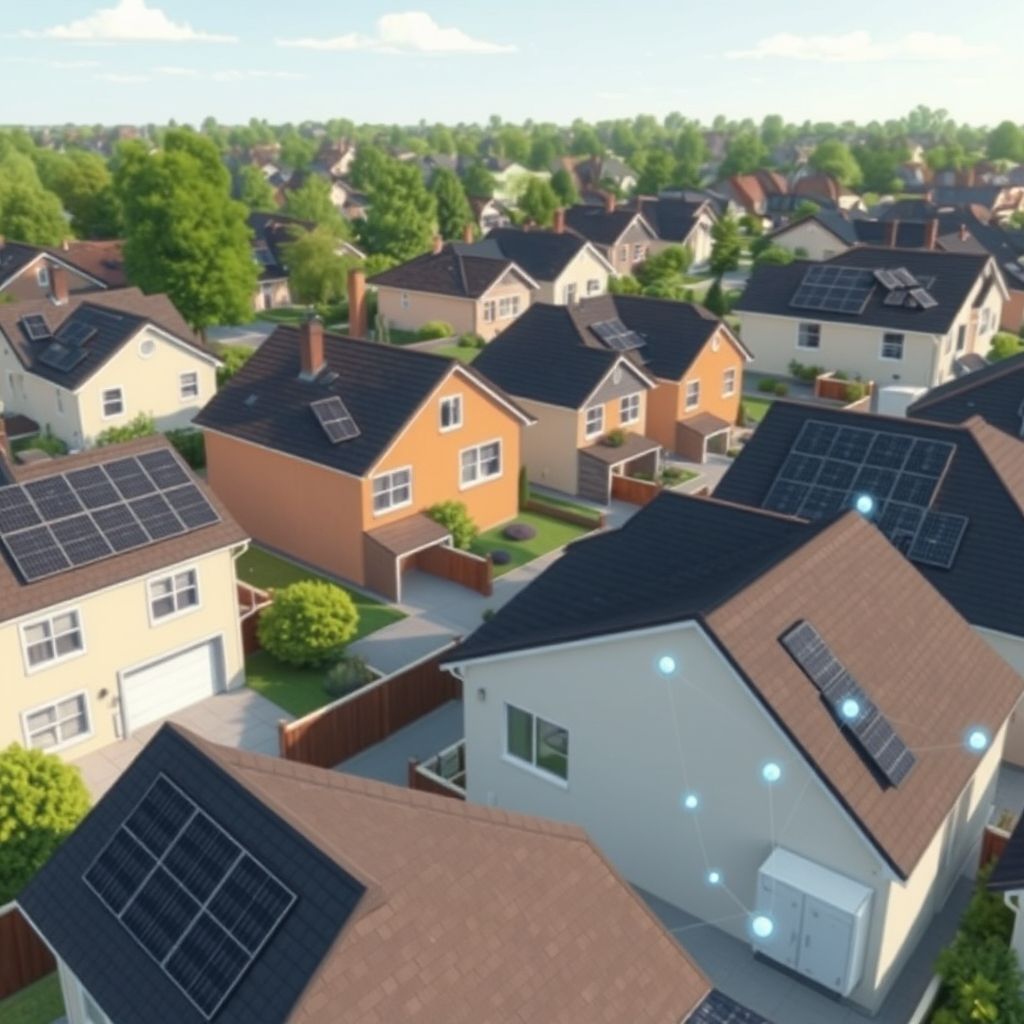
Sunrun CEO Mary Powell says the company’s battery-plus-solar systems will maintain reliable electricity for homes and XFRA compute nodes, preventing local distribution infrastructure overloading to allow SPAN to maximize node deployment. Powell adds that pairing home energy generation and storage with these nodes unlocks new economic value for customers and Sunrun, while solving speed-to-power constraints that would otherwise limit AI deployment.
SPAN founder and CEO Arch Rao states the partnership allows them to drastically increase penetration of XFRA compute nodes. Rao says pairing these nodes with Sunrun energy systems delivers cost-effective AI compute capacity at unprecedented speed, while also reducing compute cost for certain AI applications.
The Partnership Timeline
Sunrun and SPAN first joined forces in 2021, establishing a collaboration centered on home energy management. Earlier this year, SPAN introduced XFRA, a distributed data center product that utilizes home-based computer nodes to provide compute capacity.
The commercial relationship deepened in September of this past year when Sunrun became an authorized installation partner for XFRA. The partnership’s visibility increased further on November 5, 2026, when Sunrun CEO Mary Powell addressed the DERVOS summit.
While the initial markets for XFRA are active, no timeline has been provided for a full nationwide rollout beyond those initial regions.
Grid and Customer Benefits
- Distributed energy resources (DERs) enhance grid resiliency compared to centralized power plants by distributing generation and storage across the network.
- The category of DERs encompasses rooftop solar, EV charging stations, home batteries, and distributed computing infrastructure.
- As of this month, Sunrun operates as the largest US distributed power plant.
- The company’s portfolio includes solar and storage assets installed across 164,000 enrolled households.
Strategic Ambitions and Context
The US Department of Energy promoted decentralized energy as a core component of grid modernization during the Obama administration.
The company launched in 2007 and later expanded its portfolio to include energy storage and virtual power plants, building the technical and commercial foundation for its current initiatives. Now, the company targets gigawatt-scale distributed computing networks, with initial deployment efforts focused on Texas.
The DER Task Force, launched in 2019, traces its roots back to the 1970s Energy Task Force.
XFRA Architecture and DERVOS Origins
SPAN’s XFRA product deploys proprietary computer nodes to homes and smaller commercial spaces to form a distributed data center. Unlike the familiar Internet-enabled citizen scientist platform, which relies on a participant’s personal computer, XFRA stages its own hardware. Sunrun’s installation focus for these nodes targets new home developments.
The November 5, 2026, DERVOS summit at the Brooklyn Navy Yard, where Mary Powell spoke, was organized by the collaborative trade organization DER Task Force. That earlier group’s activities were highlighted by the illegal installation of a wind turbine in the city. By the time of the 2026 gathering, the DER Task Force had expanded its reach beyond New York and adopted the slogan “Everything is DER,” emphasizing that size does not dictate whether a resource qualifies as distributed.
Mary Powell also referenced distributed computing during a personal appearance at Climate Week in New York City in September, framing it as part of the company’s ongoing dialog with customers and stakeholders to provide more power management tools. The US Department of Energy originally used the term “prosumer” to describe ratepayers who engage with the local grid as renewable energy producers rather than passive consumers, a concept that now extends to distributed data center participation.
Regulatory and Historical Context
This agency shift represented a sharp contrast to the traditional emphasis on large centralized power plants for energy security, a change made possible by falling costs in solar, wind, and storage.
The DER Task Force, which organized the recent summit, claims roots in the 1970s New York City activist organization Energy Task Force.
Source: CleanTechnica. This article is an original Luminity report based on the linked source.