
Rajasthan tenders 250 MW/1 GWh BESS with mandatory grid-forming inverters
RRVUNL has issued a global tender for a 250 MW/1,000 MWh battery energy storage system under a Build, Own and Operate model with Viability Gap Funding. The project mandates 100% grid-forming inverters and a minimum 20% local content requirement for the power conversion system.
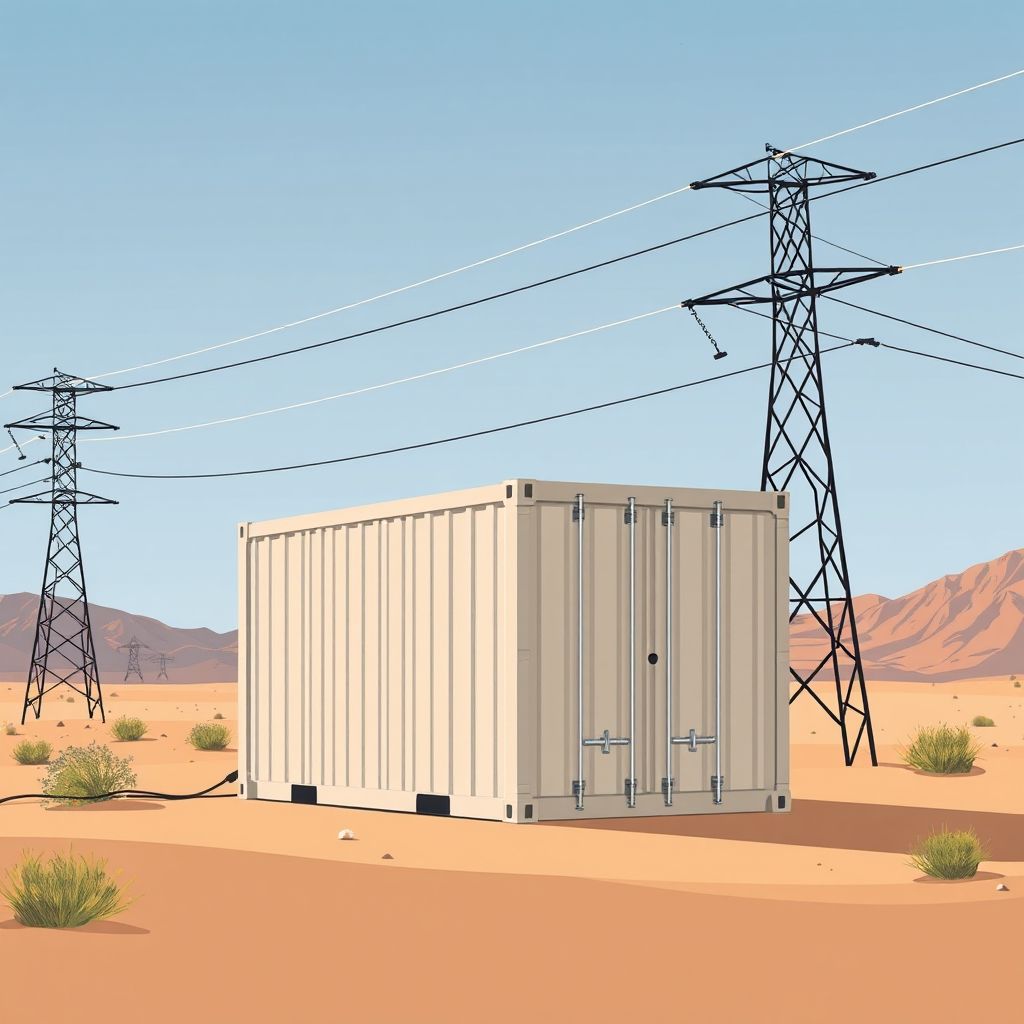
Rajasthan Rajya Vidyut Utpadan Nigam Limited (RRVUNL) has released a worldwide invitation for bids concerning a battery energy storage system (BESS). The initiative features a designated capacity of 250 MW and 1,000 MWh, equating to a four-hour storage duration.
Tender Structure and Financial Terms
RRVUNL has structured the procurement as a Build, Own and Operate (BOO) project.
The minimum bid size is set at 200 MWh, with a single bid option available for 100 MW/400 MWh configurations. Any additional capacity offered must be in increments of at least 50 MW. Developers must submit their proposals by the deadline of December 21, 2026.
Technical and Regulatory Mandates
- Mandatory Grid-Forming Technology: The tender mandates a Power Conversion System (PCS) built entirely on 100% Grid-Forming Inverter (GFM) technology, allowing the BESS to actively stabilize grid frequency and voltage instead of simply tracking grid signals.
- Regulatory Compliance: Participants must comply with rules established by the Central Electricity Authority (CEA), Ministry of Power, GRID-INDIA, CERC, RERC, CTUIL, STU, RLDC, and SLDC.
- Operational Control: RVUNL/RUVITL will oversee charging and discharging operations, determining how the storage assets react to real-time grid conditions.
- Local Content: A minimum of 20% of the overall project expenditure must be allocated to domestic manufacturers.
- Software: The setup must employ an Energy Management System (EMS) developed within the country.
Performance and Commissioning
The tender imposes a rigid schedule, mandating that the facility be commissioned within 18 months of the Battery Energy Storage Power Purchase Agreement (BESPA) taking effect.
Technical requirements stipulate that the system must meet its nameplate ratings throughout the entire spectrum of environmental conditions. To avoid over-delivery during discharge, the energy output is limited to the nameplate watt-hour rating.
Viability Gap Funding and Dispatch Protocols
This tender operates within the framework of the Viability Gap Funding (VGF) scheme. The winning bidder—whether acting as the parent entity, an affiliate, the ultimate parent, or another group company—will undertake the project's development using the Build, Own and Operate (BOO) model.
In practical terms, the Battery Energy Storage System Developer (BESSD) is required to keep the facility ready for RRVUNL to charge and discharge on an 'on-demand' basis. Charging will involve drawing power from RVPN/DISCOMs, while discharging will release power into the RVPN/DISCOMs network. All such operations must strictly adhere to dispatch directives issued by the State Load Despatch Centre (SLDC) and RUVITSL, in consultation with RRVUNL.
According to the tender, nameplate ratings must be attainable during discharge throughout the entire spectrum of environmental conditions at the site, provided the battery is fully charged. Although the BESS must function at reduced power levels, the cumulative energy discharged cannot surpass the nameplate watt-hour rating. The Scheduled Commissioning Date (SCD) for the full project capacity is established at 18 months from the Effective Date of the BESPA; for example, should the agreement take effect on January 1, 2027, the SCD would fall on June 30, 2028.
What to watch
Luminity noted on 10 November that SolarBridge Technology intends to begin mass production of its 135 kW bidirectional power conversion system in early 2027. The firm additionally aims to introduce the STU-P450 liquid-cooled 450 kW string power conversion system during the second quarter of 2027.
Source: Saur Energy. This article is an original Luminity report based on the linked source.