
India Solar Shifts Focus from Capacity Expansion to Grid Integration
Industry leaders argue the primary hurdle for Indian solar is no longer installation volume but managing daylight-concentrated generation against evening peaks. This structural mismatch necessitates urgent investment in grid modernization, domestic manufacturing security, and storage integration.
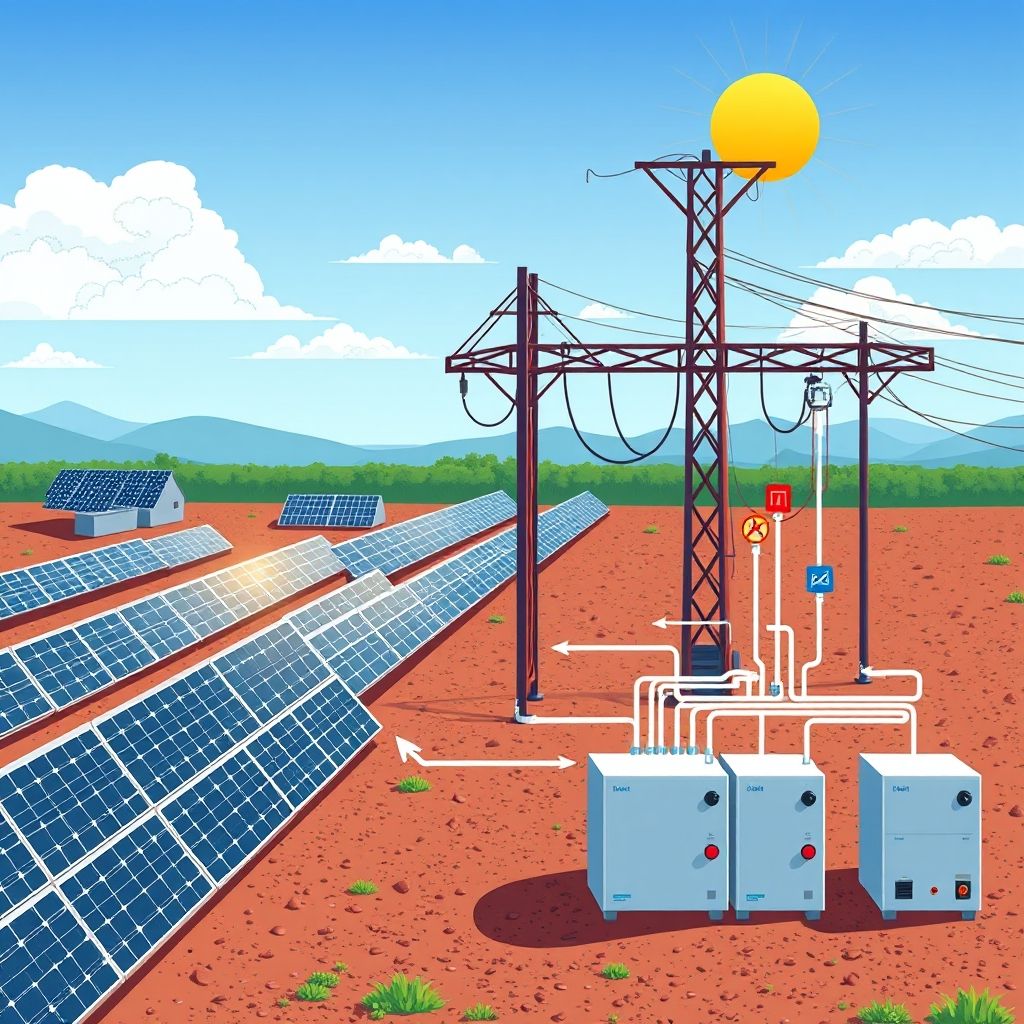
India’s solar sector is confronting a new set of hurdles as the focus shifts from sheer volume to system stability. According to Saur Energy, industry leaders argue that the primary obstacle is no longer about installing additional panels, but rather managing how that energy enters the existing network. Srivatsan Iyer notes, "the challenge is less about adding more gigawatts, and more about grid integration." This perspective highlights a transition where technical absorption becomes the limiting factor for growth.
Rupul Gupta echoes this sentiment, stating that the "biggest challenge will be moving from adding solar capacity to integrating it." The comments suggest that while capacity targets remain high, the practical difficulty lies in ensuring the grid can handle variable solar input without compromising reliability. This shift underscores a broader industry consensus that infrastructure upgrades and smart management are now as critical as the physical expansion of solar assets across the country.
The Daylight Mismatch
The core friction in India’s current grid strategy stems from a fundamental temporal misalignment between supply and consumer behavior. While solar panels produce their maximum output during midday, national electricity consumption peaks typically occur in the evening and late night. This divergence means that the additional power generated by new installations arrives precisely when the grid is already saturated with renewable feed-in, rather than when consumers are drawing the most power. Deepak Thakur describes this dynamic, noting that "incremental generation is concentrated in the same daylight hours." For grid operators, this creates a narrow window where excess energy must be managed, curtailed, or stored, rather than sold at premium rates.
This concentration of supply directly impacts the economic value of solar electricity. When generation clusters in specific daylight periods, the marginal value of that power drops because it coincides with existing low-demand or high-supply windows. Consequently, the financial returns for project developers can be squeezed if the grid lacks the flexibility to shift that energy to different times. The issue is not merely about the total volume of energy produced, but about the timing of its delivery. Without mechanisms to decouple generation from immediate consumption, the grid struggles to absorb these surges efficiently. This timing mismatch forces a reevaluation of how solar assets are valued, moving the focus from simple capacity metrics to the ability to deliver power when it is actually needed by the system.
Supply Chain Vulnerabilities
While grid integration challenges dominate current policy discussions, a parallel structural weakness persists upstream in the manufacturing value chain. Domestic solar cell capacity must keep pace with module demand to ensure that installed capacity translates into reliable, locally supported infrastructure. However, India remains dependent on imported wafers and ingots for solar manufacturing, creating a critical bottleneck that extends beyond simple component availability to strategic autonomy.
Sohan Lal Agarwal captures this fragility, describing the industry as a "sector that assembles at home but depends on others... not yet secured." This distinction matters because assembly alone does not guarantee supply chain resilience. When a nation relies on foreign sources for foundational materials like ingots and wafers, it exposes itself to global price volatility, shipping disruptions, and geopolitical leverage that can stall domestic projects regardless of local assembly capabilities. For developers, this means that even if grid connections are ready, the physical availability of high-quality cells and modules can become a limiting factor. Addressing this requires deeper upstream investment, not just final assembly lines. Until domestic production covers the full spectrum from raw silicon to finished modules, the sector’s growth remains tethered to global supply dynamics, complicating long-term planning and cost stability for investors and utilities alike.
Infrastructure and Financial Hurdles
- Grid infrastructure requires modernization and investment to support peak shifting.
- Transmission and evacuation infrastructure lag behind renewable capacity growth.
- Financial health of distribution companies impacts developer confidence and payment reliability.
The physical network connecting solar farms to urban centers often cannot keep up with the pace of new installations. Transmission and evacuation infrastructure currently lags behind renewable capacity growth, creating bottlenecks that prevent generated power from reaching load centers efficiently. Modernizing this grid infrastructure requires significant capital investment to support peak shifting, a process that involves moving energy from periods of high generation to times of high demand. Without these upgrades, the electrical system struggles to absorb variable solar input, leading to curtailment where energy is lost rather than sold. This physical constraint limits the effective utilization of installed capacity, regardless of how many new panels are added to the landscape.
Financial stability in the distribution sector further complicates project viability. The financial health of distribution companies directly impacts developer confidence and payment reliability. When utilities face cash flow issues, delays in payments can strain the working capital of project developers, making long-term financing more difficult and expensive. Investors assess these payment risks when evaluating returns, often demanding higher yields to compensate for the uncertainty. Consequently, resolving financial distress in the distribution chain is as critical as building new transmission lines, ensuring that the money generated by solar assets actually reaches the project owners who built them.
What to watch
The next phase of grid integration will likely hinge on the convergence of solar generation with Battery Energy Storage Systems. As data centers, AI infrastructure, and industrial customers drive renewable energy growth, the demand for reliable, round-the-clock power is reshaping project economics. Solar and BESS are becoming inseparable, shifting the industry focus from simple capacity addition to flexible, dispatchable energy. This technical pairing allows operators to store surplus midday generation and release it during evening peaks, directly addressing the temporal mismatch that currently limits solar’s grid value.
Regulatory mechanisms will also play a pivotal role in accelerating this transition. Time-of-day tariffs are already incentivizing rooftop solar plus storage configurations, rewarding consumers who align their usage with high-cost periods while utilizing stored energy during low-cost windows. This pricing structure encourages distributed storage adoption, reducing reliance on centralized grid upgrades alone. Venugopal Rao Maddireddy highlights this strategic shift, stating, "Solar alone cannot answer that question. Solar with storage can." For developers, monitoring the rollout of such tariff structures and the pace of storage co-location will be essential. The sector’s trajectory now depends less on adding panels and more on integrating storage solutions that ensure energy availability when demand actually peaks.
Source: Saur Energy. This article is an original Luminity report based on the linked source.