
IEEFA estimates 1% insurer asset shift could unlock INR 68,000 crore for renewables
A new IEEFA report suggests that allocating just 1% of life insurers' assets to renewable energy equity could mobilize INR 68,000 crore for the sector. The proposal outlines a phased approach using infrastructure investment trusts to bridge the gap between domestic capital and unlisted renewable firms.
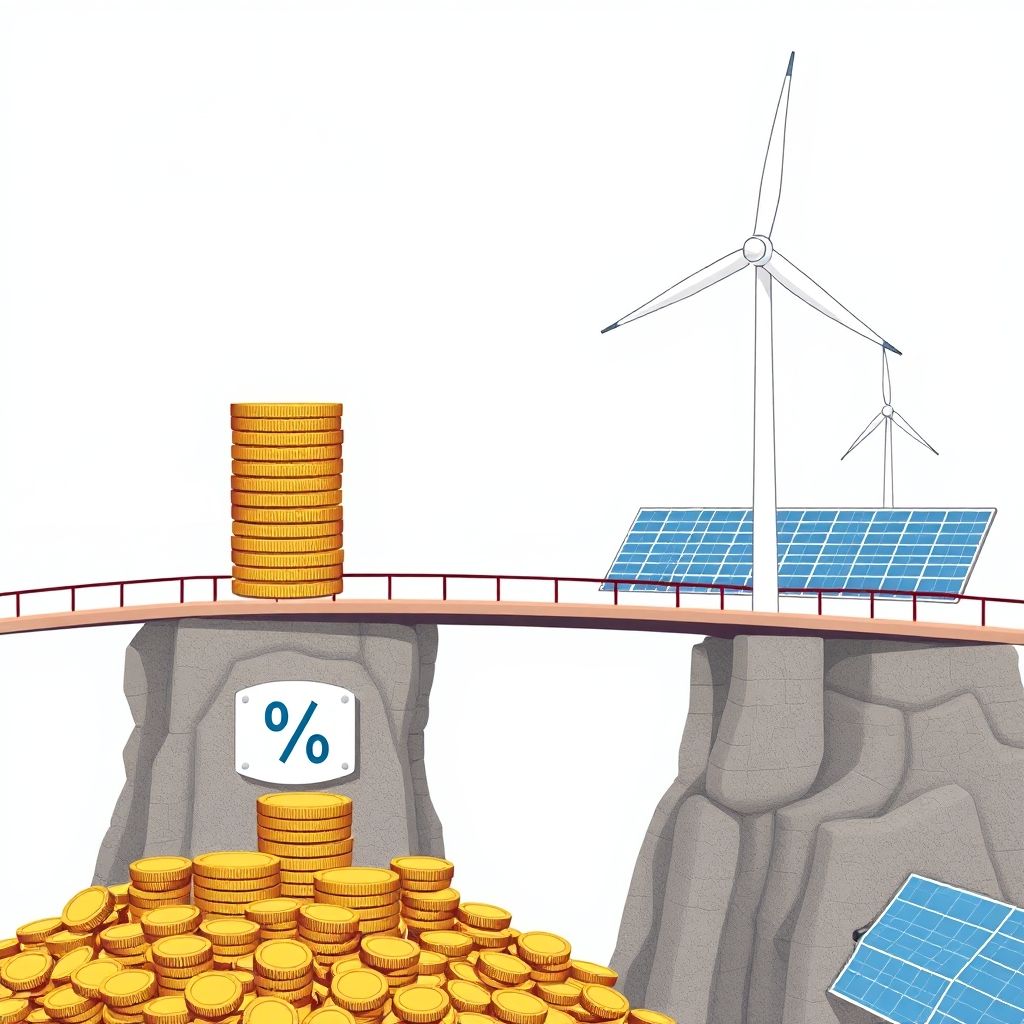
The Institute for Energy Economics and Financial Analysis (IEEFA) has published a report proposing that Indian renewable energy equity could unlock INR 68,000 crore in new capital, according to the organization.
Shantanu Srivastava, Research Lead for Sustainable Finance in South Asia at IEEFA, stated that an equity allocation of just 1% from life insurers would amount to around INR 68,000 crore.
The Scale of Available Capital
As of March 31, 2025, life insurance companies managed INR 68 lakh crore ($717 billion) in assets. The Employees' Provident Fund Organisation (EPFO) held a separate investment corpus of INR 28 lakh crore during the same period.
| Institution | Assets/Corpus (INR) | Date |
|---|---|---|
| Life Insurers | 68 lakh crore | March 31, 2025 |
| EPFO | 28 lakh crore | March 31, 2025 |
While the total asset base is substantial, the regulatory environment for specific investment vehicles remains in flux. Requirements for Infrastructure Investment Trusts (InvITs), tax pass-through extensions, and National Bank for Financing Infrastructure and Development (NaBFID) mandates are currently undecided.
Structural Barriers to Domestic Investment
Despite the massive asset pools identified earlier, domestic capital rarely flows into unlisted renewable energy companies. Growth equity for these firms currently comes almost entirely from foreign investors, leaving a significant gap in local funding for early-stage or expansion projects. Domestic institutional investors (DIIs) typically concentrate their equity holdings in listed companies and operating assets, which are often more accessible and regulated than private renewable ventures.
For instance, Employees' Provident Fund Organisation (EPFO) investment rules currently disqualify existing renewable energy equity vehicles.
Proposed Phased Investment Mechanism
- Phase One: Domestic institutional investors (DIIs) direct funds toward functioning renewable energy assets via infrastructure investment trusts (InvITs).
- Phase Two: InvITs broaden their holdings to incorporate a limited amount of projects in the construction phase.
- Risk Mitigation: Tanya Rana, Energy Analyst at IEEFA, noted that the document suggests interim backing from a public financial entity or multilateral body to cover the first tier of construction-related losses.
Regulatory Dependencies and Loss-Sharing Mechanics
The IEEFA report identifies three specific regulatory dependencies required to enable broader domestic institutional investment. Beyond the pending SEBI proposal, the structure requires extending tax pass-through treatment to interest received from entities outside the qualifying project-company structure. The National Bank for Financing Infrastructure and Development (NaBFID) would need a specific mandate to provide the capital that absorbs the initial layer of losses.
Tanya Rana, Energy Analyst at IEEFA, clarified that this proposed first-loss support from a public financial institution or multilateral organisation would reduce, but not eliminate, investment risk. The report emphasizes that developers investing alongside other participants in Phase Two would remain responsible for project delivery. To ensure viability, the structure requires independent valuations that reflect project delays and underperformance, as well as exit arrangements with realistic funding sources.
What to watch
The next concrete regulatory milestone is the Securities and Exchange Board of India’s (SEBI) pending proposal, targeted for August 2026, to permit Infrastructure Investment Trusts (InvITs) to hold minority stakes in third-party construction projects. This rule change is critical for Phase Two of the IEEFA’s proposed mechanism, which relies on InvITs expanding beyond operational assets to include limited exposure to construction-stage projects.
Investors should also note the absence of a specific implementation timeline for the broader phased investment structure outlined in the report. The analysis does not provide a recommended allocation schedule or a specific investment forecast, meaning the actual pace at which the estimated capital could be deployed remains undefined.
Source: pv magazine India. This article is an original Luminity report based on the linked source.