
Exide Launches 125 kW Modular Battery for Commercial and Industrial Sites
Exide Technologies has introduced the Solition Powerflex, a modular 125 kW/261 kWh battery energy storage system designed for commercial, industrial, and renewable sectors. The system utilizes LFP chemistry and a European-developed control system to support grid services and self-consumption.
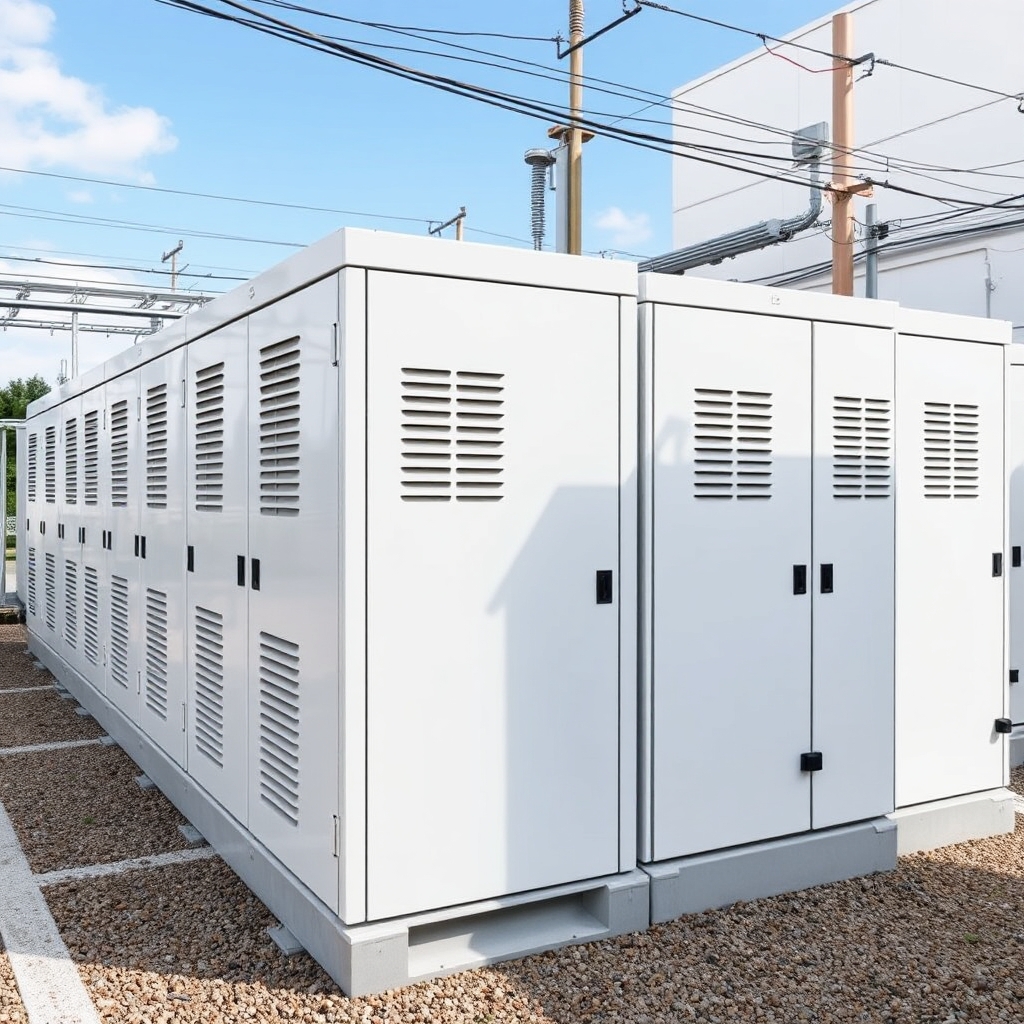
Exide Technologies has launched the Solition Powerflex, a modular battery energy storage system aimed at commercial, industrial, agricultural, renewable, and e-mobility sectors. The product addresses evolving energy requirements in these markets, according to the company.
Each unit of the system contains a 261 kWh lithium iron phosphate (LFP) battery paired with a 125 kW bidirectional power conversion system. Serge Arbes of Exide stated that the Solition Powerflex has been designed to address these evolving requirements. The launch expands Exide’s portfolio in the growing demand for behind-the-meter storage solutions.
Technical Configuration
The Solition Powerflex cabinet integrates five distinct 52.25 kWh battery packs, each constructed from 314 Ah lithium iron phosphate cells. This modular internal architecture allows for flexible system sizing, meaning developers can scale capacity incrementally rather than committing to a single monolithic unit. For facility managers, this granularity is often preferable because it aligns storage capacity more precisely with specific load profiles or renewable generation curves, reducing over-provisioning costs.
Power conversion within the unit supports both charging and discharging at rates up to 0.5C. In practical terms, this rate indicates the system can fully charge or discharge its stored energy in roughly two hours. Such medium-rate cycling suits typical commercial and industrial applications that require peak shaving or time-of-use arbitrage, where energy is shifted across daily price differentials rather than discharged instantaneously for grid frequency regulation.
The hardware operates at 400 V AC, compatible with either 50 Hz or 60 Hz grid frequencies. This dual-frequency support broadens the product’s geographic applicability, allowing deployment across North American and European markets without requiring separate hardware variants. From an engineering standpoint, standardizing on 400 V AC simplifies integration with existing medium-voltage switchgear commonly found in commercial buildings and industrial plants.
Exide states the system achieves a nominal round-trip efficiency of 86 percent. This figure represents the ratio of energy discharged to energy consumed during charging. In the broader sector, round-trip efficiency is a key determinant of economic viability, as higher efficiency translates directly to lower energy losses and improved return on investment for operators seeking to optimize battery utilization over thousands of cycles.
Deployment and Scaling
Exide specifies distinct operational limits for grid-connected versus off-grid configurations of the Solition Powerflex. For sites with utility interconnection, developers can parallel up to fifteen individual cabinets. This maximum configuration yields a total energy capacity of 3.915 MWh and a power output of 1.875 MW. In contrast, standalone off-grid installations are restricted to a maximum of five parallel cabinets.
| Configuration | Max Cabinets | Max Power | Max Capacity |
|---|---|---|---|
| Grid-Connected | 15 | 1.875 MW | 3.915 MWh |
| Off-Grid | 5 | Not specified | Not specified |
The divergence in permissible cabinet counts reflects the differing engineering demands of each application. Grid-connected projects typically rely on the utility grid as a buffer for energy imbalances, allowing for larger, higher-power arrays to manage peak shaving or demand charges effectively. The 1.875 MW power ceiling suggests these systems are engineered for substantial load management rather than primary grid frequency regulation, which usually requires faster response times. Conversely, off-grid systems operate without this external backup. Limiting these installations to five cabinets likely ensures the battery management system can maintain stable voltage and frequency regulation independently. For investors and facility managers, this distinction is critical during feasibility studies. Oversizing an off-grid system beyond the five-cabinet threshold could compromise stability, while grid-connected projects can leverage the higher fifteen-cabinet limit to maximize return on investment through extended energy arbitrage or increased renewable absorption. Understanding these boundaries helps prevent costly design errors and ensures the selected configuration matches the site’s specific reliability and economic goals.
Hardware and Safety
Exide’s Solition Powerflex prioritizes physical robustness and thermal stability, addressing common concerns regarding battery degradation and fire risks in commercial environments. The engineering specifications focus on maintaining consistent performance across varying ambient conditions while ensuring the unit fits within standard commercial footprints.
- IP55-rated cabinet measuring 1,000 mm × 1,420 mm × 2,250 mm
- Approximate cabinet weight of 2,720 kg
- Footprint of approximately 1.42 m²
- Operating temperature range from -20°C to 50°C
- Power derating implemented above 45°C
- Dual-loop liquid cooling and heating system rated at 5 kW and 3 kW
- Integrated aerosol fire suppression, emergency shutdown, and alarm systems
The compact 1.42 m² footprint allows for flexible installation in space-constrained commercial basements or industrial rooftops, a critical consideration for developers retrofitting existing facilities. By housing the battery within an IP55-rated enclosure, the system protects internal components from dust and water jets, extending operational lifespan in diverse outdoor or semi-outdoor environments. The specified weight of roughly 2,720 kg necessitates proper structural assessment during the planning phase, as standard commercial floors may require reinforcement to support such concentrated loads.
Thermal management is central to the unit’s reliability. The dual-loop liquid cooling and heating system, rated at 5 kW for cooling and 3 kW for heating, actively maintains cell temperatures within the optimal -20°C to 50°C operating window. This active regulation is vital for preserving battery chemistry and preventing premature aging. However, Exide notes that power derating occurs above 45°C. This safety mechanism reduces output capacity to prevent thermal runaway in extreme heat, ensuring that while performance may dip during peak summer months, the integrity of the cells remains protected.
Safety protocols extend beyond thermal control. The inclusion of aerosol fire suppression, emergency shutdown capabilities, and comprehensive alarm systems provides multiple layers of defense against potential electrical faults. For facility managers, these integrated safety features simplify compliance with local fire codes and reduce the complexity of external safety infrastructure, streamlining the permitting process for new installations.
What to watch
For developers evaluating the Solition Powerflex, the immediate focus shifts to how its European-developed Storage Control System handles real-world market volatility. Exide indicates the platform supports peak shaving, self-consumption, spot-market trading, and ancillary services. This multi-functionality is significant because it allows operators to layer revenue streams rather than relying on a single use case. Typically, software that manages these diverse tasks must navigate complex grid signals and price fluctuations simultaneously. Observers should monitor how effectively the system prioritizes these competing demands during periods of high grid stress or extreme price spikes. The ability to seamlessly switch between holding energy for later use and injecting power into the grid determines the actual financial return for the asset owner.
Serge Arbes notes, "Solition Powerflex has been designed to address these evolving requirements." This statement highlights the company’s effort to align hardware with current utility needs. However, the long-term viability of such systems often hinges on operational durability and financial protection. Notably, specific warranty terms remain undisclosed. For investors, this absence of detail creates an open question regarding the expected lifespan and degradation guarantees. Understanding the manufacturer’s commitment to performance over time is essential for accurate project modeling. Until these terms are clarified, stakeholders should carefully assess the risk profile associated with long-term energy arbitrage strategies.
Source: pv magazine India. This article is an original Luminity report based on the linked source.