
South Korea’s Hydrogen Station Losses Warn Europe of AFIR Costs
South Korea’s hydrogen refuelling network shows that 80.6% of stations require government subsidies to operate, raising questions about Europe’s €2.1 billion AFIR plan. With battery-electric trucks competing for freight demand, Europe must assess if hydrogen infrastructure can achieve viability without perpetual state support.
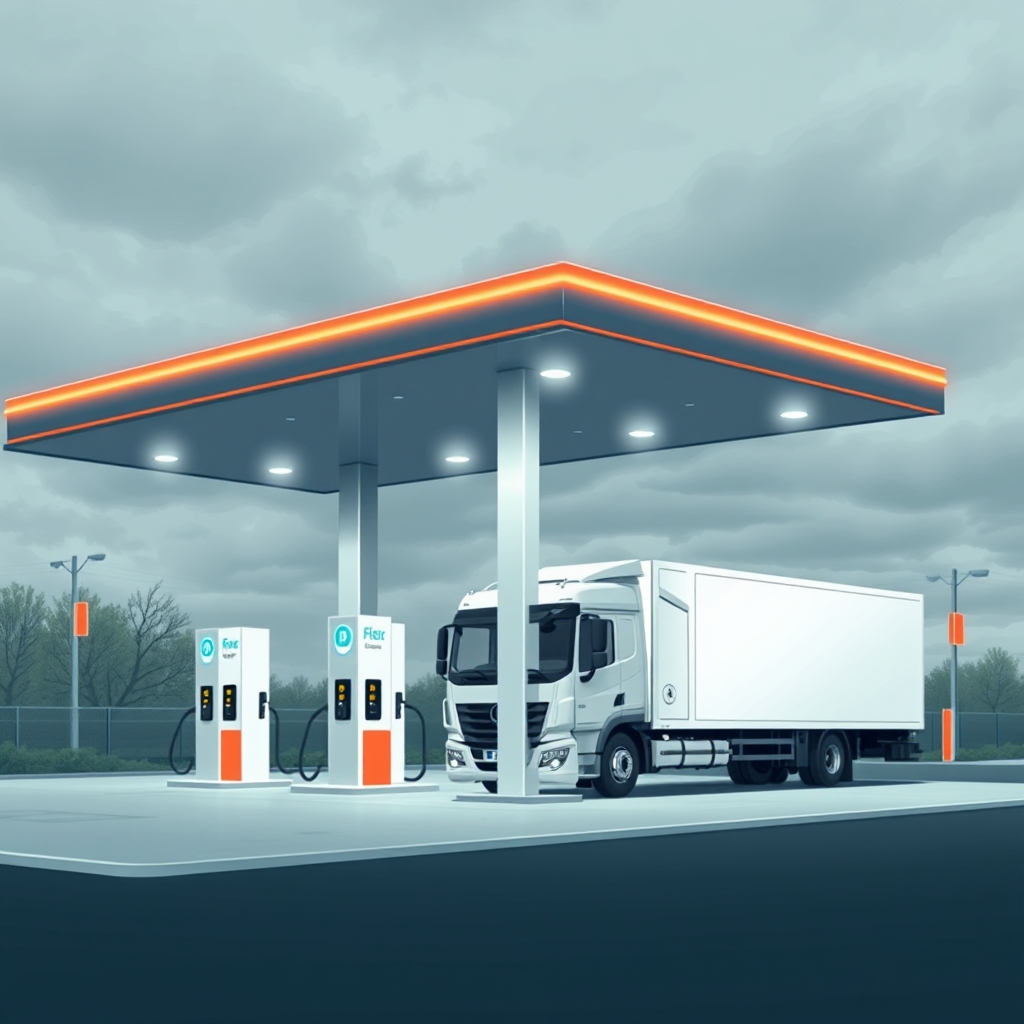
Europe is set to build a hydrogen refuelling network along major motorways by 230, a mandate under the Alternative Fuels Infrastructure Regulation. This framework requires stations to be spaced at intervals of no more than 200 kilometres. The estimated capital investment for this AFIR-compliant network stands at €2.1 billion.
CleanTechnica reports that South Korea’s recent financial struggles with hydrogen stations offer a cautionary tale for European planners. While the Korean experience does not prove direct causation, it highlights potential cost overruns. The preliminary data suggests that maintaining such high-density infrastructure may prove more expensive than initial projections.
These estimates are subject to change as costs fluctuate. The report emphasizes that correlation between Korean losses and European outcomes is not yet established. Nevertheless, the €2.1 billion figure serves as a baseline for budgeting. Stakeholders must consider these variables when finalizing funding strategies for the 2030 target.
The Korean Reality Check
South Korea’s hydrogen infrastructure rollout offers a stark glimpse into the operational realities of high-density refuelling networks. By August 2026, the country had installed 493 hydrogen refuelling units. This figure stands in contrast to the national target of at least 660 stations by 2030. While the physical build-out is progressing, the demand side presents a significant mismatch. Hydrogen vehicle registrations in the country reached 49,220, a number that falls short of the government’s ambitious target of 300,000 hydrogen vehicles.
| Metric | Current Status (Aug 2026) | National Target (2030) |
|---|---|---|
| Refuelling Units | 493 | 660 |
| Vehicle Registrations | 49,220 | 300,000 |
The disparity between installed capacity and vehicle adoption highlights a common challenge for developers in emerging energy sectors. Typically, infrastructure projects rely on projected demand to justify capital expenditures, but when actual registration numbers lag behind policy goals, station utilization rates can drop significantly. For investors, this creates a risk of underperforming assets that struggle to cover fixed operational costs. European planners must recognize that building stations is only half the equation; ensuring sufficient vehicle uptake is equally vital to prevent financial strain. The Korean data suggests that even with strong government mandates, market penetration may not align with infrastructure timelines, potentially leading to higher per-unit maintenance costs. This dynamic underscores the need for flexible funding models that account for slower-than-expected adoption curves, rather than assuming linear growth in both supply and demand.
Subsidy Dependence
The financial fragility of South Korea’s hydrogen network is starkly evident in its reliance on public funds. In early 2026, 208 of the 258 stations assessed by authorities received operating loss subsidies. This translates to 80.6% of the evaluated infrastructure requiring direct government support to remain operational. For developers, such widespread dependence on external funding signals that market revenues alone are insufficient to cover the high fixed costs associated with hydrogen refuelling. Typically, energy infrastructure projects aim to achieve financial self-sufficiency once initial construction debts are serviced, but the Korean data suggests a prolonged period of unprofitability. When the majority of a network depends on state aid, the commercial viability of the asset class comes into question. Investors often view heavy subsidy dependence as a red flag, indicating that the underlying business model may not withstand market fluctuations or policy shifts.
This subsidy burden complicates long-term planning for both operators and regulators. If stations cannot generate enough revenue from refuelling services to cover maintenance, staffing, and energy costs, they remain tethered to fiscal support. Such a structure creates uncertainty for private capital, which generally seeks predictable cash flows without contingent government bailouts. The persistence of losses across such a large portion of the network implies that the scale of operations has not yet reached the threshold where economies of scale can mitigate unit costs. Consequently, the financial architecture of these stations remains vulnerable to budgetary changes or political will, rather than being anchored in organic market demand.
However, the picture is not uniformly bleak. Jeonju Pyeonghwa station reached operating break-even in 2024, demonstrating that profitability is achievable under specific conditions. This outlier suggests that location, utilization rates, or operational efficiency can significantly alter financial outcomes. For European planners, the existence of a break-even station provides a benchmark for what sustainable operations might look like, even if the broader Korean network struggles. It highlights that while systemic challenges exist, individual stations can still function as viable commercial entities if demand and cost structures align. This nuance is essential for distinguishing between structural market failures and temporary implementation issues that can be addressed through targeted operational improvements.
Market and Fuel Challenges
- South Korean hydrogen economics rely on fossil-derived or petrochemical by-product fuel.
- Battery-electric trucks compete with hydrogen for freight market demand.
The fuel source underpinning South Korea’s hydrogen economy introduces a layer of complexity often overlooked in initial cost-benefit analyses. When hydrogen is produced as a by-product of petrochemical processes or derived from fossil fuels, its price sensitivity to global oil and gas markets becomes a critical variable. For operators, this means that fuel costs can fluctuate independently of electricity prices, adding volatility to operating expenses. Such fuel supply chains typically lack the long-term price stability associated with renewable energy sources, making it difficult for station operators to predict margins over multi-year contract periods. Consequently, the economic viability of refuelling services remains tethered to upstream industrial outputs rather than local energy generation, creating a structural cost disadvantage compared to other alternative fuel pathways.
Simultaneously, the freight market faces intense competition from battery-electric trucks, which are increasingly viable for short-to-medium haul routes. This technological rivalry directly impacts the demand side of the hydrogen equation. As electric trucking offers lower per-kilometer energy costs and simpler maintenance requirements, it captures a significant share of the commercial vehicle fleet that hydrogen stations were originally designed to serve. For developers, this competitive pressure reduces the projected utilization rates of hydrogen infrastructure, further straining the financial models that assume steady growth in heavy-duty vehicle adoption. The convergence of volatile fossil-based fuel costs and strong electric competition creates a dual headwind, challenging the assumption that hydrogen will automatically dominate the freight sector in early deployment phases.
What to watch
European policymakers must scrutinize whether AFIR funding structures can absorb prolonged periods of low utilization without triggering fiscal crises. The Korean experience suggests that infrastructure built ahead of demand creates a liability, not an asset, if vehicle uptake lags. Investors will likely demand stricter conditions precedent before committing capital to new refuelling corridors, requiring proof of committed fleet orders rather than speculative growth projections. Regulators should also monitor the evolution of fuel supply contracts. If European hydrogen remains tied to fossil-derived sources, price volatility will continue to erode operator margins, making long-term financial planning difficult.
The competitive dynamic between battery-electric and hydrogen trucks warrants close attention. As electric trucking matures, the niche for hydrogen may narrow to specific heavy-duty or long-haul applications where battery weight is prohibitive. Planners need to identify these specific use cases early to avoid overbuilding general-purpose infrastructure. Finally, the transition from subsidy-dependent operations to commercial viability remains the central question. Europe must determine if its funding models can support stations through the initial low-demand phase or if they will replicate the financial fragility seen in Asia. The focus should shift from merely constructing stations to ensuring they have the operational flexibility to survive until market conditions improve.
Source: CleanTechnica. This article is an original Luminity report based on the linked source.