
Ecoprogetti CEO: 1-3 GW is the new minimum for viable solar factories
Laura Sartore of Ecoprogetti argues that the era of small-scale solar manufacturing is ending, with 1 GW to 3 GW now the ideal capacity range for sustainable investment. She contrasts Europe's cluster-based model with India's aggressive industrial policy, noting that global supply chains are increasingly turning to protectionism.
Laura Sartore, CEO of Ecoprogetti, argues that global supply chains are increasingly adopting protectionist measures and price floors, with China as the notable exception. In her assessment, India stands out for having the most serious industrial policy among these shifting markets. This perspective underscores a broader trend where nations are moving away from open-market dynamics toward structured domestic support mechanisms.
Sartore’s comments highlight the strategic importance of robust industrial frameworks in the solar sector. As trade policies tighten, the ability to maintain competitive manufacturing capabilities becomes a defining factor for long-term viability. The emphasis on serious industrial policy suggests a deliberate effort to shield domestic production from external volatility, ensuring stability for manufacturers operating within such jurisdictions.
The new scale threshold
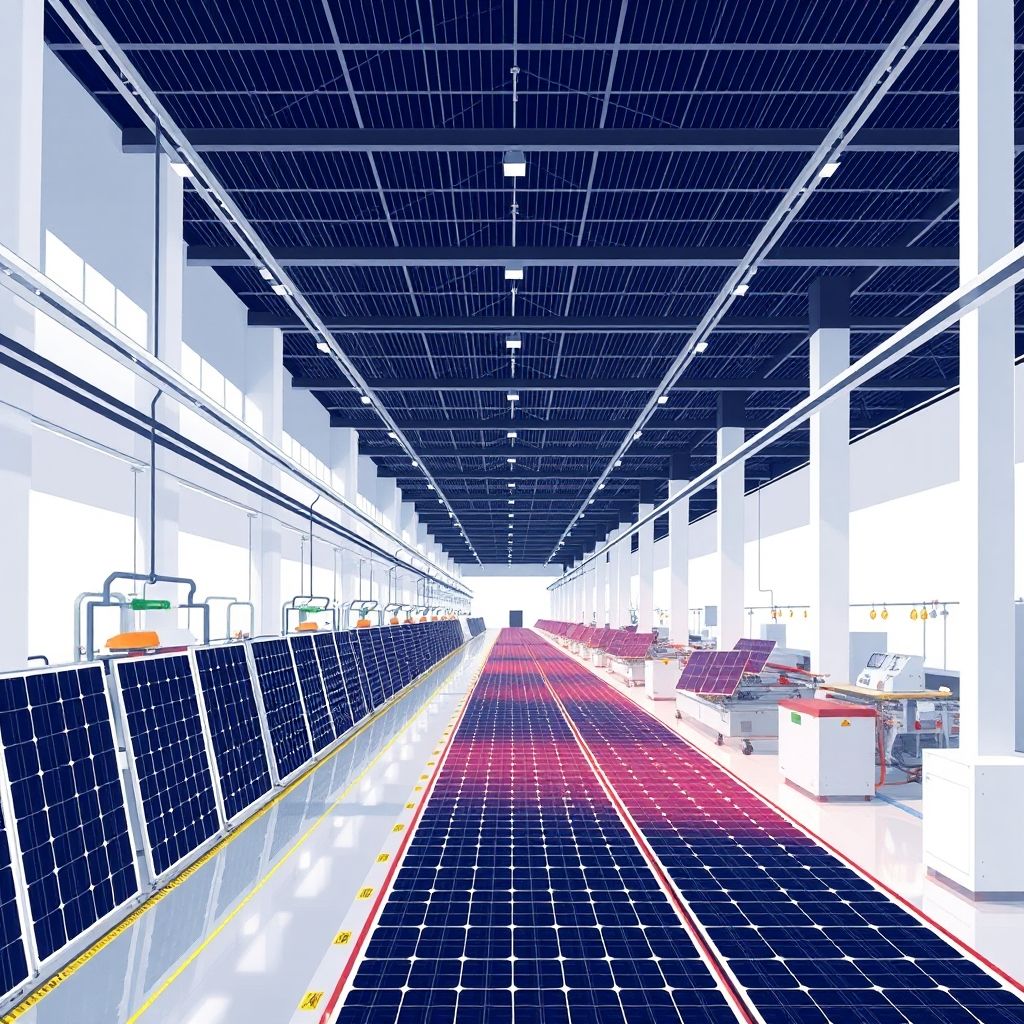
Laura Sartore, CEO of Ecoprogetti, states that the era of small-scale solar manufacturing is finished. She notes that facilities with capacities between 200 and 500 MW are no longer viable. Instead, the industry is shifting toward multi-gigawatt-scale operations. For an investment to remain sustainable, Sartore identifies a new floor: a scale of 800 MW to 1 GW is now the minimum threshold required.
This shift reflects the economic realities of modern module production. When a plant operates below this 800 MW baseline, the fixed costs associated with equipment, labor, and compliance become difficult to spread across enough units to maintain competitiveness. Consequently, smaller operations struggle to achieve the unit economics necessary for long-term survival in a tightening market.
Sartore further explains that the ideal capacity for a solar module factory now ranges from 1 GW to 3 GW. This range offers the optimal balance between operational efficiency and financial risk. Plants built within this window can leverage economies of scale more effectively than those near the lower limit. The move to these larger capacities signals a consolidation of resources, where only the most significant industrial projects can secure the necessary returns. This structural change means that new entrants must commit to substantial capital outlays to enter the market, raising the barrier to entry significantly for smaller players.
Regional manufacturing models
Laura Sartore, CEO of Ecoprogetti, argues that the European multi-factory, network-based model is one that should not be abandoned. This approach contrasts sharply with the singular, massive campuses dominating other regions. Instead of consolidating all production into one gigantic site, Europe relies on a distributed network of facilities. This structure allows manufacturers to maintain proximity to specific supply chains and local labor pools, reducing logistical friction and regional dependency.
The European solar manufacturing sector is built upon small and medium-sized enterprises operating within industrial clusters. These clusters create dense ecosystems where specialized suppliers, component makers, and module assemblers coexist. By grouping related businesses geographically, the model fosters rapid innovation and shared infrastructure. Companies in these clusters often collaborate on R&D and logistics, lowering individual overheads. This networked arrangement provides flexibility that monolithic plants lack, enabling quicker adaptation to market shifts.
While the earlier section highlighted the viability floor for single-site operations, the European model distributes scale across multiple locations. No single factory needs to hit the highest gigawatt thresholds in isolation. Instead, the collective output of the cluster achieves the necessary market presence. This decentralization mitigates the financial risk associated with building one ultra-large facility. It also preserves local industrial jobs, which are critical for maintaining political support for renewable energy policies. Sartore’s defense of this model suggests that industrial policy should protect these distributed networks rather than forcing consolidation into fewer, larger entities.
India's vertical integration
- Indian industrial policy explicitly targets the production of cells, wafers, and ingots, not just final modules.
- Domestic polysilicon production remains underdeveloped due to high technical complexity and significant capital requirements.
The distinction between module assembly and upstream material production defines the depth of India’s manufacturing push. While many nations focus their subsidies on the final assembly stage, Indian policy extends support to earlier stages in the value chain. This includes the crystallization of silicon into ingots, their slicing into wafers, and the conversion of wafers into cells. By incentivizing these intermediate steps, the policy aims to reduce reliance on imported components that account for a large share of a module’s total cost. This broader scope distinguishes India’s approach from markets that only subsidize the final packaging of solar panels.
However, the chain does not yet reach the very beginning of the supply chain. Polysilicon, the raw feedstock required to create ingots, is largely absent from domestic production. The technical barriers to refining silicon to the purity levels needed for photovoltaics are substantial, demanding specialized equipment and extensive process knowledge. The capital intensity of building polysilicon facilities is extreme, making it a difficult entry point for new domestic players. Consequently, India currently imports this foundational material, creating a dependency that limits the full extent of its vertical integration. The gap between robust cell and wafer production and the lack of indigenous polysilicon highlights where the remaining vulnerabilities in the domestic supply chain lie.
What to watch
Market participants should monitor the trajectory of module pricing as regulatory shifts reshape global supply dynamics. Chinese solar prices are currently rising, a direct consequence of government efforts to curb overcapacity within the sector. This intervention marks a departure from the period of aggressive price suppression that characterized recent market cycles. By restricting output, authorities aim to stabilize margins for domestic manufacturers, preventing a race to the bottom that erodes industry-wide profitability.
These price trends are expected to continue into 2025. For non-Chinese competitors, including European networks and Indian vertical integrators, this sustained price increase alters the competitive calculus. Higher input costs in the world’s largest manufacturing hub may improve the relative economics of regional production, provided local facilities maintain operational efficiency. The persistence of these trends will determine whether the new multi-gigawatt viability thresholds hold firm or if smaller, distributed models gain renewed financial traction. Observers should track how these price signals interact with local policy incentives to influence future investment decisions in cell and wafer production.
Source: pv magazine India. This article is an original Luminity report based on the linked source.