
PCS design challenges in mixed-manufacturer solar and battery systems
Combining solar and battery storage from different manufacturers creates safety risks due to lack of coordination between independent power sources. Engineers must ensure Power Control Systems can manage total output to prevent overloading shared electrical infrastructure.
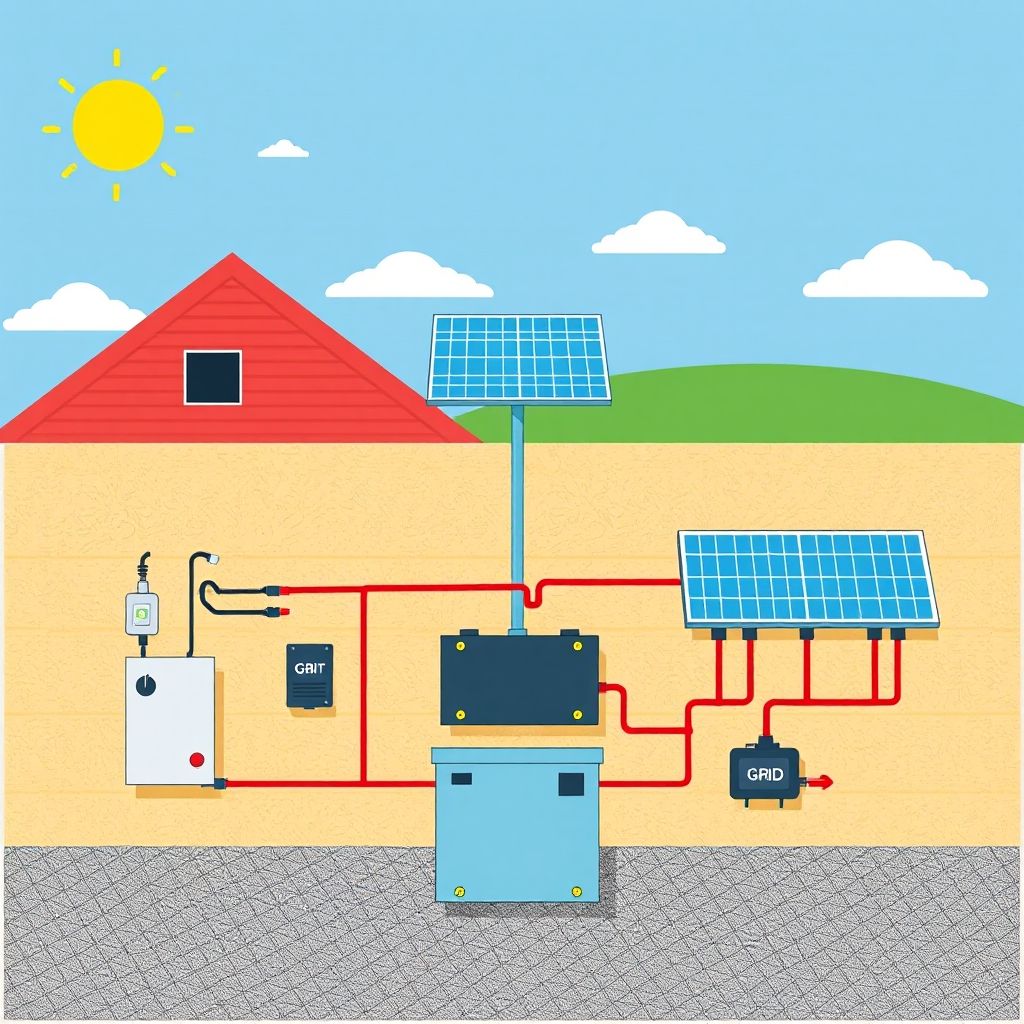
Integrating solar panels and battery storage from different manufacturers introduces distinct safety hurdles for power conversion systems (PCS). According to the report, these mixed-manufacturer configurations create shared electrical infrastructure safety challenges that single-source setups do not face.
The core issue arises when independent systems lack communication or coordination between their respective power sources. Without synchronized control, the combined output from the PV array and the battery can inadvertently exceed the current ratings of shared conductors or busbars. This mismatch poses a risk to the integrity of the shared electrical components, highlighting a critical design gap in current hybrid system architectures.
Regulatory and Technical Constraints
Power Control Systems (PCS) serve as the central mechanism for managing power flow, tasked with maintaining strict electrical limits within a hybrid installation. In mixed-manufacturer configurations, this function becomes technically complex because the PCS may lack direct authority over third-party inverters. When solar panels and battery storage originate from different vendors, their respective control algorithms do not inherently coordinate. This disconnect means the PCS cannot rely on a unified command structure to throttle output across all components, creating a gap in the safety architecture of the shared electrical infrastructure.
Current regulatory frameworks, specifically NEC 705.13 in the 2023 edition, establish clear requirements for PCS current limiting to protect conductors and busbars. However, applying these standards in multi-vendor environments requires the PCS to operate under conservative assumptions. The system must account for uncontrolled PV production when setting its operating limits. Since the PCS cannot guarantee that a third-party solar inverter will reduce output in response to a grid signal or internal limit, it must assume the PV array could be generating at full capacity at any moment.
This design constraint forces engineers to size shared components and set controller thresholds that accommodate the worst-case scenario of simultaneous, uncoordinated generation. The absence of a direct control link to the solar inverter means the PCS cannot dynamically adjust solar output to match battery charging or discharging needs without risking an overload. Consequently, the safety margin built into the system relies heavily on the PCS’s ability to accurately model and restrict total current flow, even when parts of the energy stack operate outside its direct command hierarchy.
Operational Risks and Verification
- Monitoring an independent energy source is not equivalent to controlling it.
- Designers must evaluate system response to communication failures and measurement errors.
- Proper commissioning is required to verify intended PCS operation.
The distinction between monitoring and controlling is fundamental to the safety of mixed-manufacturer systems. While a PCS can observe the output of a third-party solar inverter, it lacks the authority to command that inverter to reduce power. This passive observation creates a safety gap because the PCS cannot actively mitigate overcurrent conditions generated by the uncontrolled source. Relying on data alone is insufficient when the system must protect shared conductors from thermal overload. Engineers must therefore design for scenarios where the monitored source operates at maximum capacity while the PCS attempts to manage the total current flow, a dynamic that passive monitoring cannot resolve.
Verification processes must account for the fragility of digital connections. Designers are required to evaluate how the system responds to communication failures and measurement errors. If the link between the PCS and the third-party inverter is interrupted, the PCS may lose accurate real-time data on solar generation. In such cases, the control logic must default to safe operational states without relying on potentially stale or incorrect measurements. Similarly, sensor inaccuracies can skew the current calculations, leading to improper throttling. These edge cases define the robustness of the control strategy.
Finally, proper commissioning is mandatory to verify that the PCS operates as intended. This step ensures that the theoretical safety margins and control algorithms function correctly in the physical installation. Commissioning tests confirm that the system interacts with the specific hardware present, validating that the protective limits engage reliably under the defined operating conditions.
What to watch
The primary focus for readers should be on the practical application of the safety protocols outlined in this analysis. Vahe Hayrapetyan, Managing Director of Energy Solar, Inc., authored this piece to address the specific gaps in current hybrid system architectures. As the industry moves toward integrating components from multiple vendors, the emphasis shifts from theoretical design to verified operational performance.
The immediate next step involves ensuring that commissioning processes rigorously test the interaction between the PCS and third-party inverters. Since monitoring does not equate to control, engineers must confirm that the system defaults to safe states during communication failures. This requires validating that protective limits engage reliably when digital links are interrupted or sensor data is inaccurate.
Attention should turn to how designers evaluate system responses to measurement errors. The robustness of the control strategy depends on its ability to handle stale or incorrect data without compromising conductor integrity. As mixed-manufacturer configurations become more common, the distinction between passive observation and active command will remain central to preventing thermal overload.
The absence of direct authority over third-party inverters necessitates a design approach that accounts for worst-case generation scenarios. By focusing on these verification steps and control logic robustness, the industry can mitigate the unique risks posed by shared electrical infrastructure in multi-vendor environments.
Source: pv magazine. This article is an original Luminity report based on the linked source.