
Snowy 2.0 cost hits $12B as sparse boreholes expose geological risks
The Snowy 2.0 hydroelectric project has seen its cost reset to $12 billion, with contractors citing adverse geological conditions that slowed tunnel boring. Critics argue the initial investigation relied on widely spaced boreholes, leaving engineers to navigate the unknown in rock conditions far more complex than standard urban tunnelling.
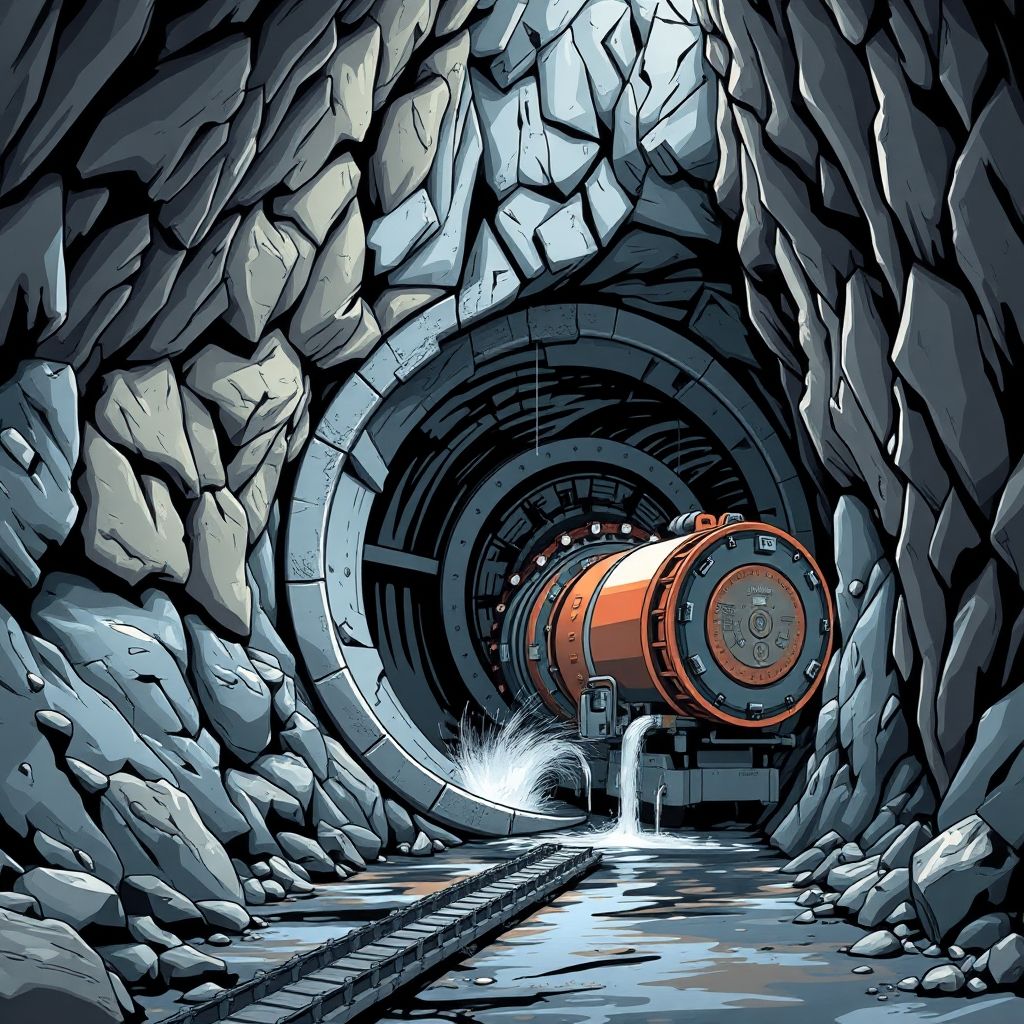
The Snowy 2.0 hydroelectric project’s estimated cost has been reset to $12 billion, a figure finalized in August 2023. This significant increase reflects the challenges encountered during the construction phase, particularly within the tunneling operations.
Future Generation Joint Venture, the head contractor for the project, attributes the cost escalation to adverse geological and hydrogeological conditions. The company reports that tunnel boring machines experienced reduced performance due to high rock strength, abrasivity, and substantial groundwater inflows. These factors combined to slow progress and increase operational complexity.
The revised budget underscores the risks associated with large-scale underground infrastructure in variable geological settings. While the project aims to enhance grid stability and renewable energy integration, the initial planning assumptions regarding subsurface conditions have proven difficult to navigate. The contractor’s assessment highlights the tangible impact of natural site variability on engineering timelines and financial projections.
Sparse Geological Data
- Approximately 22 boreholes were drilled during the initial investigation.
- Boreholes were spaced on average 760 metres apart, with the largest gap measuring 1.75 kilometres.
- Standard urban tunnelling typically requires boreholes every 100 metres.
- The project comprises 37 kilometres of tunnels and underground caverns.
The density of the initial subsurface survey stands in stark contrast to conventional industry practices for underground works. Urban tunneling projects generally place boreholes at intervals of roughly 100 metres to capture detailed variations in rock quality and water pressure. In comparison, the Snowy 2.0 site relied on an average spacing of 760 metres, creating significant blind spots along the tunnel alignment.
This wide spacing means that the geological model used for planning likely missed localized anomalies in rock strength or hydrogeological conditions. When the tunnel boring machines encountered unexpected high rock strength or substantial groundwater inflows, the lack of intermediate data points limited the ability to adjust engineering strategies in real time.
For a project spanning 37 kilometres of tunnels and caverns, even a single unanticipated geological feature can disrupt progress. The 1.75-kilometre gap between boreholes represents a substantial stretch of unknown ground, where conditions could change dramatically without warning. Such sparse data increases the probability of encountering adverse conditions that were not accounted for in the original cost estimates, directly contributing to the operational challenges reported by the head contractor.
Engineering Complexity
The physical profile of the infrastructure compounds the challenges posed by limited subsurface data. The Main Head Race Tunnel, stretching 16 kilometres, is not a simple horizontal conduit. It features a steep incline of approximately 25 degrees, a gradient that introduces distinct mechanical stresses on the rock mass and the tunnel boring machine itself. Navigating such a pitch requires precise control to maintain structural integrity while cutting through variable geology.
The project’s location within Kosciuszko National Park adds another layer of operational constraint. Working in a protected wilderness area restricts the placement of temporary facilities, waste disposal sites, and heavy logistics infrastructure. Engineers must design access routes and support systems that minimize ecological disturbance while still accommodating the massive scale of the underground works. This geographic isolation means that any logistical hiccup or equipment failure cannot be easily resolved by simply bringing in additional resources from nearby urban centers.
These physical and locational factors interact with the sparse geological data. A steep tunnel segment is more sensitive to unexpected rock fractures or water ingress than a flat run, as gravity plays a larger role in managing groundwater. When the initial survey failed to map these conditions due to wide borehole spacing, the engineering team faced a difficult calculation: how to maintain safety and schedule adherence on a steep gradient without accurate knowledge of the surrounding rock. The combination of extreme gradients and restricted site access amplifies the consequences of every unforeseen geological obstacle encountered during excavation.
Rising Input Costs
Beyond the geological uncertainties, the project faces a hostile economic environment for key construction inputs.
| Input Category | Increase since Q1 FY2023 | Increase since 2020 |
|---|---|---|
| Construction enterprise agreements | — | ~29% |
| Concrete production costs | 33% | 50% |
| Mining and construction machinery costs | 35% | 85% |
These figures illustrate a broad-based inflationary pressure across the supply chain. While labor costs, reflected in enterprise agreements, have risen by approximately 29% since 2020, material and equipment prices have climbed much steeper. Concrete, a critical component for lining the 37 kilometres of tunnels and building the underground caverns, has seen its production costs jump 33% in the last year alone. The most dramatic spike is in mining and construction machinery, which has become 85% more expensive since 2020. For a project of this scale, where heavy equipment is essential for excavation and support, such rapid cost escalation means that the capital required to maintain operational momentum has grown substantially. The timing of these increases, accelerating sharply since early 2023, aligns with the period when geological challenges began to significantly impact project velocity, creating a dual burden of slower progress and higher per-unit costs.
What to watch
The next critical milestone is the revised completion date, which Snowy Hydro has moved to the end of 2028. This timeline shift offers a concrete window to assess whether the engineering team can overcome the steep gradients and sparse geological data that have slowed progress. Readers should monitor whether the construction pace improves as the tunnel boring machines navigate the remaining 16-kilometre race tunnel, particularly given the high costs of machinery and concrete.
The project’s original scope, announced in March 2017 with a $2 billion estimate, targeted a capacity of 2.2 gigawatts and 350 gigawatt-hours of storage. Whether this specific output remains viable under the current cost structure is an open question. The financial projections have already shifted significantly, and the final tag price will reveal how much the input inflation and geological surprises have eroded the initial budget.
Former senior energy executive Ted Woodley has offered a stark perspective on the project's management, stating, "There were no constraints that I’m aware," while also describing the situation as "just an absolute shambles." These comments highlight the tension between the original planning assumptions and the on-ground reality. Stakeholders should look for clarity on how the head contractor intends to address the logistical and ecological restrictions within Kosciuszko National Park as it pushes toward the new deadline.
Source: RenewEconomy. This article is an original Luminity report based on the linked source.