
Arena offers up to $75 million for Rondo heat battery at Rio Tinto’s Yarwun refinery
Arena is offering up to $75 million for a 30 MW / 360 MWh Rondo Energy heat battery at Rio Tinto’s Yarwun alumina refinery in Queensland: $3.6 million for a FEED study due in 2027, $38 million for deployment after a final investment decision, and $33.3 million in conditional contingency support.
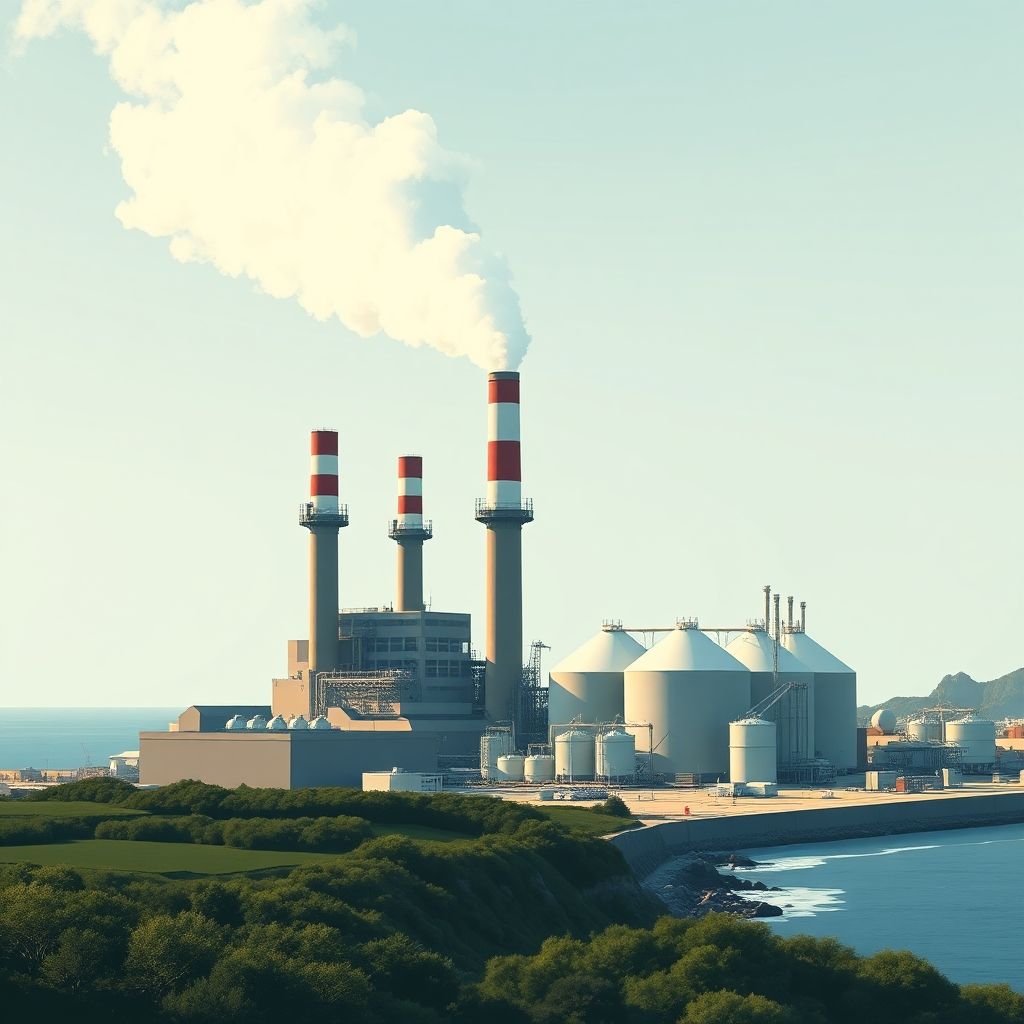
Plans for one of the world’s biggest industrial heat battery projects, a “hot brick” system from US company Rondo Energy at Rio Tinto’s Yarwun alumina refinery near Gladstone in Queensland, have won up to $75 million in funding from the Australian Renewable Energy Agency (Arena), RenewEconomy reports.
According to the company, the project will feature a capacity of 30 megawatts and 360 megawatt-hours. It would soak up cheap daytime renewable electricity, turn it into high-temperature heat and deliver it as steam. If it goes ahead, it will be Australia’s largest demonstration of industrial heat electrification, one of the first large-scale uses of thermal storage for industrial process heat anywhere, and a world first for the alumina industry. First, Rondo has to complete a front-end engineering design (FEED) study, which it hopes to finish in 2027.
Technology and Funding Structure
Rondo’s system relies on ceramic blocks, often referred to as hot bricks, to store thermal energy. These materials can reach temperatures up to 1,000°C, a level hot enough to generate high-pressure steam for industrial processes. Unlike electrochemical batteries that store electrical energy, this thermal approach captures heat directly. For heavy industry, such as alumina refining, this method aligns with existing infrastructure that already uses steam for processing, potentially simplifying integration with current plant operations.
The project’s financial backbone includes support from the Australian Renewable Energy Agency, or Arena. Total funding for the initiative reaches up to $75 million. This sum is structured in distinct phases to manage risk and support development. The first tranche, valued at $3.6 million, is allocated specifically for front-end engineering design. This early-stage work typically involves detailed planning, feasibility analysis, and technical specifications required before construction can begin.
Beyond the initial design phase, Arena has committed further capital to the project’s execution. This includes $38 million designated for the actual deployment of the heat battery. A conditional contingency fund of $33.3 million is available. The $38 million is available only once the study is complete and a final investment decision is made, while the $33.3 million of “conditional contingency support” is reserved for defined circumstances to manage specific risks such as cost overruns and electricity costs.
Strategic Rationale
The core objective of the Yarwun project is to replace fossil fuels with renewable energy sources for industrial heat. This shift addresses a specific challenge in heavy manufacturing, where high-temperature processes have historically relied on burning natural gas or coal. By substituting these conventional fuels with stored thermal energy, the facility seeks to lower carbon emissions associated with alumina production. This transition is particularly significant because industrial heat accounts for a substantial portion of global energy consumption, and decarbonizing this sector is often more complex than electrifying transportation or residential heating.
Kira Rundel notes that "Alumina is a traditionally hard to decarbonise process." This characterization reflects the technical difficulties involved in achieving the precise temperatures and consistent heat flow required for refining bauxite into alumina. Many industrial processes cannot simply swap gas boilers for electric heaters without major capital expenditure or operational disruption. Thermal storage systems offer a pathway around these barriers by decoupling heat generation from heat use. This allows facilities to capture renewable energy when it is available and store it for later use, ensuring a steady supply of high-grade heat even when wind or solar output fluctuates. For refinery operators, this reliability is essential to maintain production targets while meeting environmental goals.
Stakeholder Perspectives
- Arena CEO Darren Miller said: "This project will test whether thermal energy storage can provide a practical pathway."
- Armando Torres, Rio Tinto’s Pacific operations managing director, said: "This study will help us determine whether thermal energy storage can provide a... viable alternative."
Miller’s comments frame the Yarwun development as a critical validation exercise rather than a guaranteed deployment. In the industrial sector, moving from theoretical efficiency to operational reality often hinges on proving that new technologies can withstand the rigors of continuous, high-temperature processing. Miller said large industrial sites such as Yarwun provide the scale, infrastructure and operating conditions needed to properly evaluate emerging technologies, and that the evidence would help industry make future investment decisions well beyond a single refinery.
Torres’s perspective highlights the cautious, evidence-based approach Rio Tinto is taking toward integrating new energy systems. By emphasizing the need for a study to determine viability, the company underscores that adoption depends on rigorous assessment of operational fit. For heavy industry operators, the transition to renewable heat is not merely a matter of swapping fuel sources; it requires verifying that stored energy can reliably match the precise thermal demands of refining processes. Torres said generating the high-pressure steam Yarwun needs is the hard part of cutting refinery emissions, and that the study is meant to show whether thermal storage can be a technically and economically viable alternative to fossil fuels for part of that steam. Rio Tinto also operates the nearby Boyne smelter, which in March received a $2 billion federal and state lifeline to keep running until at least 2040, with Rio committing to underwrite $7.5 billion of new wind, solar and battery projects in the Gladstone region.
What to watch
The immediate milestone for the Yarwun initiative is the completion of the study, targeted for 2027. This timeline dictates when stakeholders will receive the detailed findings necessary to evaluate the technology’s performance against industrial requirements. Until this assessment concludes, the project remains in a validation phase rather than a construction or operational stage. Readers should look for official announcements regarding the study’s outcomes, which will clarify whether the thermal energy storage system meets the specific viability criteria outlined by the partners. The availability of further funding tranches is contingent on the project’s progress through these defined development stages. Rondo, backed by investors including Microsoft and Breakthrough Energy, already runs its technology at fuel and cement facilities in the US and Thailand; Yarwun would be its first alumina application. The company says its refractory bricks need no phase change or pressurised system and deliver round-trip efficiencies of around 97-98% because the power is converted straight to heat.
Source: RenewEconomy. This article is an original Luminity report based on the linked source.