
Waaree EPC Revenue Slides 42%; SWREL Consolidated Sales Drop Amid ALMM Shift
Waaree Renewable Technologies saw its solar EPC revenue fall sharply in Q2 FY27, while Sterling and Wilson Renewable Energy reported a decline in consolidated sales despite growth in domestic EPC. Industry leaders attribute the volatility to the implementation of ALMM List-II and the ongoing transition to higher-cost compliant modules.
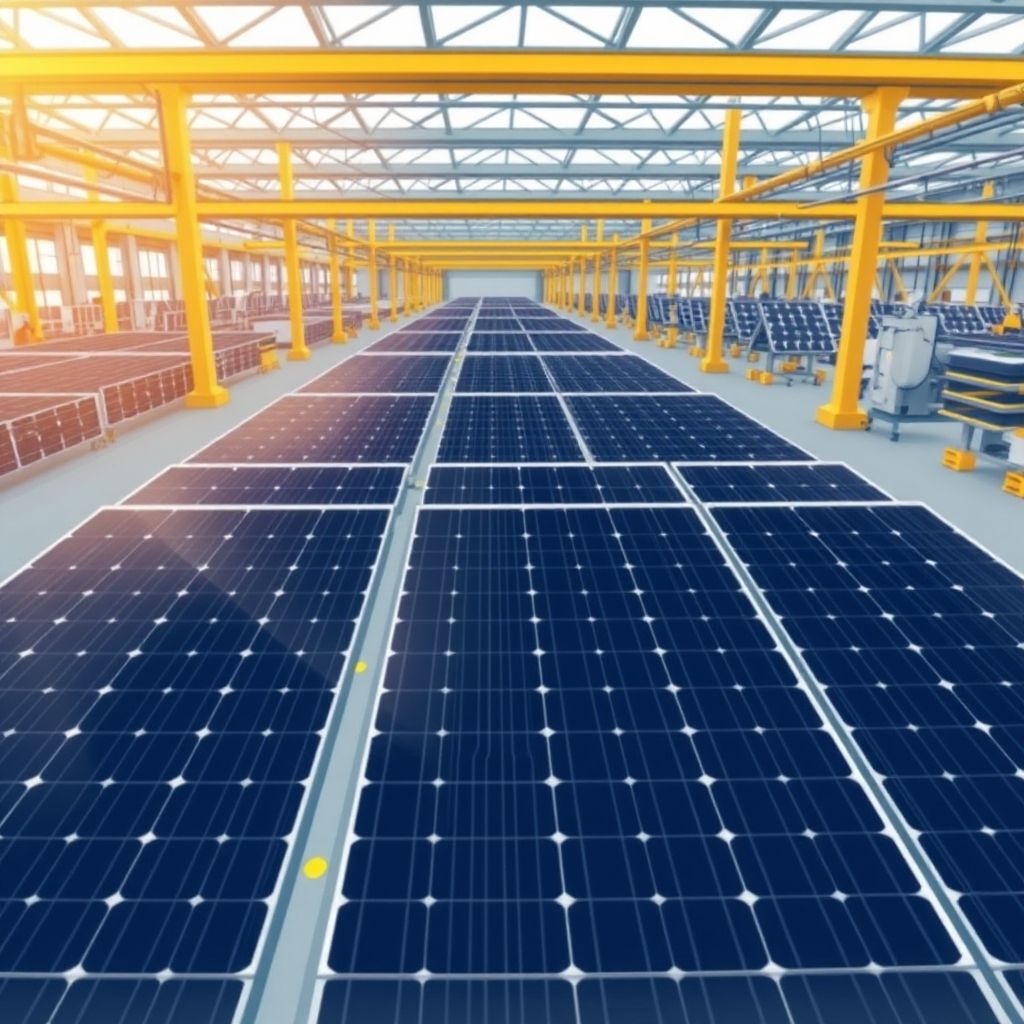
Waaree Renewable Technologies reported that its solar EPC revenue declined 42.2% to ₹444.98 crore in Q2 FY27. According to the company, this segment’s contraction occurred even as its overall consolidated revenue increased 36.5% to ₹1,057.84 crore during the same period.
Meanwhile, Sterling and Wilson Renewable Energy stated that its Q2 FY27 consolidated revenue decreased 11.2% to ₹1,527 crore. These results reflect the current financial performance of both firms as they navigate shifts in the renewable energy sector. The data highlights diverging trends in their respective business segments, with Waaree’s total earnings growing despite the sharp drop in its EPC division.
EPC Revenue Divergence
Although Waaree Renewable Technologies experienced a steep drop in solar EPC income, the segment’s profitability rose. The firm disclosed that EPC margins climbed to roughly 22.9% within the timeframe. This increase in margin indicates that the remaining project work carried greater relative profit potential, even as the overall volume of EPC services provided declined markedly. The trend points to a structural shift in the type of projects being completed, where a smaller number of potentially higher-value contracts supported the bottom line despite the top-line decrease.
Manmohan Sharma, CFO of Waaree Renewable Technologies, credited the broader growth pattern with operational consistency rather than sheer volume. He noted, "The growth during the quarter was driven by steady progress across our project portfolio, timely execution, and our expanding capabilities across the renewable energy value chain and T&D segment." These remarks emphasize that the company’s financial stability comes from diversifying into transmission and distribution in addition to its primary renewable operations. Regarding the EPC unit specifically, the margin gain suggests that execution efficiency and careful project selection were vital in preserving profitability. The firm’s capacity to sustain strong margins while dealing with a revenue downturn highlights the significance of operational discipline in handling project pipelines during times of sector-wide recalibration.
SWREL Domestic Growth and Global Decline
Sterling and Wilson Renewable Energy’s first half FY27 results reveal a stark contrast between its home and overseas operations. Domestic EPC revenue rose by approximately 13% to reach ₹2,768 crore, indicating robust demand for installation services within India. This growth suggests that local project pipelines remained active enough to offset broader market pressures, allowing the firm to expand its domestic footprint despite sector-wide adjustments.
In sharp contrast, the company’s international revenue collapsed, dropping to ₹165 crore from a previous high of ₹929 crore. This precipitous fall highlights a significant contraction in cross-border engagements. The disparity between the rising domestic figures and the shrinking global numbers underscores how Sterling and Wilson’s current financial performance is increasingly tethered to the Indian market. While the domestic segment delivered steady expansion, the international arm’s decline represents a major drag on overall consolidated earnings. The data points to a strategic or market-driven shift where overseas opportunities have become less accessible or profitable, leaving the domestic EPC business as the primary engine for revenue generation during this period.
Regulatory Drivers and Cost Impact
The financial pressures reflected in these quarterly results are partly attributable to evolving regulatory frameworks governing solar manufacturing in India. Key regulatory and market factors shaping the current cost structure include:
- The Advanced and Emerging Technologies (ALMM) List-II for solar cells was implemented on June 1, 2026.
- India currently possesses over 200 GW of solar module capacity and 35 GW of solar cell capacity.
- The use of higher-compliant modules could increase overall project costs by 15–17%.
- CRISIL Ratings estimates that domestic solar cell production meets only half of India’s projected 60–65 GW demand for FY27.
The implementation of ALMM List-II mandates the use of specific advanced technology cells, a shift that directly impacts the bill of materials for new installations. With domestic cell capacity significantly lagging behind the much larger module capacity, the supply chain faces inherent constraints. CRISIL Ratings’ assessment that local cell production covers just half of the anticipated FY27 demand suggests that developers may face supply bottlenecks or reliance on higher-priced compliant inputs.
For project developers, this regulatory shift translates into a direct upward pressure on capital expenditure. The estimated 15–17% increase in project costs due to compliant modules reduces the margin cushion for EPC contractors. When project economics tighten, firms often become more selective in their bidding strategies, potentially leading to the volume declines observed in EPC revenues. This cost escalation forces a recalibration of project feasibility, where only those with sufficient subsidy support or lower financing costs remain viable, thereby reshaping the competitive landscape for installation services.
What to watch
C.J. Thakur, Global CEO at Sterling and Wilson Renewable Energy, described the current environment as a "transition period," noting that all ongoing projects remain on track with no delays attributable to the company’s execution capabilities. This assurance contrasts with reported project delays linked to contracts with Coal India and NTPC, suggesting that external client-side factors, rather than internal EPC bottlenecks, are driving current timeline slippages. Separately, Waaree Renewable Technologies’ recent acquisition of a 55% stake in Associated Power Structures Pvt Ltd represents a concrete step toward diversifying its revenue streams. As the ALMM List-II mandate tightens supply chains, the ability of firms to maintain execution speed while absorbing higher module costs will determine if the current revenue contraction stabilizes. The divergence between Sterling and Wilson’s domestic growth and its global decline, alongside Waaree’s margin expansion, sets the stage for the next quarter’s performance, where the impact of the 15–17% cost increase on project viability will become more apparent.
Source: Saur Energy. This article is an original Luminity report based on the linked source.