
CATL Launches Dual-Battery Truck System, Targets 900 Swapping Stations by 2026
CATL has introduced a dual-battery architecture for electric heavy-duty trucks that extends usable capacity through a fixed backup unit. The company’s QIJI Energy division aims to build 900 battery-swapping stations by the end of 2026 to support this rollout.
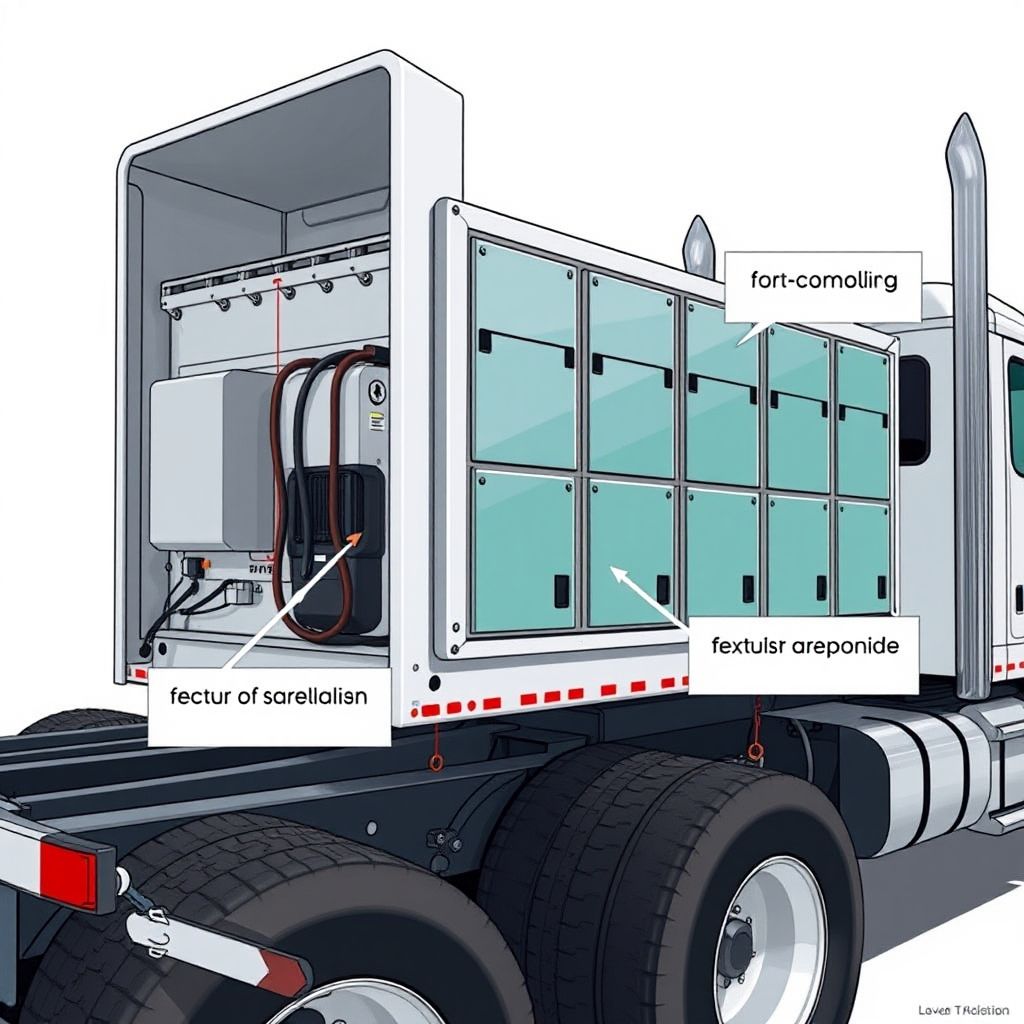
CATL has unveiled a new dual-battery configuration designed for electric heavy-duty trucks. The company says the system pairs a swappable main battery with a fixed backup unit. This architecture aims to address range anxiety and operational downtime in long-haul logistics.
According to the manufacturer, the backup battery activates automatically when the main battery’s charge level drops below 5%. This ensures continuous power delivery to the vehicle’s drivetrain during the transition to a full battery swap. The design seeks to minimize idle time at swapping stations by maintaining propulsion capability while the swappable pack is being replaced.
The launch aligns with CATL’s broader strategy to expand its battery swapping network. The company has targeted the construction of 900 swapping stations by 2026. This infrastructure rollout is intended to support the growing fleet of electric trucks and facilitate faster adoption in commercial sectors.
Technical Architecture
The technical core of CATL’s new heavy-duty truck solution relies on a specific range-extension module. This component utilizes a 77 kWh battery pack, a capacity level that provides substantial energy reserves for the vehicle’s auxiliary systems. Crucially, the pack supports 3C charging rates. In battery terminology, the "C" rating indicates how quickly a battery can safely accept current relative to its total capacity. A 3C specification means the system can theoretically replenish its full energy storage in approximately twenty minutes, assuming the charger and thermal management systems operate at peak efficiency. This rapid recharge capability is distinct from the slower, standard charging speeds often found in lighter-duty electric vehicles, reflecting the higher power demands and tighter operational windows of commercial logistics fleets.
Beyond the extension module, the dual-battery configuration fundamentally alters how the primary energy source is managed. By introducing a dedicated fixed backup unit, the system allows operators to push the main battery’s depth of discharge from its previous limit of 70% to over 95%. Depth of discharge measures the percentage of total capacity that can be safely depleted before the battery management system intervenes to protect cell longevity. Raising this threshold from 70% to over 95% effectively unlocks a significantly larger portion of the main pack’s stored energy for daily use. This expansion of usable capacity directly translates to increased driving range per charge cycle, reducing the frequency with which trucks must stop for energy replenishment during long-haul routes. The combination of deeper discharge and rapid extension charging creates a more resilient power architecture for heavy freight applications.
Swapping Infrastructure
- QIJI Energy, CATL’s dedicated battery-swapping business unit, manages the physical exchange process for the new truck system.
- The network utilizes 432 kWh and 513 kWh standardized battery blocks to ensure compatibility across the fleet.
- Each battery swap operation is completed in five minutes, achieving a 99.99% success rate.
The operational backbone of this system rests on QIJI Energy, the specific division within CATL responsible for managing the swapping infrastructure. By standardizing the energy storage units into 432 kWh and 513 kWh blocks, the network ensures that any compatible truck can accept a replacement pack without requiring model-specific hardware adjustments. This modularity is essential for scaling the service across a diverse fleet of heavy-duty vehicles, as it allows stations to stock a limited range of pack sizes that cover the majority of operational needs.
The speed and reliability of the exchange process are critical for commercial logistics, where vehicle downtime directly impacts delivery schedules. A five-minute swap window significantly reduces the time trucks spend at stations compared to traditional charging methods, which often require hours. The reported 99.99% success rate indicates a high level of mechanical and software reliability in the automated handling systems. For fleet operators, this near-perfect reliability minimizes the risk of failed swaps that could strand a vehicle, ensuring that the promised efficiency gains are realized in daily operations.
Commercial Model
The unveiling signaled a major milestone in monetizing the novel dual-battery system, securing contracts for 13,000 units. This scale underscores prompt interest from fleet managers aiming to weave the technology into their supply chains. Jesse Yang, QIJI Energy’s chief executive, remarked, "The combination of the dual-electric range extension battery and QIJI battery swapping offers the best solution for electrifying heavy-duty trucks." This viewpoint connects the hardware's technical prowess with the practical demands of heavy freight, where consistent performance and availability are critical.
Looking past the immediate sale of hardware, the enduring revenue strategy depends on a Battery-as-a-Service (BaaS) framework. Under this scheme, clients pay for net energy instead of the total output. This nuance carries financial weight, as it omits power used by auxiliary components and thermal regulation from the invoice. By billing only for energy sent to the drivetrain, the framework establishes a steadier cost profile for users. Per the company, this method can lower per-kWh battery rental expenses by as much as 20%. This savings helps counterbalance the elevated initial capital outlay for electric heavy-duty trucks, rendering the total cost of ownership more viable against diesel options on long-haul journeys.
What to watch
The immediate milestone for the network is the end of 2026, when CATL targets the completion of its 900-station rollout. This phase sets the foundation for the next expansion, with plans to reach 2,000 locations by 2027. Doubling the infrastructure within twelve months requires sustained capital investment and logistical coordination to install and calibrate each site. Operators will likely monitor the pace of this expansion closely, as the density of available swapping points directly influences the feasibility of long-haul electric routes.
Beyond the near-term buildout, the long-term goal of 10,000 stations nationwide represents a massive scaling challenge. Achieving this density involves navigating land acquisition, grid connection approvals, and supply chain constraints for hardware. The transition from a few hundred to thousands of sites will test the operational reliability of the QIJI Energy management system. Readers should look for updates on whether the 2027 target is met on schedule, as this will indicate the company’s ability to sustain its growth trajectory in the competitive heavy-duty electric vehicle market.
Source: Saur Energy. This article is an original Luminity report based on the linked source.