
New Mexico hits 50% renewable target six years ahead of schedule
New Mexico achieved its 2030 renewable energy milestone in 2024, driven by utility-scale expansion and federal incentives. The state’s primary utility, PNM, is now moving to replace coal assets with wind, solar, and battery storage to meet rising demand.
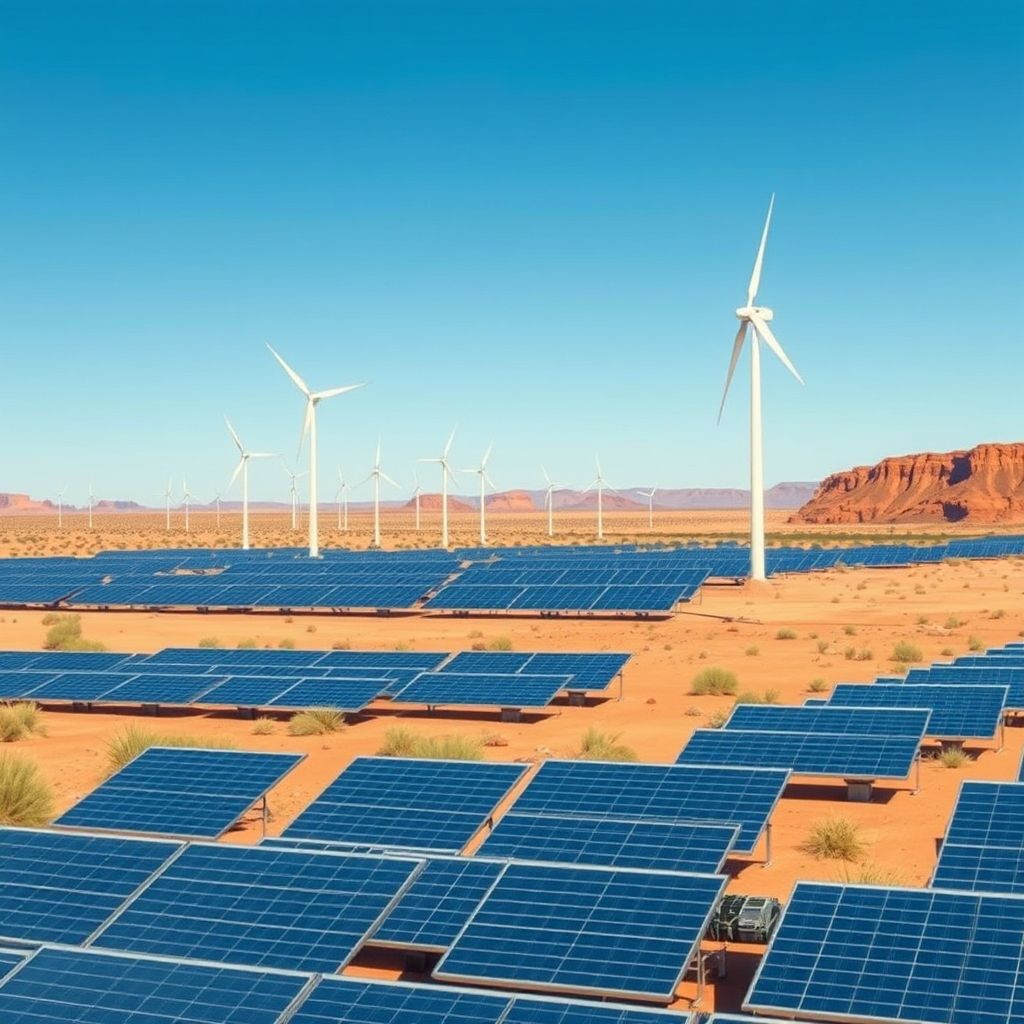
New Mexico has reached its 50% renewable energy target six years ahead of schedule, according to data reported by Canary Media. The state achieved this milestone in 2024, well before the deadline set by its 2019 Energy Transition Act. That legislation mandates 50% renewables by 2030, 80% by 2040, and 100% carbon-free electricity by 2045.
The early achievement underscores the state’s commitment to aggressive grid decarbonization. Rep. Nathan Small, who championed the original targets, reflected on the legislative intent behind the law. "We wanted to set very ambitious, important targets," Small said, indicating that the 2030 benchmark was designed to be challenging yet attainable. The 2024 result suggests that New Mexico’s renewable buildout has outpaced even the most optimistic projections embedded in the 2019 statute, positioning the state as a notable outlier in U.S. energy transition timelines.
Utility Progress and Capacity
Public Service Company of New Mexico (PNM) generated 80% carbon-free electricity in 2023, a figure that significantly exceeds the state’s 50% renewable mandate. This performance highlights how the dominant utility in the state has accelerated its grid transformation beyond legislative requirements. The data indicates that PNM’s generation mix has shifted heavily toward low-carbon sources, allowing the company to meet a substantial portion of local demand without relying on fossil fuels.
The scale of this transition is evident in PNM’s installed infrastructure. The utility currently operates 5 gigawatts of nameplate capacity. Nameplate capacity refers to the maximum rated output of a power plant or renewable facility under ideal conditions, serving as a standard metric for comparing the potential size of different energy assets. This 5 GW figure represents the total theoretical generation capability available to PNM, encompassing all its power plants and renewable installations.
Comparing this capacity to actual consumer needs reveals a significant surplus. PNM’s peak demand stands at 2.3 gigawatts, which is the highest level of electricity consumption the grid experiences at any single moment, typically during hot summer afternoons or cold winter mornings. The gap between the 5 GW of installed capacity and the 2.3 GW peak load suggests that the utility maintains a robust reserve margin. This extra capacity ensures grid stability and reliability, providing a buffer against equipment failures or sudden spikes in usage. For the state’s energy transition, this surplus capacity is critical, as it allows for the integration of intermittent renewable sources like wind and solar without compromising the consistent delivery of power to homes and businesses. The disparity between installed capacity and peak demand underscores the resilience of the current grid structure as it continues to absorb more renewable energy.
Future Expansion and Coal Exit
PNM has proposed a substantial expansion of its clean energy portfolio, pairing new renewable generation with storage to manage grid variability. The plan includes 800 MW of wind capacity, 240 MW of solar, and 610 MW of battery storage. Together with a smaller 40-MW gas plant, these assets total 1.7 GW of new infrastructure. The inclusion of significant battery capacity is notable because solar and wind output fluctuates with weather conditions; batteries store excess energy during peak production hours and release it when generation drops, helping maintain grid stability without relying on fossil fuel peaker plants.
This expansion aligns with the utility’s scheduled retirement of coal assets. PNM plans to exit its 200-MW stake in the Four Corners coal plant by July 2031. The plant, operated by Arizona Public Service, has long been a source of regional power, but its gradual phase-out reflects the broader shift away from thermal generation. By coupling the addition of 1.7 GW of new clean and flexible capacity with the removal of coal, PNM aims to replace firm thermal output with a mix of renewables and storage. This strategy addresses the intermittency of wind and solar directly, rather than retaining gas or coal plants solely for balancing purposes.
The following table summarizes the proposed new assets and the coal capacity slated for retirement:
| Asset Type | Capacity (MW) | Status |
|---|---|---|
| New Wind | 800 | Proposed |
| New Solar | 240 | Proposed |
| Battery Storage | 610 | Proposed |
| Gas Plant | 40 | Proposed |
| Four Corners Stake | 200 | Exit planned by July 2031 |
The 610 MW of battery storage is particularly significant given the scale of the new solar and wind additions. Storage allows the grid to shift energy in time, ensuring that power generated during sunny midday hours or windy evenings can serve demand during other periods. This mechanism reduces the need for quick-starting fossil fuel plants, which are traditionally used to balance supply and demand. As PNM moves toward its coal exit date, the proposed storage capacity will likely play a central role in maintaining reliability while the generation mix shifts entirely toward low-carbon sources.
Institutional Strength and Financial Context
- New Mexico energy consumption is expected to grow 40% by 2032.
- Dan West of the Clean Air Task Force noted that the state has built the institutions and infrastructure necessary for transition.
- Blackstone is identified as a potential acquirer of PNM.
- Laurie Williams, PNM senior vice president, stated that "We still have thermal resources in the fleet..."
- Federal tax credits can reduce project costs by 30% or more.
The state’s energy trajectory is not static; demand is projected to rise by 40% by 2032. This growth necessitates robust institutional frameworks to manage grid complexity. Dan West of the Clean Air Task Force emphasized that New Mexico has successfully built the institutions and infrastructure required to support this shift. These structural elements provide the regulatory and operational backbone needed to integrate expanding renewable resources while maintaining reliability for an increasing number of consumers.
Financial mechanisms also play a pivotal role in shaping the utility’s future. Federal tax credits can reduce project costs by 30% or more, a significant incentive that lowers the capital barrier for new clean energy installations. This cost reduction improves the economic viability of large-scale projects, making them more attractive to investors. Concurrently, Blackstone is listed as a potential acquirer of PNM, signaling potential changes in ownership and strategic direction. While Laurie Williams, PNM senior vice president, acknowledged that the company still has thermal resources in the fleet, the combination of federal incentives and institutional readiness positions the utility to navigate its transition. The interplay between financial tools and existing infrastructure will determine how effectively PNM meets rising demand while decarbonizing its generation mix.
What to watch
The immediate horizon focuses on a specific regulatory milestone: the commission’s decision regarding the proposed 40-MW gas plant. This ruling is expected in the second quarter of 2027. While the broader expansion plan includes significant wind, solar, and battery storage, the gas plant serves a distinct functional role within the proposed portfolio. Its approval or rejection will shape the near-term flexibility of the grid before the larger renewable assets come online.
For readers tracking the transition, this decision acts as a concrete checkpoint. It is not merely a procedural step but a determination of how much thermal capacity remains in the mix during the critical phase of integration. The timing matters because it precedes the full realization of the 1.7 GW expansion package. Observing this outcome provides clarity on the utility’s approach to balancing intermittent renewable output with firm generation resources.
The regulatory process will define the operational parameters for the next phase of New Mexico’s energy evolution. As the state moves toward its 2032 demand projections, the specifics of this gas plant approval will influence how the grid manages variability. Stakeholders should note that this decision stands separate from the long-term coal exit schedule, offering a distinct window into the utility’s short-term reliability strategy. The commission’s ruling will effectively set the stage for how the proposed storage and renewable assets interact with existing thermal resources in the coming years.
Source: Canary Media. This article is an original Luminity report based on the linked source.