
Victoria approves 1.5GW Warracknabeal wind farm, bypassing Coalition buffer rules
The Victorian government has granted state approval to the Warracknabeal Energy Park, a 1.5GW wind and storage project in the Wimmera region. The development proceeds despite Coalition policies that would have blocked it via a 2km buffer zone.
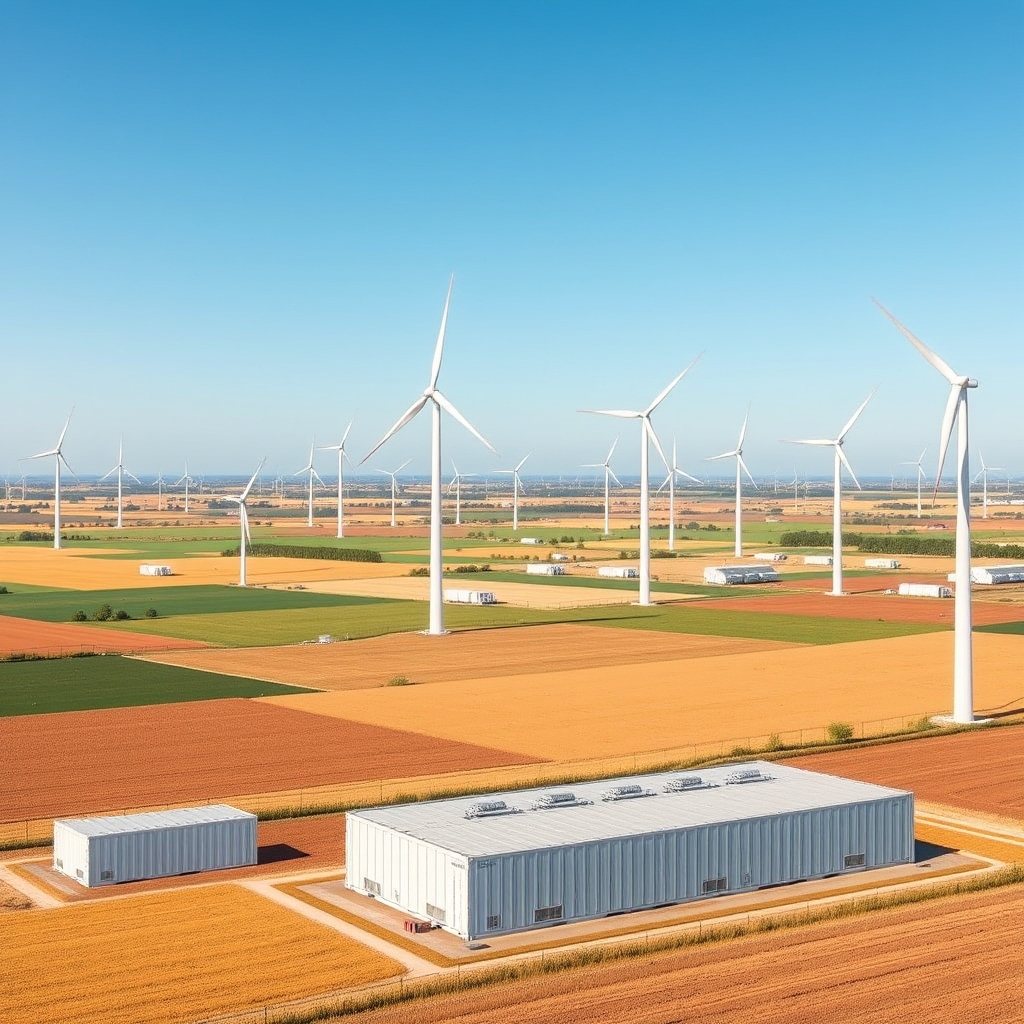
The Victorian government has officially approved the Warracknabeal Energy Park, marking a significant milestone for the state’s renewable energy expansion. The project, developed by WestWind Energy, represents one of the largest wind developments in the country. With a total capacity exceeding 1.5 gigawatts, the facility is designed to play a pivotal role in Victoria’s energy grid.
According to RenewEconomy, this approval stands in contrast to previous Coalition-era policies that would have restricted such large-scale developments. The project’s scale underscores the current government’s commitment to accelerating the transition to clean energy sources. WestWind Energy has positioned the park as a key contributor to the state’s long-term energy security and sustainability goals.
Project Scale and Location
The Warracknabeal Energy Park occupies a vast 26,000 hectares of agricultural land in Victoria’s Wimmera region. This sprawling footprint is essential for hosting 219 wind turbines, a number that reflects the extensive spatial requirements of modern utility-scale wind generation. Large wind farms often require significant land areas to accommodate turbine spacing, access roads, and substation infrastructure, ensuring that rotor wakes from one turbine do not reduce the efficiency of neighboring units. The site’s specific placement, situated 5 km west of the town of Warracknabeal, positions the facility within a rural landscape that is increasingly common for major renewable energy developments in the state.
Using agricultural land for wind projects allows for dual-use of the terrain, as crops can often continue to be grown between the turbine foundations. This approach helps maintain local land value and supports the agricultural community while generating electricity. The proximity to the town is notable, as such large-scale infrastructure often requires careful planning to manage visual and noise impacts on nearby residents. The sheer volume of turbines emphasizes the industrial nature of the project, transforming a previously agricultural expanse into a major power generation hub. For the grid, locating such a large capacity in the Wimmera region connects it to existing transmission corridors, facilitating the movement of clean energy to demand centers.
Integrated Storage Capacity
- Two battery energy storage systems are included
- Each system has a capacity between 300 and 600 megawatt-hours
The Warracknabeal Energy Park integrates two distinct battery energy storage systems, each with a capacity ranging from 300 to 600 megawatt-hours. This configuration allows the facility to store a substantial amount of electricity generated by the wind turbines for later release. The specific capacity range indicates a flexible design that can be adjusted based on grid needs or technological advancements during the construction phase.
Battery storage is essential for managing the variability inherent in wind power generation. By capturing excess energy when wind speeds are high and releasing it when demand peaks or wind drops, the systems help stabilize the local grid. This capability reduces the need for fossil fuel peaker plants, which are traditionally used to balance supply and demand. For the Victorian grid, integrating storage directly with a large-scale wind farm enhances reliability and ensures that clean energy is available when it is most needed, supporting the state’s broader decarbonization targets.
Political and Economic Context
The approval of the Warracknabeal Energy Park highlights a sharp divergence in energy policy between successive Victorian governments. The previous Coalition administration proposed a two-kilometer buffer zone for renewable energy projects, a regulatory framework that would have significantly restricted the siting of large-scale wind farms near residential areas and other sensitive zones. Such buffer rules are often designed to mitigate community concerns over visual impact and noise, but they also effectively reduce the available land for development, slowing project pipelines and increasing costs for developers who must search for compliant sites. By bypassing these restrictions, the current government has signaled a clear shift toward prioritizing rapid capacity addition over strict proximity controls, a move that accelerates the physical rollout of clean energy infrastructure across the state.
Labor’s approach is framed around the economic benefits of renewable investment. The government asserts that Victoria has the cheapest power in Australia because Labor has invested in renewables. This claim links policy direction directly to consumer outcomes, suggesting that high volumes of wind and solar generation drive down wholesale electricity prices. For investors and consumers, this narrative positions renewable energy not just as an environmental imperative but as a cost-saving mechanism. By securing approvals for major projects like this one, the administration aims to lock in long-term price stability and reduce reliance on volatile gas markets.
The project itself is viewed as a strategic asset in this broader economic strategy. Officials note that Warracknabeal Energy Park is well positioned to contribute meaningfully to Victoria’s renewable energy targets. This assessment underscores the project’s role in meeting state-level decarbonization goals while simultaneously supporting local economic activity through construction and operations. The integration of such a large facility into the grid reflects a deliberate policy choice to scale up clean energy capacity quickly, aligning with the stated objective of maintaining competitive electricity prices for Victorian households and businesses.
What to watch
With state environmental approval secured in May, the immediate focus shifts to the Commonwealth. The project still requires final clearance under the federal EPBC Act, a regulatory hurdle that often introduces uncertainty into construction timelines. Until that federal sign-off is confirmed, developers and investors remain in a holding pattern, as the approval process can be subject to political or technical delays that ripple through supply chains.
Once cleared, the scale of the facility’s impact on the Victorian grid will be the primary metric for observers. The plant is estimated to power 1.2 million homes, a figure that translates to roughly 12.5 per cent of the state’s total electricity demand. This volume is substantial enough to alter wholesale market dynamics, particularly during peak demand periods. Readers should monitor how this new capacity interacts with existing grid infrastructure, as integrating such a large share of generation requires careful management of transmission constraints and frequency stability. The transition from state to federal approval marks the final administrative step before physical construction milestones begin, setting the stage for the project’s eventual operational debut.
Source: RenewEconomy. This article is an original Luminity report based on the linked source.