
Industrial heat pumps quietly replace gas in Australian commercial buildings
Australian businesses are rapidly shifting from gas to electric heat pumps, a transition described by industry leaders as largely unreported. With new buildings going fully electric and retrofits accelerating, the sector aims to leverage efficiency gains to offset rising energy costs.
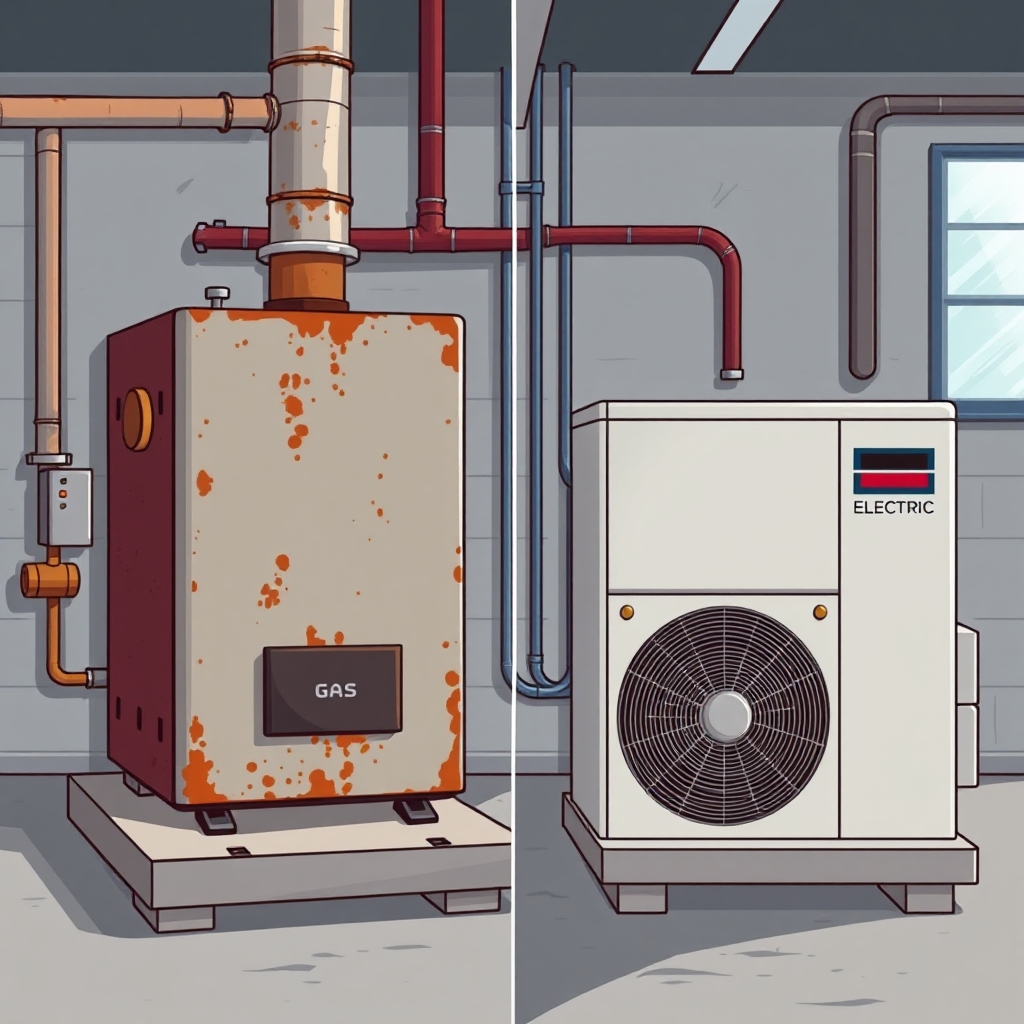
The industrial sector is undergoing a quiet but significant transition, with decades-old gas boilers being replaced by efficient electric heat pumps. Jarrod Leak, CEO of the Australian Alliance for Energy Productivity, describes this as a major shift that has largely gone unreported.
This change is critical because industrial and commercial buildings consume over half of Australia's total energy. As companies seek to reduce reliance on volatile gas prices, the adoption of electric heating technologies is gaining traction across the country.
The Silent Shift
The transition from fossil fuels to electrification in the built environment is accelerating, though it often happens without fanfare. A striking indicator of this change is that eighty per cent of new large buildings in Australia are now fully electric. This statistic signals a fundamental rethinking of how commercial structures are designed and operated. Rather than relying on gas pipelines for heating and cooking, developers are increasingly integrating electric systems from the ground up. For investors and building owners, this shift reduces exposure to volatile fuel markets and aligns new assets with long-term decarbonisation goals. It also simplifies infrastructure requirements, as buildings no longer need complex gas safety certifications or storage solutions.
While office towers and residential complexes dominate headlines, swimming centres are currently driving industrial heat pump adoption in a more niche but impactful way. These facilities require massive, consistent thermal loads to maintain water temperatures, making them ideal candidates for high-capacity heat pump technology. Unlike intermittent office heating, a pool’s demand is steady, allowing heat pumps to operate at peak efficiency for extended periods. This consistent load profile demonstrates the reliability of electric heating in demanding industrial contexts. As these facilities prove the technology’s viability, they provide a practical template for other sectors. The quiet proliferation of these systems suggests that electrification is moving beyond pilot projects into mainstream commercial infrastructure, reshaping how Australia’s most energy-intensive buildings manage their thermal needs.
Retrofit Momentum
The momentum behind industrial electrification is no longer confined to theoretical projections or isolated pilot programs. Concrete data now illustrates the scale of this transformation across the Australian commercial sector.
- 232 building retrofits are expected by the end of next year
- These projects are specifically defined as those involving systems larger than 100 kilowatts
- Victoria leads with 59 retrofits, closely followed by New South Wales with 58
These figures represent a substantial volume of high-capacity thermal load shifting from gas to electric heat pumps. By focusing on installations exceeding 100 kilowatts, the data isolates significant commercial and industrial applications rather than small-scale domestic upgrades. This distinction matters because large-capacity systems require robust engineering, substantial capital investment, and careful integration with existing building infrastructure. For facility managers and investors, this scale indicates that the technology has moved past the experimental phase into a standard procurement category.
The geographic concentration in Victoria and New South Wales reflects the density of major commercial hubs and manufacturing bases in these states. Typically, such regional clustering occurs where energy-intensive industries, such as food processing, data centers, or healthcare facilities, cluster. These sectors face immediate pressure to manage operational costs and meet sustainability targets. The proximity of these two states in retrofit counts suggests that supply chains, specialized installation contractors, and policy frameworks are maturing simultaneously in the nation’s most populous regions. This creates a feedback loop where increased project volume lowers unit costs and improves technical expertise, making subsequent installations more efficient and reliable.
Economics and Incentives
The financial case for switching to electric heat pumps is becoming increasingly compelling, driven by a combination of direct efficiency gains and looming cost pressures. Industrial heat pumps are up to five times more efficient than gas, meaning they convert significantly more of the electricity they consume into usable heat. For commercial operators, this efficiency gap translates directly into lower operating costs, although the federal government's new domestic gas reservation legislation, which it says will bring down gas prices for industry, could slow the switch. This technological advantage is further reinforced by government support. The Federal Community Energy Upgrades Fund provides incentives that help offset the initial capital costs of installation. Such funding mechanisms are critical for bridging the gap between the higher upfront cost of electric systems and their long-term savings, making the investment viable for a broader range of businesses, from mid-sized manufacturers to large commercial complexes.
The economic urgency is sharpened by specific regional risks. In Victoria, which is tightening who can use gas under its Gas Substitution Roadmap, big commercial gas users could face network price rises of as much as $111,000 a year, according to modelling by pipeline owner Australian Gas Infrastructure Group. This potential penalty acts as a powerful deterrent against remaining on the gas grid, effectively pricing out older fossil fuel infrastructure. For developers and facility managers, this creates a clear binary: adapt to electric systems now to avoid escalating fixed costs, or continue paying for an increasingly expensive network connection. Typically, when network charges rise to such levels, the payback period for electrification projects shortens dramatically. This dynamic encourages rapid decision-making, as the cost of inaction becomes more expensive than the cost of transition. The combination of superior efficiency, federal incentives, and punitive gas network fees creates a robust economic environment where electrification is not just an environmental choice, but a logical financial strategy for protecting margins and ensuring long-term operational stability.
What to watch
The next phase of industrial heat pump adoption hinges on whether current successes can scale beyond isolated facilities into broader sector-wide rollouts. A significant indicator is aged care: A2EP is pitching a $100 million co-investment scheme to convert between 100 and 200 aged care homes from gas. Aged-care facilities, shopping centres, hospitals and hotels are the sectors the report says have yet to start considering the switch. This initiative tests the technology’s viability in a sector characterized by strict safety standards and continuous occupancy, offering a real-world stress test for reliability and maintenance protocols. If successful, it could establish a repeatable model for other sensitive commercial environments.
Simultaneously, investors are closely monitoring the long-term financial performance of early adopters. Hardwicks Meat Works, which brought its retrofitted heat pump system online in January 2023, expects to achieve full payback before 2028. This timeline serves as a critical benchmark for the sector. Typically, commercial projects require clear, verifiable return-on-investment data to attract further capital. If Hardwicks meets this target, it provides concrete evidence that the operating savings justify the upfront capital expenditure, even in energy-intensive processing environments. Watch for independent audits confirming these savings, as they will likely influence procurement decisions across the food processing industry.
Finally, the interplay between network charges and equipment lifespan remains an open question. As more buildings leave the gas grid, the economic case relies heavily on sustained efficiency gains. Readers should look for updates on how these systems perform under varying load conditions over time, ensuring that the initial efficiency promises hold up in daily operations.
Source: RenewEconomy. This article is an original Luminity report based on the linked source.