
Illinois School District Installs 843 kW Rooftop Solar System
Allied Facility Partners has completed a solar installation across three buildings in the Cary Community Consolidated School District. The system offsets more than half of the facilities' electricity usage and includes a public dashboard for educational purposes.
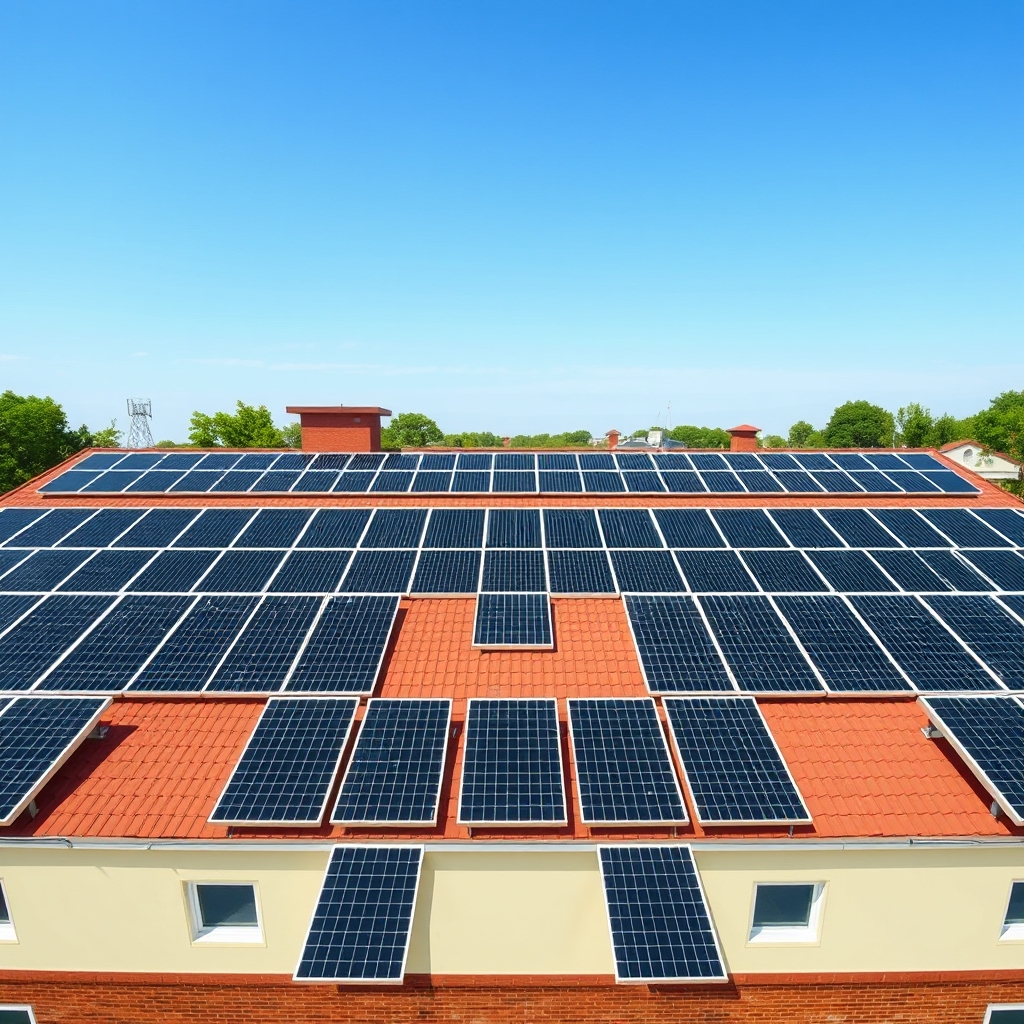
Allied Facility Partners has completed a new rooftop solar installation for Cary Community Consolidated School District 26 in Illinois. The project features a combined system capacity of 843 kW, marking the district’s latest addition to its on-site renewable energy infrastructure.
According to Solar Power World, the project is now fully operational. The installation aligns with broader trends in educational institutions seeking to reduce energy costs and carbon footprints through distributed generation. While specific performance data for this particular site has not been released, such systems typically contribute to grid stability and local energy resilience.
The completion of this 843 kW array underscores the growing viability of commercial-scale solar in mid-sized school districts. As utility rates fluctuate, many administrators are turning to fixed-cost energy sources to stabilize long-term budgets. This project serves as a practical example of how public sector entities are integrating clean technology into existing campus infrastructure without major structural renovations.
System Specifications
The physical footprint of this installation comprises 1,429 solar modules distributed across the roofs of three district facilities. These panels feed into seven inverters, which convert the direct current produced by the photovoltaic cells into alternating current usable by the school buildings. This configuration allows the system to deliver an estimated annual generation of 990,654 kWh. By doing so, the array offsets 55% of the total electricity consumption at those specific sites, significantly reducing reliance on the local utility grid.
| Component | Quantity/Value |
|---|---|
| Solar Modules | 1,429 |
| Inverters | 7 |
| Annual Generation | 990,654 kWh |
| Consumption Offset | 55% |
These figures illustrate how distributed generation scales to meet institutional demand. For developers and facility managers, the ratio of module count to inverter capacity is a critical design parameter. Inverters typically have a maximum input limit, so the number of panels must be carefully balanced to ensure the system operates efficiently without exceeding inverter thresholds. A 55% offset is a substantial coverage level, meaning the school only purchases 45% of its power from the utility. This level of self-sufficiency usually requires precise engineering to match production peaks with consumption patterns. While rooftop space is finite, maximizing yield through proper module orientation and inverter sizing ensures that every square foot of available roof area contributes effectively to the district’s energy goals. Such installations turn passive building envelopes into active power plants, enhancing the overall efficiency of the campus energy system.
Financial Structure
The funding mechanism behind this installation is a Guaranteed Energy Savings Contract (GESC). This financial model allows public entities, such as school districts, to finance energy efficiency and renewable energy upgrades without using immediate capital funds. Instead of paying a lump sum upfront, the district commits to a series of periodic payments over the life of the contract. These payments are designed to be no greater than the projected energy savings generated by the new system. In practice, this means the cost of the solar array is effectively offset by the reduction in utility bills, creating a neutral or positive cash flow impact from day one.
For educational institutions, this structure is particularly attractive because it aligns financial obligations with operational benefits. School budgets are often fixed and tightly monitored, making large capital expenditures difficult to justify. A GESC transforms an infrastructure project into an operational expense that pays for itself through reduced utility costs. The contractor or energy service company typically assumes the risk associated with the performance of the system, guaranteeing that the savings will materialize as projected. If the system underperforms, the financial provider is usually responsible for the shortfall.
This approach leverages the fact that energy savings are predictable and recurring. By locking in these savings, the district can budget more confidently against volatile utility rates. The contract term usually spans several years, matching the useful life of the equipment. Upon completion of the term, the district may assume ownership of the assets or continue the partnership, depending on the specific terms. This model democratizes access to clean energy technology, allowing smaller public bodies to participate in the transition to renewable power without straining their immediate financial resources. It shifts the focus from initial cost to long-term value, ensuring that the investment remains sustainable for the community it serves.
Educational Value
The installation extends beyond mere electricity generation, serving as a tangible teaching tool for students across the district. Key features and statements regarding this aspect include:
- The system features a public-facing real-time energy dashboard.
- David Martin described the project as a "significant long-term investment."
- Martin also noted, "We are also excited about the educational opportunity" provided by the installation.
Real-time dashboards transform abstract concepts of energy consumption into visible, immediate data. For students, seeing exactly how much power the rooftop array is producing at any given moment connects classroom lessons on physics, environmental science, and mathematics to their daily school experience. This transparency fosters a deeper understanding of how renewable energy systems interact with building loads and the broader grid. By observing fluctuations in output due to weather or time of day, learners gain practical insights into the variability inherent in solar power generation.
For administrators and faculty, these digital tools support curriculum integration without requiring additional hardware costs. The phrase "significant long-term investment" underscores that the value extends past financial savings to include human capital development. Schools increasingly view infrastructure upgrades as dual-purpose assets that reduce operational expenses while enhancing educational outcomes. By making energy production visible, the district creates an ongoing, hands-on learning environment that prepares students to understand and engage with the evolving energy sector. This approach turns the school building itself into a dynamic classroom, reinforcing the practical applications of clean energy technologies in a real-world setting.
What to watch
With the physical installation complete, attention now shifts to operational performance and long-term financial alignment. Readers should monitor how closely the system’s actual output matches the projections that underpin the guaranteed savings contract. Early data from the real-time dashboard will reveal whether the array consistently meets its design targets under varying weather conditions. Any persistent deviation between predicted and realized generation could trigger performance reviews, as such contracts typically include mechanisms to address shortfalls.
Beyond immediate utility bill reductions, the district’s experience with this financial model will serve as a benchmark for other public institutions. Success here demonstrates that energy savings can reliably offset operational costs, potentially encouraging neighboring districts to explore similar financing structures. The educational impact also warrants observation. How effectively faculty integrate the live data into curricula will determine if the project truly transforms the school building into a dynamic learning environment.
Finally, the end-of-term transition remains a key milestone. When the contract concludes, the district will need to decide whether to assume full ownership of the assets or renegotiate the partnership. This decision will influence future maintenance responsibilities and long-term cost planning. For investors and developers, the project’s steady operation validates the viability of distributed generation in institutional settings, offering a concrete example of how renewable infrastructure can align with fixed public budgets.
Source: Solar Power World. This article is an original Luminity report based on the linked source.