
Uruguay Sets 99 MW Solar Tender with 20-Year PPAs
UTE has launched a tender for three 33 MW solar projects in Uruguay, requiring 20-year power purchase agreements. The bid documents are scheduled for publication in late 2026, with a focus on local workforce integration and specific grid connection constraints.
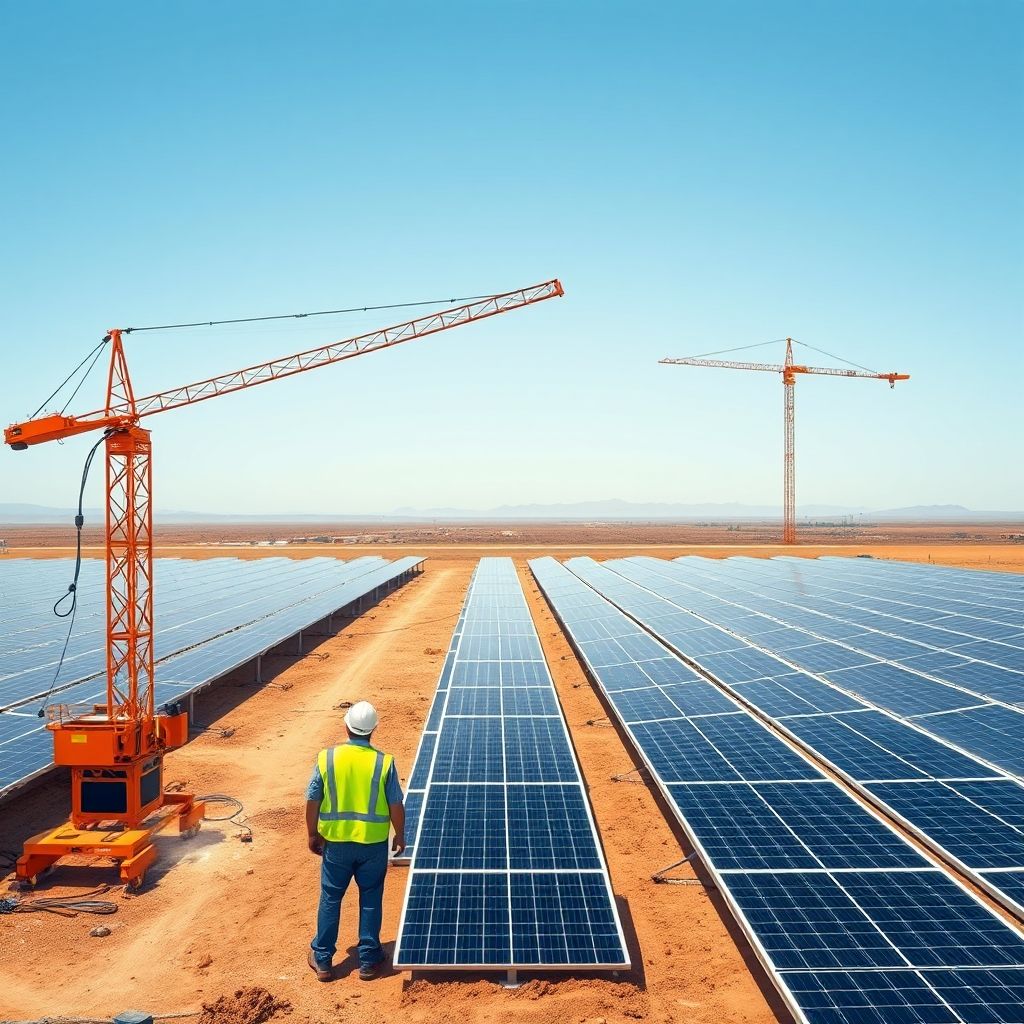
Uruguay’s state utility UTE has announced plans for a new solar tender, designated P104220. According to reports by pv magazine, the initiative involves the development of three distinct solar projects, each with a capacity of 33 MW. This brings the total planned capacity for the tender to 99 MW.
The tender structure includes power purchase agreements (PPAs) with a duration of 20 years for each project. These long-term contracts are designed to secure a consistent supply of renewable energy over the coming decades. By splitting the total capacity into three equal segments, UTE aims to facilitate broader participation in the bidding process while maintaining a standardized contractual framework for all selected developers.
Tender Timeline and Logistics
The administrative schedule for this procurement begins with the release of tender documents on October 28, 2026. This date marks the formal start of the competitive process, providing bidders with the detailed technical specifications and contractual terms required to prepare their proposals. Following a review period of several months, the bid opening is set for the final week of January 2027. This gap between document publication and bid evaluation allows potential developers to conduct necessary feasibility studies, secure financing commitments, and finalize project designs before submitting their offers.
Once bids are evaluated, successful developers will face a strict construction deadline. The tender requires that all three plants be installed within two years of the contract award. This timeframe is standard for utility-scale solar projects, as it accounts for permitting, equipment procurement, and on-site construction activities. Adhering to this schedule is critical for developers, as delays can incur financial penalties under the power purchase agreements. The two-year window ensures that the renewable energy capacity comes online in a timely manner, aligning with the grid’s need for consistent new supply. By defining these milestones clearly, the tender structure provides a predictable roadmap for investors and contractors involved in the project’s execution.
Financial Structure and Grid Rules
The financial framework for the P104220 tender introduces a distinct depreciation mechanism that diverges from standard flat-rate renewable energy contracts. Instead of a uniform payment stream, the remuneration structure is tiered: developers receive 100% of their bid price for the first 15 years of the agreement. For the final five years of the 20-year term, this payment drops to 40% of the original bid price. All prices are denominated in dollars per megawatt-hour, which helps insulate bidders from local currency fluctuations often seen in emerging market energy sectors. This back-loaded reduction allows the utility to lower its long-term procurement costs while still offering developers a robust revenue stream during the initial period when debt servicing is most significant.
Grid integration rules impose strict geographic constraints on project siting. Connection points must be located within 5 km of selected grid nodes. This proximity requirement minimizes the length and cost of transmission lines needed to deliver power, reducing technical risks associated with long-distance voltage drops. The tender explicitly prohibits the inclusion of battery energy storage systems. This restriction forces developers to optimize panel efficiency and layout without relying on storage to smooth output, a common requirement in markets seeking to maximize daytime solar generation without the added capital expenditure of batteries.
| Remuneration Period | Payment Level |
|---|---|
| First 15 years | 100% of bid price |
| Final 5 years | 40% of bid price |
This split creates a clear incentive structure for bidders to balance upfront competitiveness with long-term cash flow stability. The 40% rate in the final phase reflects a common utility strategy to reduce exposure as project debts are retired, ensuring that the state’s long-term energy costs remain manageable.
Labor Requirements and Strategic Context
- Bid maintenance deposit: $300,000 per project
- Minimum 80% of workforce must be national
- At least 50% of the national workforce must be women, over 50, or under 24
- Tender supports Uruguay's 500 MW solar capacity expansion plan
The tender imposes specific financial and social obligations on bidders to ensure local economic benefits and financial seriousness. Each developer must post a $300,000 bid maintenance deposit per project, a standard practice that signals commitment and covers administrative costs if a bidder withdraws after the award. This upfront capital requirement filters out less serious participants, ensuring that only firms with adequate liquidity proceed to the construction phase.
Beyond financial safeguards, the tender enforces strict local hiring mandates. At least 80% of the total workforce must be national, directly injecting wages into the domestic economy during the construction period. Half of this national workforce must consist of women, individuals over 50, or those under 24. These demographic targets aim to broaden employment access and address specific labor market gaps, ensuring that the social benefits of renewable energy expansion are distributed across diverse segments of the population. Such provisions are increasingly common in public procurement to align infrastructure projects with broader social policy goals.
Strategically, this procurement is a component of a larger national effort. The tender supports Uruguay's plan to expand its solar capacity by 500 MW. By integrating these labor and financial rules into the bidding criteria, the state utility links renewable energy deployment with domestic job creation and social inclusion. This approach ensures that the transition to cleaner power generates tangible local benefits, reinforcing public support for the broader capacity expansion goals.
What to watch
The next phase of this procurement process centers on the geographic distribution of the three awarded plants. Bids will determine which specific sites within Tacuarembó, Florida, and Uruguay's eastern region receive the construction contracts. These locations are not arbitrary; they reflect the grid constraints outlined in the tender, specifically the requirement for connection points to sit within five kilometers of designated grid nodes. Investors and developers should monitor how the final award allocates capacity across these three distinct zones, as local infrastructure readiness and transmission proximity will heavily influence project timelines and execution risks.
Beyond the immediate award, the integration of these new solar assets into the existing grid remains a key technical consideration. Since the tender explicitly prohibits battery storage, the eastern region's grid operators will need to manage variable daytime generation without on-site buffering. Watching how the national utility handles grid stability in these specific areas will provide insight into Uruguay's broader strategy for managing high-penetration solar without relying on ancillary storage costs. The successful deployment of these projects in Tacuarembó, Florida, and the east will serve as a practical test of the country's ability to scale solar capacity while adhering to strict local labor and financial mandates.
Source: pv magazine. This article is an original Luminity report based on the linked source.