
Floating wind industry pursues global collaboration despite U.S. policy headwinds
The floating wind sector is prioritizing international technical cooperation as U.S. developers face stalled negotiations and high heating fuel costs in Maine. Recent activities include testing shock-absorbing mooring systems and sharing steel platform designs to advance the technology toward a 15-gigawatt national target.
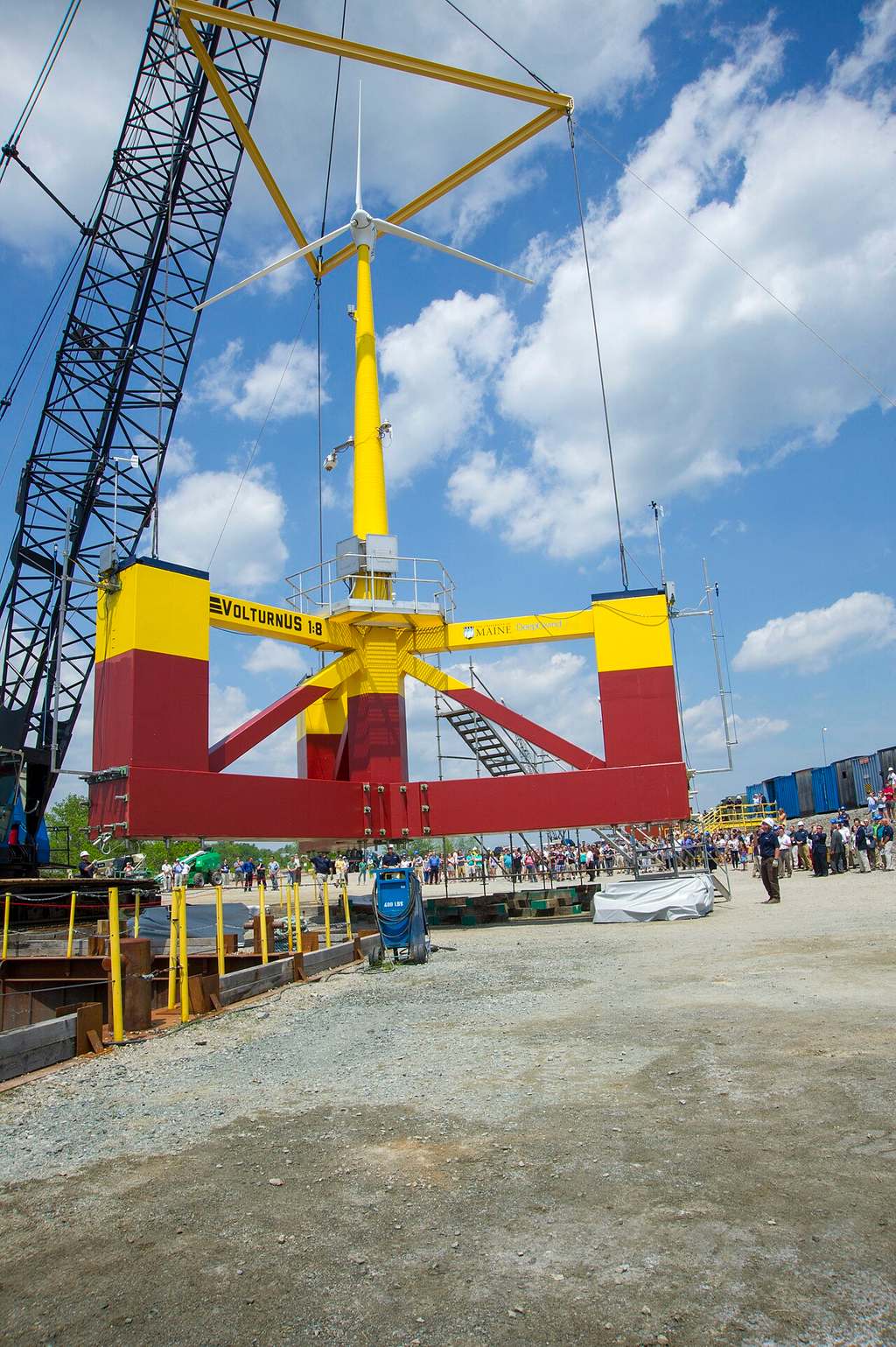
Floating wind turbines, which operate from buoyant platforms moored to the seabed, continue to pursue global collaboration even as U.S. policy shifts create headwinds. The United States has set a national goal of 15 gigawatts of floating wind capacity by 2035, aiming to expand access to deeper waters where traditional fixed-bottom structures are impractical.
However, recent developments highlight the fragility of domestic momentum. According to reports by Canary Media, a developer suspended power offtake negotiations for a research array in March 2025. This pause underscores the uncertainty facing projects that rely on long-term contracts and stable regulatory environments. While international partners remain engaged in technical and commercial discussions, the U.S. sector faces the challenge of aligning ambitious long-term targets with immediate market realities. The industry’s ability to maintain cross-border cooperation will be critical as it navigates these shifting domestic conditions.
Maine’s Heating Crisis
Resident energy costs in Maine have climbed steadily over the last two decades, creating a persistent pressure point for grid planning and policy design. In 2008, heating fuel prices in the state exceeded $4 per gallon. Today, those prices exceed $6 per gallon. For households relying on oil or propane for space heating, this inflationary trend represents a significant financial burden that drives demand for alternative energy sources. High fuel costs often serve as the primary catalyst for state-level initiatives aimed at diversifying the energy mix away from imported fossil fuels.
The economic strain of expensive heating has historically influenced voter behavior on infrastructure and research funding. In 2010, Maine voters approved a bond measure specifically designated for research funding. Such ballot measures allow residents to directly authorize spending on technical development, bypassing some legislative hurdles. By approving this measure, voters signaled support for investing in new energy technologies that could potentially lower long-term utility bills and reduce dependence on volatile fuel markets. This early public endorsement of research funding highlights how local economic pain points can translate into political will for energy innovation, providing a foundation for subsequent technical and institutional efforts in the floating wind sector. The contrast between the 2008 price point and current levels illustrates the sustained financial motivation behind these policy and technical advancements.
Technical Testing and Design
- Quarter-scale platform model deployed off Castine, Maine
- Model supports a 108-foot tall turbine
- Maine Maritime Academy cadets towed the model in May 2025
- Full-scale models designed for waves around 60 feet high
- Dublin Offshore testing shock-absorbing mooring devices on the Maine model
- University of Maine shared technical specifications for a steel platform design
Physical validation remains the critical next step for floating wind technology, moving beyond theoretical simulations to real-world ocean conditions. The quarter-scale platform model located off Castine, Maine, serves as a tangible testbed for these engineering concepts. This specific model supports a 108-foot tall turbine, providing data on how the structure interacts with wind loads at a reduced but representative scale. In May 2025, cadets from the Maine Maritime Academy towed the model, integrating academic resources into the practical logistics of offshore testing. Such collaborative efforts help verify that design assumptions hold up under actual sea states before full-scale construction begins.
The durability of these structures depends heavily on their ability to absorb kinetic energy from large swells. Full-scale models are designed to withstand waves around 60 feet high, a threshold that dictates the robustness of the mooring systems. Dublin Offshore is currently testing shock-absorbing mooring devices on the Maine model to refine how these systems dissipate force during high-energy events. Simultaneously, the University of Maine has shared technical specifications for a steel platform design, offering a transparent engineering baseline for the sector. These parallel workstreams in mooring dynamics and structural integrity aim to reduce the technical risk that often deters investors from committing capital to early-stage offshore projects.
Institutional Framework
Beyond the engineering challenges, the regulatory and collaborative architecture supporting floating wind in Maine has solidified over the last several years. In 2021, the state established the Offshore Wind Research Consortium, a body designed to coordinate efforts among various stakeholders. Such consortia typically function to pool technical expertise and align research priorities, ensuring that academic, industrial, and governmental partners work toward common technical goals rather than operating in isolation. This structure helps streamline the data collection necessary for validating new platform designs and mooring systems in specific local waters.
Building on this collaborative foundation, Maine signed a research array lease with the Bureau of Ocean Energy Management in 2024. This federal agreement provides the legal framework required to deploy test platforms in federal waters, a critical step for any project seeking to validate technology before commercial deployment. For developers, securing such a lease demonstrates that the necessary permitting pathways are accessible, reducing one layer of regulatory uncertainty. The combination of a state-led consortium and a federal lease creates a dual-layered support system. This setup allows for continuous technical iteration while maintaining compliance with national maritime regulations, offering a stable environment for the ongoing testing activities described in previous sections.
What to watch
Attention turns to the practical outcomes of the ongoing validation work in Maine’s waters. With the quarter-scale platform already deployed off Castine, the immediate focus remains on whether the shock-absorbing mooring devices currently being tested can reliably dissipate force during high-energy events. Success here is not just an academic exercise; it directly informs the engineering standards required for structures intended to withstand the severe sea states common in the North Atlantic. Investors and developers will closely monitor how data from these localized tests translates into broader confidence in the technology’s durability and long-term operational viability.
The regulatory pathway also demands scrutiny. The existence of the state consortium and the federal research array lease provides a stable framework, but the next phase involves moving from permitted testing to potential commercial application. Readers should look for signals indicating how the technical specifications shared by the University of Maine and the collaborative data from the consortium will influence future design iterations. The transition from prototype validation to scalable deployment hinges on demonstrating that the current engineering solutions can handle the economic and environmental pressures of real-world operation without requiring significant structural rework.
Source: Canary Media. This article is an original Luminity report based on the linked source.