
Italy Awards €770 Million for 505 MW of Agricultural Rooftop Solar
Italy’s energy regulator has allocated €770.4 million to fund 505 MW of solar installations on agricultural and agro-industrial sites. The initiative, part of the National Recovery and Resilience Plan, rejected nearly half of all applications due to budget constraints.
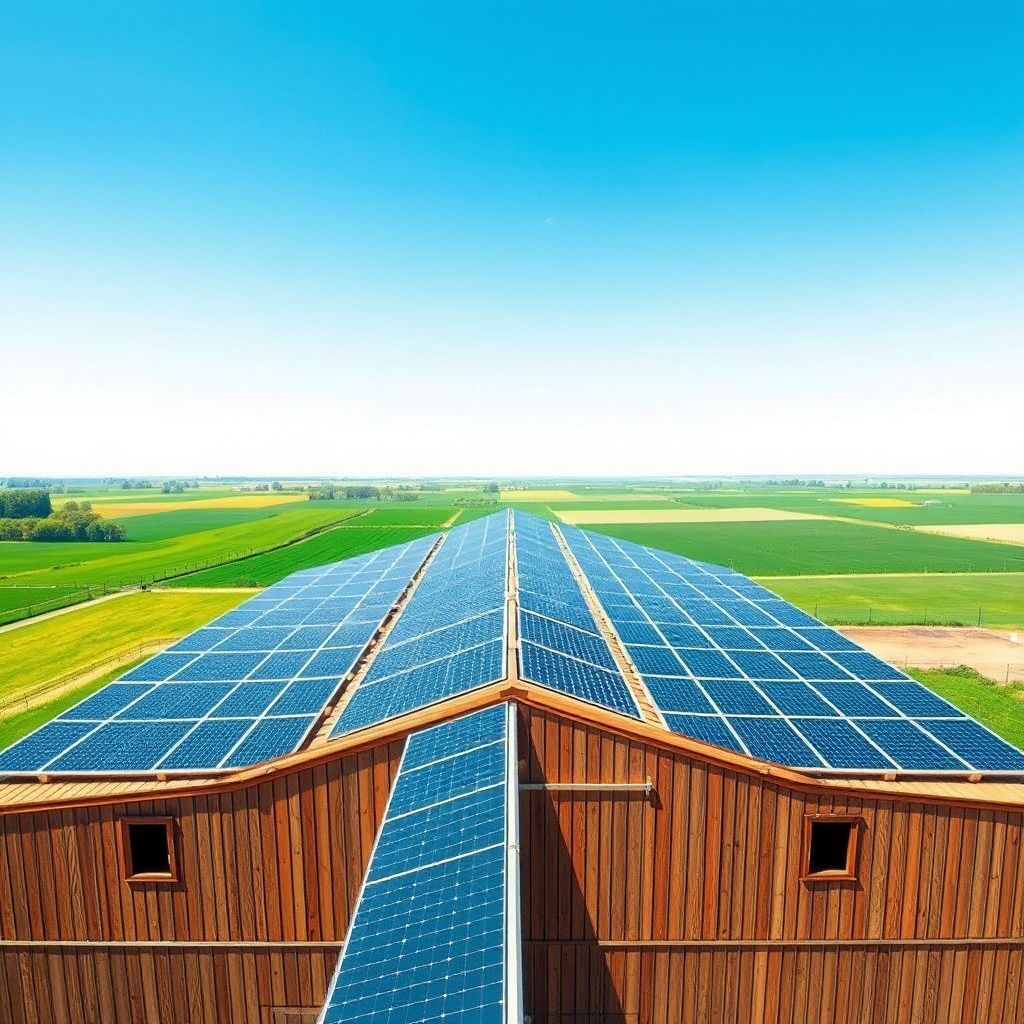
Italy has allocated €770.4 million to support 505 MW of rooftop solar installations, according to data reported by pv magazine. The funding covers 7,409 projects spanning agricultural, livestock, and agro-industrial sectors.
The initiative is managed by Gestore dei Servizi Energetici (GSE), the national agency responsible for overseeing energy service incentives. This allocation targets specific agricultural and industrial rooftops, integrating renewable energy generation with existing land use. The program aims to expand solar capacity within these sectors, leveraging available roof space to contribute to the country's broader energy mix.
Budget Constraints and Rejections
The funding envelope proved insufficient to accommodate all interested parties. Of the 16,919 applications submitted, which collectively sought €1.74 billion, only a portion received support. This gap highlights the intense demand for public incentives in the agricultural solar sector, where developers often compete for limited state resources. When budget lines are capped, the allocation process effectively prioritizes specific projects, leaving many viable proposals unfunded despite their technical merit.
Specifically, 1,863 eligible applications were denied because the available funds were exhausted. These rejected proposals had sought €187.3 million to install 170 MW of capacity. For developers, such rejections represent a significant financial setback, as securing upfront capital for engineering and procurement is a major hurdle. The inability to access this specific funding stream may delay construction timelines or force companies to seek alternative private financing, which often comes with different cost structures and risk profiles.
Beyond the budget cap, eligibility rules filtered out a substantial number of submissions. A total of 7,610 applications were deemed ineligible, representing €775.4 million in requested funding. These rejections likely stem from strict technical or administrative criteria that did not align with the program’s specific requirements. 37 applicants voluntarily withdrew their requests, totaling €3.9 million, perhaps after reassessing their project economics or finding other funding sources.
This allocation forms part of the National Recovery and Resilience Plan (PNRR), a broader framework designed to stimulate economic recovery through green investments. The strict adherence to budget limits and eligibility standards reflects the careful fiscal management required to ensure that public funds deliver maximum impact.
Regional Distribution
The funding is distributed unevenly across Italy's regions, reflecting local demand for agricultural solar incentives. Northern regions dominate the top of the list, with Lombardy securing the largest share of the allocation.
| Region | Funding (€ million) | Projects | Capacity (MW) |
|---|---|---|---|
| Lombardy | 145.2 | 884 | 92 |
| Veneto | 99.5 | 735 | - |
| Emilia-Romagna | 84.6 | 633 | - |
| Piedmont | 72.5 | 664 | - |
| Sicily | 58.3 | 617 | - |
| Puglia | 55.1 | - | - |
| Campania | 48.9 | - | - |
Lombardy leads both in total financial support and installed capacity, receiving €145.2 million for 92 MW across 884 projects. This concentration in the north suggests a higher density of eligible agricultural and agro-industrial rooftops in these areas. Veneto follows with €99.5 million for 735 projects, while Emilia-Romagna secured €84.6 million for 633 projects. Piedmont received €72.5 million for 664 projects, indicating a high volume of smaller installations.
Southern regions also secured significant portions of the budget, though with lower total values. Sicily received €58.3 million for 617 projects, showing strong participation despite geographic distance from the northern hubs. Puglia and Campania received €55.1 million and €48.9 million, respectively. The variation in project counts relative to funding amounts highlights differences in average project size across regions. For developers, this distribution indicates where the market for agricultural rooftop solar is currently most active, influenced by regional land use patterns and existing infrastructure.
Project Scale and Geography
The funding breakdown ranges from broad regional totals to precise provincial and individual farm-level details, highlighting the program's detailed structure. Notable data points comprise:
- Cuneo province obtained €39.2 million, with Mantua following at €37.3 million, Brescia at €37.1 million, and Verona at €36 million.
- The highest single subsidy reached €1.54 million, backing an 847 kW setup in Costa de’ Nobili.
- A swine facility in Roncade was granted €1.38 million for a 764 kW array.
- A poultry operation in Scandolara Ravara received €1.24 million for a capacity of roughly 1 MW.
- The mean subsidy amount across the initiative averages approximately €1,500 per kW.
- The Ministry of Agriculture released the official decree for these allocations on December 17, 2025.
These numbers reflect the standard magnitude of agri-photovoltaic installations, which typically stay below the megawatt threshold to accommodate the physical constraints of barns and processing plants. The heavy weighting of funds toward provinces such as Cuneo and Mantua implies that specific areas offer favorable roof configurations or a denser population of qualifying agro-industrial businesses. For stakeholders, the mean cost per kilowatt acts as a reference point for assessing financial viability, while the distinct cases of livestock and poultry operations show how various agricultural sectors are engaging in the shift to renewable power. The Ministry of Agriculture’s decree, dated December 17, 2025, establishes the legal basis for these grants, guaranteeing that the dispersed capital complies with national regulatory frameworks for renewable energy support.
What to watch
With the formal decree issued, the next phase shifts from administrative approval to physical execution. Developers must now mobilize capital and labor to meet strict construction deadlines, which require completion within 18 months of the award. This timeframe is standard for such incentive programs, designed to prevent indefinite project hold-ups that tie up public funds without delivering grid capacity. For investors, the ability to secure financing and procure equipment within this window is the primary operational hurdle, as delays can jeopardize the final incentive payout.
Beyond construction, the timeline extends to long-term verification. Applicants face a final reporting deadline of December 31, 2028, ensuring that installed systems remain operational and compliant well after the initial build-out. This extended monitoring period aligns with typical renewable energy subsidy structures, where performance guarantees and maintenance records validate the continued contribution to energy independence.
Looking back, the scale of this recent allocation sits against the backdrop of the previous scheme, which approved 23,000 projects totaling 1.7 GW. That prior volume indicates a mature market infrastructure capable of handling large-scale agricultural solar integration. As the current cohort of 505 MW moves into the construction phase, the focus turns to whether the supply chain can maintain pace with the demand, particularly given the specific deadlines set by the Ministry of Agriculture. The transition from paper awards to functional solar arrays will determine the tangible impact on local energy grids in the coming years.
Source: pv magazine. This article is an original Luminity report based on the linked source.