
Union minister says India on track for 500 GW non-fossil capacity by 2030
Union Minister Pralhad Joshi stated that India is on track to achieve its target of 500 GW non-fossil energy capacity by 2030. At the 31st CII Partnership Summit, he highlighted recent agreements and government orders that have secured ₹43,871 crore in renewable energy investment.
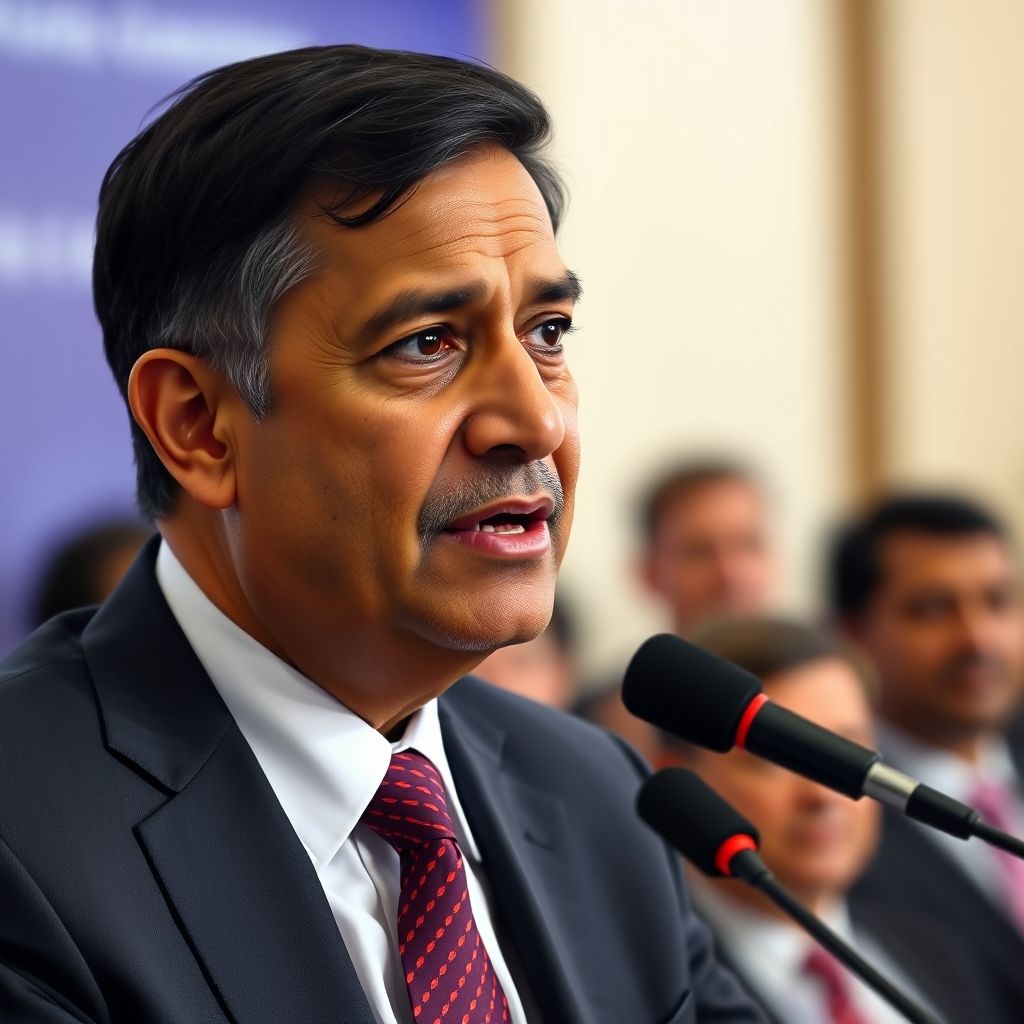
Union Minister for New and Renewable Energy Pralhad Joshi asserted that India is well-positioned to meet its goal of 500 GW non-fossil energy capacity by 2030. Speaking at the 31st CII Partnership Summit held in Visakhapatnam on Friday, the minister shared these insights, as reported by ETEnergyWorld Renewables.
Investment and Employment
The renewable energy sector has secured ₹43,871 crore in investment through 17 agreements and three government orders. These initiatives are projected to generate 4,700 jobs.
Grid Demand and Capacity Mix
India’s peak power demand has surged from 123 GW in 2012 to 270 GW recently. This increase contrasts with the 2012 grid collapse, when north India remained without power for nearly 72 hours. Non-fossil sources now supply nearly 33% of the country’s electricity.
Rooftop Solar Progress
- Andhra Pradesh has connected 7.86 lakh households to rooftop solar.
- The PM Surya Ghar Muft Bijli Yojana has benefited 66 lakh households nationally, against a target of 1 crore.
- Average installation time for the first 1 lakh units was 118 days, dropping to a current average of 6 days.
- The Ministry aims to reduce this installation timeline to 5 days shortly.
Background
On 13 November 2026, Luminity announced that the PM Surya Ghar program had activated 14.8 GW of rooftop solar infrastructure, benefiting 50.06 lakh households as of 4 August 2026. This scheme, which integrated the Grid Connected Rooftop Solar Phase II project, targets one crore residences by supplying complimentary or affordable power of up to 300 units monthly. Submissions filed from 13 February 2024 onward qualify for PM Surya Ghar pricing, whereas prior filings retain previous tariff structures.
Participants can access unsecured financing at an annual interest rate of 5.75%, with repayment periods extending to 10 years. By August 2026, 21.87 lakh loan requests had received approval, resulting in 17.5 lakh finished installations through this funding channel. State data from Andhra Pradesh dated 31 July 2026 indicated 814.09 MW of installed capacity and ₹1,512.61 crore in disbursed central subsidies. As of 4 August 2026, the state reported 4,11,915 deployed rooftop units, of which 1,33,477 were part of the SC/ST initiative, against a total of 9,04,508 portal applications according to state subsidy details.
Summit Investment Context
The 31st CII Partnership Summit, held in Visakhapatnam, wrapped up with the signing of 303 memoranda of understanding that lock in approximately ₹9.9 lakh crore in investment pledges for Andhra Pradesh. CP Radhakrishnan, the Vice President, served as the chief guest at the closing ceremony, where he commended Chief Minister N Chandrababu Naidu for securing a 74% rate on investment implementation. Radhakrishnan observed that the state is positioning itself as a key entry point for India’s broader global economic interactions, bolstered by its 1,053-km coastline and three national industrial corridors. He pointed to progress in urban centers such as Vijayawada, Tirupati, Anantapur, Kadapa, and Kurnool, noting that the Swarna Andhra 2047 vision aligns with Prime Minister Narendra Modi’s Viksit Bharat objective for 2047.
Source: ETEnergyWorld Renewables. This article is an original Luminity report based on the linked source.