
India reaches 50.06 lakh rooftop solar households under PM Surya Ghar
The Ministry of New and Renewable Energy reports that 50.06 lakh households have benefited from rooftop solar, crossing the halfway mark of the one-crore target. The ministry is considering a three-to-four month extension for the programme as it prepares a successor scheme.
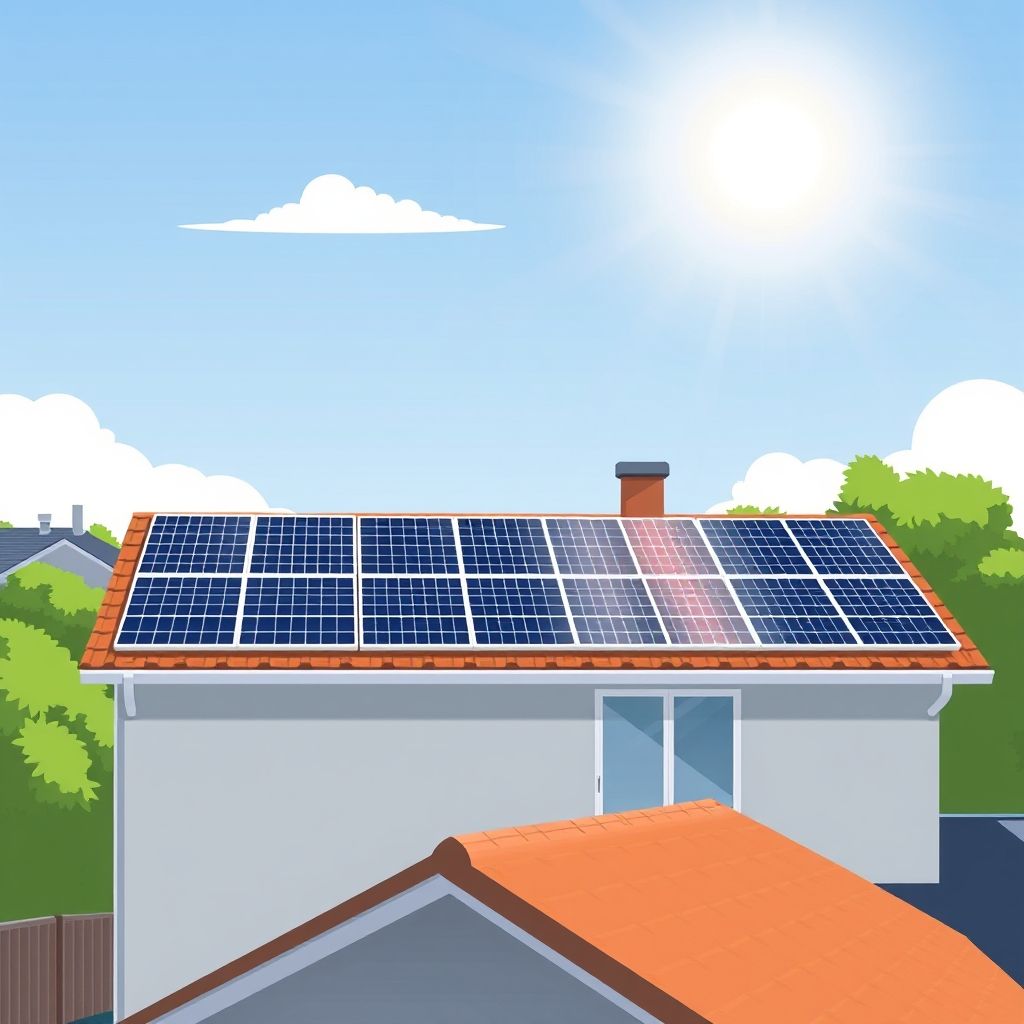
The Ministry of New and Renewable Energy (MNRE) confirms that India has reached the midpoint of its goal to equip one-crore homes with rooftop solar systems. By 4 August 2026, 50.06 lakh residences have gained access to rooftop solar power via the PM Surya Ghar initiative. Data from the ministry indicates that 14.8 GW of rooftop solar capacity has been brought online under this scheme.
Financial Incentives and Loan Access
The PM Surya Ghar scheme facilitates rooftop solar adoption through collateral-free loans offered at an interest rate of 5.75% per annum. Borrowers can spread repayments over a tenure of up to 10 years. As of August 2026, the Ministry of New and Renewable Energy (MNRE) reports that 21.87 lakh loan applications have been sanctioned under this framework. Of these, 17.5 lakh installations have been completed via loan financing.
This recent surge contrasts sharply with the preceding decade, during which only 7.94 lakh rooftop solar installations were recorded nationwide. The programme currently lists 34,219 registered vendors, with 29,469 active.
The ministry is considering a three to four month extension for the programme.
Economic Impact on Households
By August 2026, 19 lakh households reported zero electricity bills. In FY2024-25, 12 lakh households earned a collective ₹421 crore by selling surplus electricity to the grid. This translates to an average additional income of ₹3,500 per household among those exporting power.
Launched in February 2024 with an outlay of ₹75,021 crore. July 2026 marked the highest monthly figure since launch, with 5.06 lakh households benefiting in that single period.
Through the Utility-Led Aggregation model, 1.6 lakh installations have been dedicated to households under Pradhan Mantri Awas Yojana (PMAY), Below Poverty Line (BPL) categories, and Scheduled Castes and Scheduled Tribes (SC/ST).
Capacity-building programmes have trained 2.32 lakh people.
Implementation Challenges and Oversight
- In December 2025, the Parliamentary Estimates Committee highlighted issues including implementation variances, delays in approvals and subsidy payouts, and elevated loan rejection rates.
- The current approval duration ranges from 45 to 120 days, surpassing the target 30-day period.
- IEEFA and JMK Research noted a disparity in domestic solar cell and module production capabilities in October 2025.
- According to IEEFA and JMK Research, restricted supply and elevated costs of DCR-compliant modules may postpone installations.
- Daily installations reached 5,038 in October 2025, rising to 16,328 by July 2026.
- The Utility-Led Aggregation approach has received approval in 12 states.
- A total of 23,000 third-party quality checks have been completed.
Financing Structure and Vendor Ecosystem
Collateral-free loans carry a 5.75% interest rate, set at the repo rate plus 50 basis points. The committee highlighted insufficient empanelled vendors in certain states and a lack of installation components in remote regions. A joint October 2025 assessment by the Institute for Energy Economics and Financial Analysis (IEEFA) and JMK Research flagged delays in technical approvals, net metering, and subsidy processing. The report attributed these issues to meter shortages and poor coordination among consumers, installers, and distribution companies (DISCOMs).
Regulatory Benchmarks and Vendor Accountability
Roughly 23,000 third-party quality checks have been carried out under the vendor accountability framework to verify that installation standards are met. Additionally, the Utility-Led Aggregation model, which enabled 1.6 lakh installations for PMAY, BPL, and SC/ST households, has received approval for rollout in 12 states.
What to watch
With 50.06 lakh households connected as of August 2026, the Ministry of New and Renewable Energy projects reaching 90 lakh households by March 2027, keeping pace with the broader target of one crore households and 30 GW of residential capacity by FY2026-27. Attention now turns to the successor scheme, which is currently under stakeholder consultation.
Source: Saur Energy. This article is an original Luminity report based on the linked source.