
CATL Tener Sodium BESS specs: 30+ MWh blocks, 95% efficiency, 2027 delivery
CATL has released detailed technical specifications for its Tener Sodium battery energy storage system, highlighting a 30+ MWh capacity per block and 95% round-trip efficiency. The company states that the sodium-ion design offers significant reductions in cooling requirements, noise, and footprint compared to its LFP EnerX line, with overseas deliveries scheduled for summer 2027.
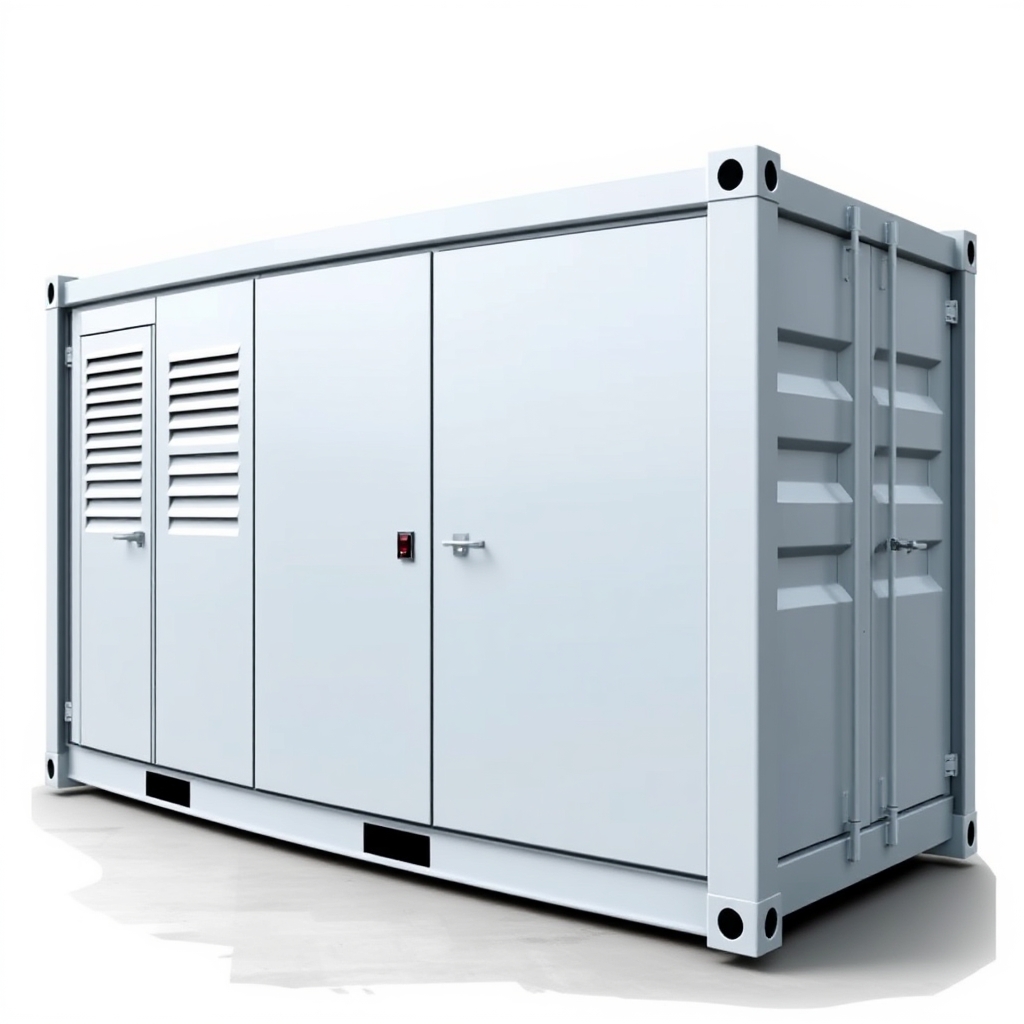
CATL has clarified the technical details of its Tener Sodium battery energy storage system (BESS), which was launched at The Smarter E event in Munich in June. The system is designed with a capacity of over 30 MWh per block, according to the company.
David Santiago, CATL’s energy storage product solution manager, noted that the product has received "a lot of orders" since its introduction.
Technical Specifications
The Tener Sodium system comprises eight cabinets, each holding approximately 4 MWh. The full block measures 18.2 m wide, 7 m deep, and 3.5 m high. Individual cabinets weigh between 44 and 45 metric tons, a slight increase from the 42 metric ton module weight recorded at launch. Electrically, the system delivers 7.5 MW over four hours at a 0.25P rate. The nominal DC voltage is 1,166.88 V, with an operating range spanning 612 V to 1,387.2 V.
| Specification | Value |
|---|---|
| Capacity per cabinet | ~4 MWh |
| Block dimensions | 18.2 m × 7 m × 3.5 m |
| Cabinet weight | 44–45 metric tons |
| Power output | 7.5 MW (4h) |
| Nominal voltage | 1,166.88 V DC |
| Voltage range | 612 V – 1,387.2 V |
| Round-trip efficiency | 95% |
| State of health | 70% after 20 years |
The 95% round-trip efficiency figure applies specifically to conditions at 25°C and a 0.25P load. Long-term durability is projected at 70% state of health after two decades under the same duty cycle.
Thermal and Environmental Performance
The Tener Sodium system operates between -35°C and +55°C, while storage conditions extend to -35°C and +60°C. The enclosure meets IP55 ingress protection standards and features C5 corrosion protection, with C4 as an optional specification.
Power conversion is handled by Terapower converters rated at 265 kW. These units achieve 99.2% peak efficiency and 98.5% full-load efficiency. The converter operating range spans -40°C to +60°C, with derating initiating above 50°C and 3,000 m.
Operational Efficiency and Footprint
Sodium-ion chemistry reduces thermal management requirements compared to lithium iron phosphate (LFP) alternatives. CATL states that Tener Sodium cells generate 27.2% less heat at the beginning of life and 32.7% less at end of life than EnerX LFP cells. For a 50 MWh station, the required refrigeration capacity drops to 490 kW, down from 720 kW for the LFP system. Lower cooling demands also reduce overall energy consumption, with auxiliary power usage at 1% compared to the industry average of 2%.
A 500 MWh project requires 6,630 m² for Tener Sodium, whereas the EnerX LFP configuration occupies 9,700 m². This difference results in an areal density of 0.197 MWh/m² for the sodium-ion system, compared to 0.125 MWh/m² for LFP. The system operates at a noise level of 65 dB(A), which is 10 dB(A) quieter than the 75 dB(A) recorded for the LFP counterpart.
Cost Projections and Delivery Timeline
- Estimated EPC costs for the sodium layout are 9.2% lower than those for the EnerX configuration.
- EPC equipment costs are projected to be 12% lower, while civil works excluding labor are down 16%.
- Labor costs for the sodium layout are estimated to be 17% lower than for the LFP alternative.
- Overseas delivery is scheduled for summer 2027, following the August 2027 production window.
- The specific shipping method and associated costs for overseas delivery remain unknown.
- The impact of a 32 MWh block capacity on power output is not yet specified.
In-House Power Conversion and LFP Compatibility
CATL’s in-house Terapower converter integrates bidirectional DC/DC conversion to boost voltage at the battery’s low end, accepting 600 V to 1,500 V DC at up to 222 A and outputting 690 V AC at 50 or 60 Hz. The unit is liquid-cooled, rated IP66, and supports IEC 61850 and Modbus TCP interfaces. Santiago noted the converter ties into the battery’s thermal management system, accounting for its auxiliary consumption. CATL plans to use the same cabinets and layout for a lithium iron phosphate (LFP) version, which Santiago estimated at around 50 MWh across eight cabinets. Developers can choose the chemistry during project design, though CATL is prioritizing sodium-ion certification with the LFP variant to follow. The company also lists current harmonic distortion below 3% at rated load for the converter.
Source: pv magazine. This article is an original Luminity report based on the linked source.