
Transaera tests MOF dehumidification heat pump in Washington D.C. apartment building
Transaera is testing a rooftop heat pump system using metal-organic frameworks in a Washington D.C. multifamily building. The project, supported by a $125,000 grant, aims to prove independent data on energy efficiency and operating cost reductions.
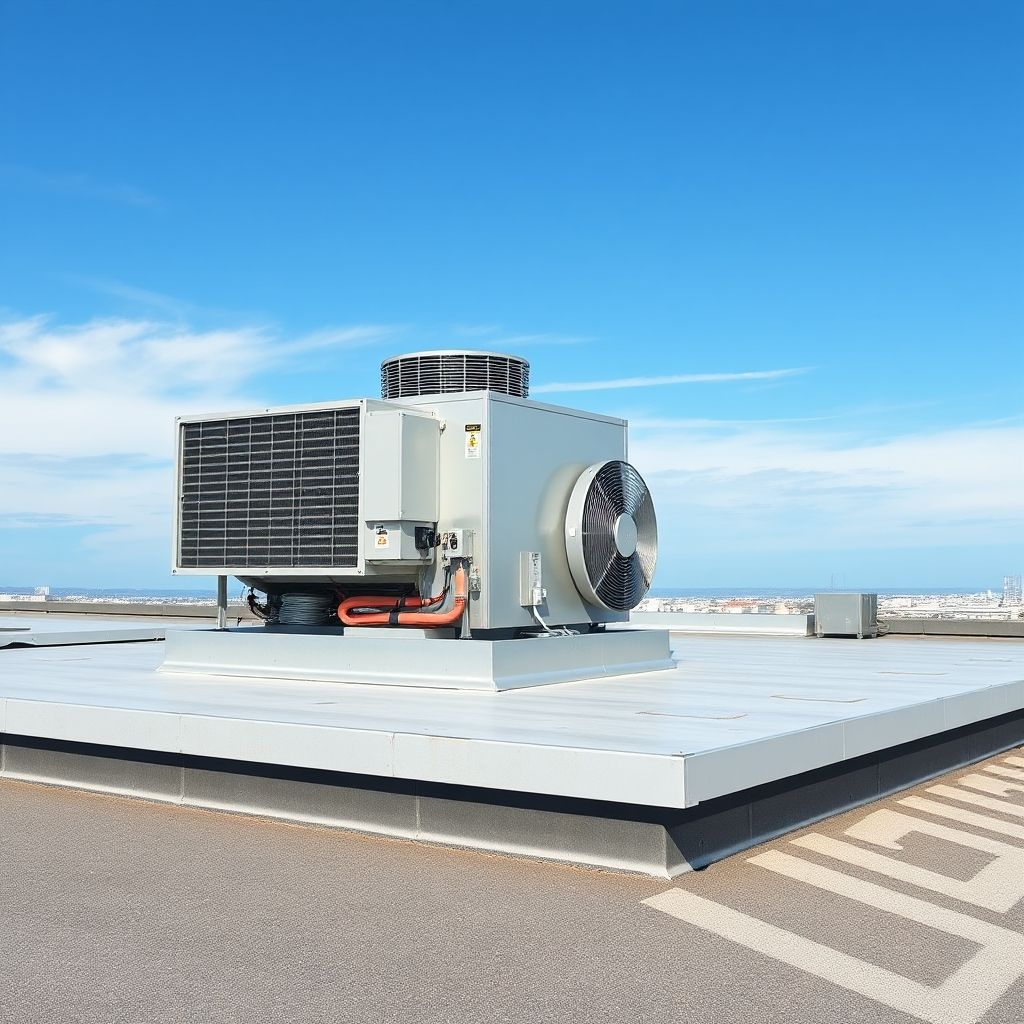
Transaera is currently testing a metal-organic framework (MOF) dehumidification heat pump in a multifamily apartment building in Washington, D.C., according to the company. The project is supported by a $125,000 grant from The Clean Fight National Deployment Grant Fund. This pilot aims to evaluate the technology’s performance in a real-world residential setting, providing data on its operational capabilities in a dense urban environment.
Sorin Grama, CEO and co-founder of Transaera, emphasized the economic drivers behind the deployment. “Building owners deciding how to electrify need operating cost reduction,” Grama stated. The company suggests that lowering these costs is a primary factor for building owners considering electrification strategies. The test represents a practical application of the technology, focusing on tangible financial benefits for property management.
System Design and Efficiency
Transaera’s pilot unit functions as a dedicated outdoor air system (DOAS), a configuration that integrates cooling, heating, and dehumidification into a single mechanical platform. This unified approach contrasts with traditional setups that often require separate components to handle temperature control and moisture removal. The core of this design relies on metal-organic frameworks, or MOFs, for moisture extraction. These porous materials capture water vapor from incoming air, allowing the system to manage humidity levels efficiently before the air is conditioned for the building. By handling dehumidification directly within the air handling process, the unit reduces the load on other mechanical systems, contributing to the overall operational profile of the building.
The physical design of the Transaera unit prioritizes compatibility with existing infrastructure. It is engineered as a drop-in replacement for conventional rooftop HVAC units, meaning it can be installed in the same location where standard equipment is currently housed. The dimensions and weight of the new system are comparable to those of existing equipment, which simplifies the installation process for building managers. This structural parity eliminates the need for major structural modifications to the roof or supporting frameworks, a significant consideration in dense urban environments where space and load capacity are constrained.
According to Transaera, this integrated design results in an energy use reduction of approximately 40% compared to conventional packaged DX rooftop units. This efficiency gain is attributed to the combined operation of the MOF-based dehumidification and the integrated thermal management. By consolidating these functions, the system avoids the energy penalties often associated with running multiple separate units for cooling and dehumidification. The drop-in nature of the unit, combined with these reported efficiency improvements, offers a direct pathway for multifamily buildings to upgrade their mechanical systems without extensive retrofitting. This approach addresses the practical challenges of electrification in existing residential structures, providing a tangible example of how advanced materials can be applied to standard building services.
Independent Validation and Amazon Partnership
Sorin Grama, Transaera’s CEO and co-founder, stressed the critical value of third-party verification for the pilot’s results. “This project lets us prove, with independent data, that a more efficient system works...” Grama stated. Focusing on external scrutiny helps overcome a typical barrier in tech adoption, where manufacturer-reported metrics frequently lack the rigor needed for broad deployment. By utilizing independent data gathered from a Washington, D.C. apartment building, the firm seeks to furnish objective proof of operational reliability within a genuine residential context. This method enables stakeholders to evaluate the technology’s real-world performance against conventional system baselines, rather than depending on theoretical or simulated outcomes alone.
The wider trustworthiness of the metal-organic framework technology is reinforced by its earlier use in a commercial setting. Amazon executed a six-month field trial of the system within a U.S. logistics facility, a project that wrapped up in May. This lengthy period facilitated the accumulation of significant operational data under steady, high-demand conditions characteristic of major distribution hubs. Moving from a regulated industrial space to a multifamily residential structure marks a change in application scope, although the underlying technology stays consistent.
Asad Jafry, Amazon’s Director of Global Energy, Sustainability and AGV, discussed the strategic fit of this partnership. “At Amazon, we seek technologies that support our Climate Pledge...” Jafry noted. The collaboration has now advanced past initial testing. Jafry added, “Our work with Transaera has moved from field trial to readiness...” This advancement signals that the technology has cleared preliminary assessment phases and is now being positioned for wider rollout. The participation of a large corporate player in the validation process adds further substance to the technical assertions, implying the system has satisfied specific performance and durability criteria necessary for commercial-scale use.
Background
- 232 building retrofits involving systems larger than 100 kilowatts are expected by the end of next year, according to a Luminity report from 15 October 2026.
- Victoria leads the national count with 59 retrofits, followed closely by New South Wales with 58, as detailed in the same earlier report.
These figures illustrate the scale of commercial electrification underway in Australia’s largest states. The expectation for over two hundred projects exceeding 100 kilowatts by late 2026 reflects a sustained shift away from gas-based heating in commercial structures. Victoria and New South Wales account for the majority of this activity, with their combined total representing the bulk of the national pipeline.
This Australian data provides a useful comparative context for the Transaera pilot in Washington, D.C. While the U.S. test focuses on a single multifamily residential building, the Australian statistics highlight the broader market trajectory for large-scale building retrofits. The concentration of projects in specific states mirrors how electrification efforts often cluster in regions with particular policy or market incentives. For readers tracking global trends in building efficiency, these numbers underscore that significant deployment activity is occurring across different continents simultaneously. The earlier report offers further detail on the specific industrial heat pump applications driving these changes in Australia.
What to watch
The specific building address and exact installation date for the Washington, D.C. pilot remain undisclosed. Without these details, independent verification of the site’s physical characteristics, such as local climate data or building age, is currently limited to the general context provided by Transaera. Until that validation is published, the technology’s readiness for broader commercial deployment remains a preliminary assessment based on the Amazon field trial and the current D.C. test.
Source: pv magazine USA. This article is an original Luminity report based on the linked source.