
UNSW study finds east-west PV systems degrade slower than trackers
A study by UNSW researchers indicates that east-west ground-mounted solar systems experience up to 40% lower rates of certain degradation mechanisms compared to single-axis trackers. The findings suggest that mounting configuration directly influences module reliability, with thermal effects being most pronounced in southern Australia.
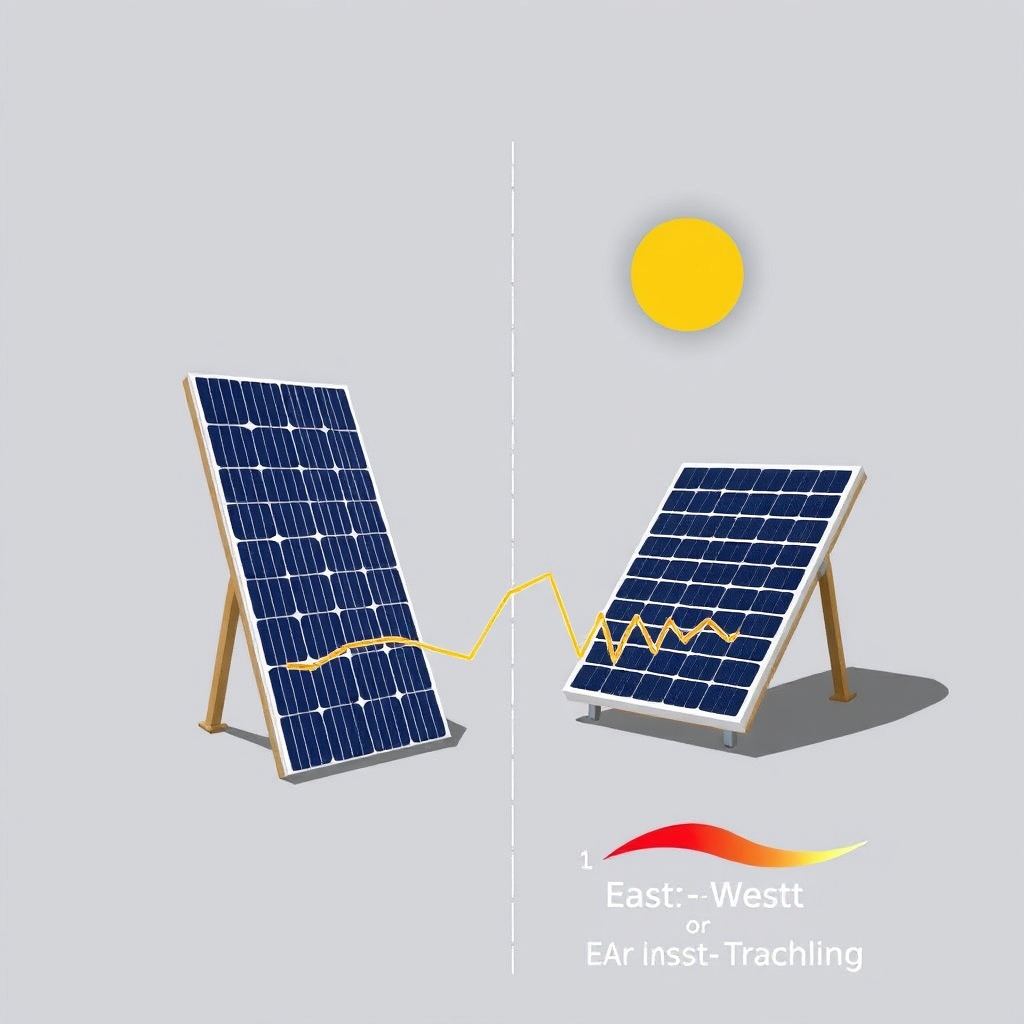
Researchers at the University of New South Wales (UNSW) have found that east-west ground-mounted PV systems can experience up to 40% lower rates of certain degradation mechanisms than single-axis trackers, pv magazine reported. Their simulations point to lower operating temperatures and less ultraviolet exposure as the reasons.
“Our work demonstrates that PV mounting configuration directly influences module reliability, not just energy yield and installation costs,” said corresponding author Bram Hoex. The study, “Accurate Modeling of Module Temperature for Ground-Mounted PV and Its Impact on Degradation,” is published in the IEEE Journal of Photovoltaics.
Methodology and Data Sources
The work focused on the Maverick east-west system made by Australian company 5B. The team built a transient thermal model that includes radiative heat exchange with the sky, arguing that conventional models often overlook wind direction, mounting configuration, thermal inertia and sky radiation.
They validated five thermal models of increasing complexity against monitoring data collected between September 2022 and June 2023 at a 5B Maverick test site near Bungendore, New South Wales. That installation uses JinkoSolar 315 W modules, with module temperatures measured by thermocouples and weather recorded by a nearby station. ERA5 climate data were used to improve estimates of longwave radiation.
The researchers then simulated Maverick and single-axis tracking systems at Bannerton in Victoria and Clare in Queensland, using bifacial Longi modules and SMA inverters, with different DC-to-AC ratios for the two mounting types. Adding sky radiation and transient temperature effects significantly improved accuracy, particularly at night and during rapid temperature swings.
Thermal Dynamics and Degradation Mechanisms
- Heat transfer coefficients for the east-west system were comparable to single-axis trackers, indicating similar cooling.
- East-west modules still run cooler, because their fixed orientation means lower plane-of-array irradiance.
- Trackers receive more sunlight and generate more energy per module, but run hotter.
- Higher temperatures plus more UV exposure meant more thermal degradation and photodegradation in trackers.
- Both mechanisms peaked in summer; thermal degradation differences were largest in southern and southwestern Australia.
The study assessed two mechanisms: thermal degradation caused by temperature fluctuations, and photodegradation linked to ultraviolet exposure, temperature and humidity. In other words, the east-west units do not shed heat any better than trackers; they simply collect less irradiance, so they heat up less. That is also why trackers produce more energy per module, which is the trade-off against slower wear.
The researchers also noted that inverter clipping and power curtailment could accelerate degradation by increasing module temperatures. They concluded that lower degradation could make fixed east-west systems particularly attractive for remote installations, where maintenance and replacement costs are higher.
The Maverick System
Each Maverick unit is a prefabricated, relocatable ground-mounted system of up to 90 solar panels on frames that unfold in a concertina configuration, with modules tilted at 10 degrees. It has preconfigured electrical connections, a compact footprint, high power density and minimal ground penetration, which suits land-constrained or difficult sites, including mine waste rock dumps. In 2024 the technology was deployed in a 16.9 MW installation of 342 Maverick units at the Jundee gold mine in Western Australia. The researchers said the low tilt allows greater ground coverage and higher energy density per unit of land.
Earlier UNSW work found that single-axis trackers can receive up to 1.5 times more UV radiation than fixed-tilt systems in high-irradiance regions, resulting in degradation rates nearly twice as high.
What to watch
“Our findings also provide a framework for integrating temperature-dependent degradation into PV system simulations, moving beyond conventional fixed annual degradation assumptions,” Hoex said. He added that low-tilt east-west configurations “could offer additional benefits through reduced degradation, complementing their advantages in land utilisation and deployment costs.” The results are simulations for Australian sites; the study does not put a cost figure on the slower degradation against trackers' higher energy yield.
Source: pv magazine. This article is an original Luminity report based on the linked source.