
Aiko Solar to convert Tianjin PERC plant to 6 GW ABC capacity
Aiko Solar has approved a CNY 1.15 billion investment to convert its Tianjin PERC facility into a 6 GW All Back Contact cell production line. The upgrade begins in the fourth quarter of this year, with full production targeted for the third quarter of 2027.
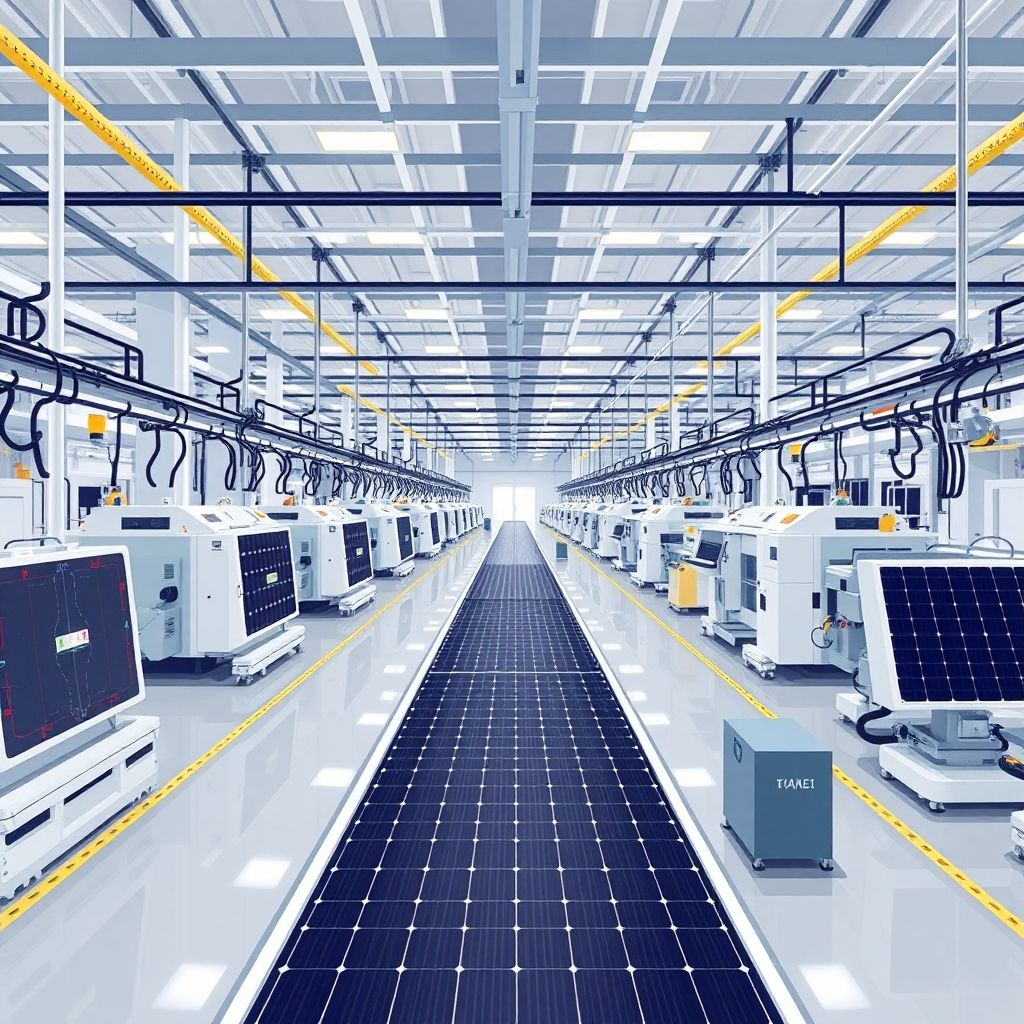
Aiko Solar plans to convert its Tianjin PERC facility into a 6 GW All Back Contact (ABC) cell production line. According to the company, the overhaul will begin in the fourth quarter of this year. The total investment for the upgrade is CNY 1.15 billion, equivalent to $172.2 million.
This move shifts the plant’s output from PERC technology to ABC cells. The stated investment covers the necessary equipment and infrastructure changes required for the transition. The project is scheduled to start later this year, with the conversion process expected to take several quarters to complete.
The facility’s capacity will be dedicated to ABC cell production once the upgrade is finished. This represents a significant capital expenditure for Aiko Solar, focusing on advanced cell technology within its existing Tianjin operations. The company has not provided further details on the specific timeline for full operational status beyond the start date.
Technical Conversion Details
The technical core of this conversion involves shifting from standard PERC architecture to All Back Contact (ABC) cells. ABC technology utilizes n-type silicon, distinguishing it from the p-type material common in legacy PERC designs. Structurally, these cells place all electrical contacts, including grid lines and busbars, on the rear surface. This arrangement leaves the front face unobstructed, allowing more light to reach the active silicon area rather than being blocked by metal fingers. By moving the connection points to the back, the design reduces shading losses that typically limit efficiency in conventional cells.
Aiko Solar will execute this transition within its existing Tianjin facility, repurposing the current PERC production workshop as the site for the new ABC line. This approach leverages established infrastructure and space, integrating the new cell manufacturing process into the plant’s current operational footprint. The resulting cells are designed to support high-performance modules. Aiko Solar introduced the G4 Infinite Ultra module in July, which belongs to the 690 W power class. This module specification indicates that the upgraded ABC cells are intended to drive output levels consistent with that high-wattage product tier. The integration of rear-side contacts and n-type technology aims to enhance energy conversion efficiency within the constraints of the existing workshop environment.
Financial Breakdown
Aiko Solar has allocated CNY 1.131 billion for fixed assets to complete the facility upgrade. This capital expenditure covers the physical equipment and infrastructure modifications needed to transition the Tianjin plant. In addition to these long-term assets, the company has set aside CNY 19 million for initial and working capital. This smaller reserve supports the operational launch of the new production line, covering immediate cash flow needs during the startup phase.
The company will fund this project through a combination of own capital, financial institution financing, and industry ecosystem partners. This mixed funding structure spreads the financial commitment across internal reserves and external sources.
| Funding Component | Amount (CNY) |
|---|---|
| Fixed assets investment | 1.131 billion |
| Initial and working capital | 19 million |
The fixed assets figure represents the bulk of the total outlay, reflecting the heavy industrial nature of solar cell manufacturing. Working capital, by contrast, addresses the short-term liquidity required to keep the new line running once construction concludes. By involving industry ecosystem partners alongside traditional bank financing, Aiko Solar diversifies its funding base. This approach reduces reliance on any single source of capital while leveraging relationships within the solar supply chain to support the expansion. The distinct separation between asset investment and working capital highlights the different financial needs of building a factory versus operating it.
Strategic Rationale
The Aiko Board of Directors states that this capacity upgrade will introduce the company’s latest ABC technology. They clarify that after this technological upgrade, related production capacity will be fully upgraded to ABC technology. This shift addresses a fundamental limitation in legacy manufacturing. P-type PERC cell efficiency has reached a bottleneck, meaning further gains in energy conversion are increasingly difficult to achieve within that architecture. Consequently, market demand for these older cells is declining, and prices are falling.
For manufacturers, continuing to produce technology that has hit its performance ceiling becomes financially unsustainable as competitors adopt more efficient designs. By converting its Tianjin line, Aiko Solar moves away from a saturated, low-margin segment. This transition allows the company to align its production capabilities with current technological standards, ensuring its output remains competitive against newer, higher-performing cell offerings from other suppliers.
Background
- pv magazine India reported on 23 October 2026 that Aiko’s ABC cells shift all electrical grid lines and busbars from the front surface to the rear side of the cell.
- The same report noted that this architecture is intended to increase light absorption and improve aesthetics for rooftop and distributed PV applications.
- Aiko’s Board of Directors stated that the project will utilise the existing PERC plant as the production workshop, adding new process production equipment and upgrading supporting power auxiliary equipment and facilities.
- The Board also stated that the upgrade aligns with the development trend of the photovoltaic industry and the company’s strategic development direction.
- Aiko’s Board of Directors noted that p-type PERC cells face the risk of rapid obsolescence.
Relocating the electrical contacts to the back of the cell achieves more than just a boost in efficiency. By freeing up the front face, the layout permits greater light capture, which directly enhances the energy output per square meter. The visual appeal is especially significant for distributed PV projects, where the seamless integration with building surfaces is a primary factor for architects and consumers. This particular setup sets the technology apart from the standard front-contact designs that currently prevail in the market.
The Board’s description of the initiative focuses on conformity with wider sectoral shifts rather than standalone product attributes. By specifically mentioning the threat of quick obsolescence for p-type PERC cells, the firm underscores the necessity of moving away from older designs. This perspective clarifies why the current facility is being repurposed instead of allowed to decline. The installation of fresh process machinery and the modernization of auxiliary power systems show that this transition involves a substantial physical renovation of the production line, not just a digital adjustment. These modifications guarantee that the infrastructure meets the distinct technical demands of the new cell type while preserving continuous operations within the original workshop space.
What to watch
The immediate milestone for this conversion is the scheduled production start date, set for the third quarter of 2027. This timeline marks the transition from capital expenditure and infrastructure upgrades to active manufacturing. The gap between the current financial commitments and that start date represents the period during which the Tianjin plant must be reconfigured to fully support Aiko’s ABC technology.
Additional reporting: pv magazine India.
Source: pv magazine. This article is an original Luminity report based on the linked source.