
Tesla unveils Powercore medium-voltage platform for solar and storage
Tesla has introduced Powercore, a medium-voltage power electronics platform that integrates a solid-state transformer, switchgear, and inverter into a single enclosure. The system is designed for solar, storage, data centers, and EV charging, with an operational target of 2027.
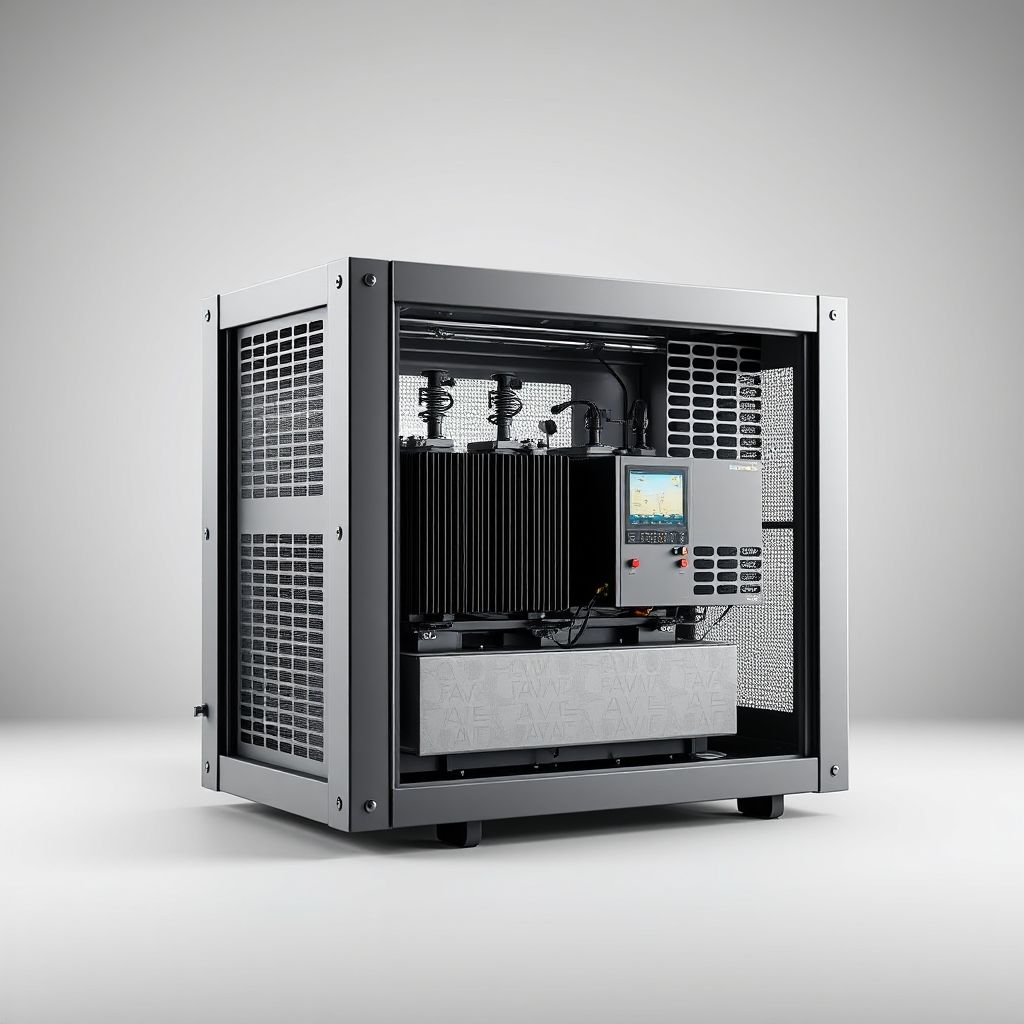
Tesla unveiled Powercore, a medium-voltage power electronics platform, at RE+ 2026 this week in Las Vegas. The company presented the system at the Las Vegas Convention Center, describing it as an integrated solution for solar and storage applications.
The platform combines a solid-state transformer, switchgear, and inverter into a single enclosure. Tesla stated that the medium-voltage architecture is intended to streamline installation and maintenance.
Technical specifications
| Parameter | Specification |
|---|---|
| Nominal DC voltage | 800 V to 2,000 V |
| AC voltage | 10 kV to 34.5 kV |
| Max power output | 7.4 MW (9 MVA) at 34.5 kV AC |
| Operating temperature | −40°C to 55°C |
| Fault clearing speed | 100 microseconds |
The 100-microsecond fault clearing rate is significantly faster than conventional equipment.
Application segments
Powercore targets four distinct sectors: solar, energy storage, data center power, and EV charging. For solar installations, the platform supports both 1,500 V DC plants and 2,000 V DC architectures. In energy storage applications, Tesla Megapack batteries connect directly to the system via DC bus connectors. The unit also serves data centers by converting grid power directly to 800 V DC for servers, eliminating intermediate conversion steps.
Grid integration and safety
AJ Booth, Tesla’s head of energy and charging, explained that the system enhances safety by interrupting faults a thousand times faster than conventional equipment. He credited this performance to the integrated solid-state circuit breaker design. In addition to protection, Powercore provides grid-forming controls that supply synthetic inertia and reactive power support. Booth observed that pairing a data center with Powercore and Megapack creates a stiffer local grid.
Market context and availability
- Powercore production will take place at Tesla’s U.S. sites, with operations scheduled to commence in 2027.
- The system includes a warranty lasting up to 25 years.
- Traditional transformers often face lead times stretching as far as four years.
- Tesla’s energy segment represents approximately 10% of overall revenue.
- The platform has earned certification through the NVIDIA DSX Ready Program.
Tesla’s head of energy and charging, AJ Booth, highlighted the company’s history, noting, “We’ve done 3 terawatts of power converters at Tesla.” He clarified that developing all power converters internally enabled Tesla to offer a dependable and financeable route for clients to embrace what remains a novel technology for the sector.
Manufacturing scale and market positioning
Tesla manufactures all Powercore power converters in-house, a capability Booth noted allows the company to provide a "bankable and reliable pathway" for customers to adopt the new technology. The integrated design eliminates the need for asset owners to purchase secondary inverters and transformers, while pre-assembled delivery of the platform and Megapack batteries reduces manual on-site wiring. Although specific pricing and initial customer lists remain undisclosed, Tesla held the second position in utility-scale power conversion system shipments for the US and Canadian market in 2025, according to a Luminity report from November 18, 2026. The company’s Energy Generation and Storage division has routinely outperformed the core automotive business in margins, despite quarter-to-quarter revenue volatility.
Source: pv magazine India. This article is an original Luminity report based on the linked source.