
Court strikes down Solar for All termination as community solar grows
A US District Court judge in Rhode Island has invalidated the federal termination of the Solar for All program, which had received termination notices from the EPA. Meanwhile, US community solar capacity has reached 11.5 GW, driven by state-level policies and utility-driven markets.
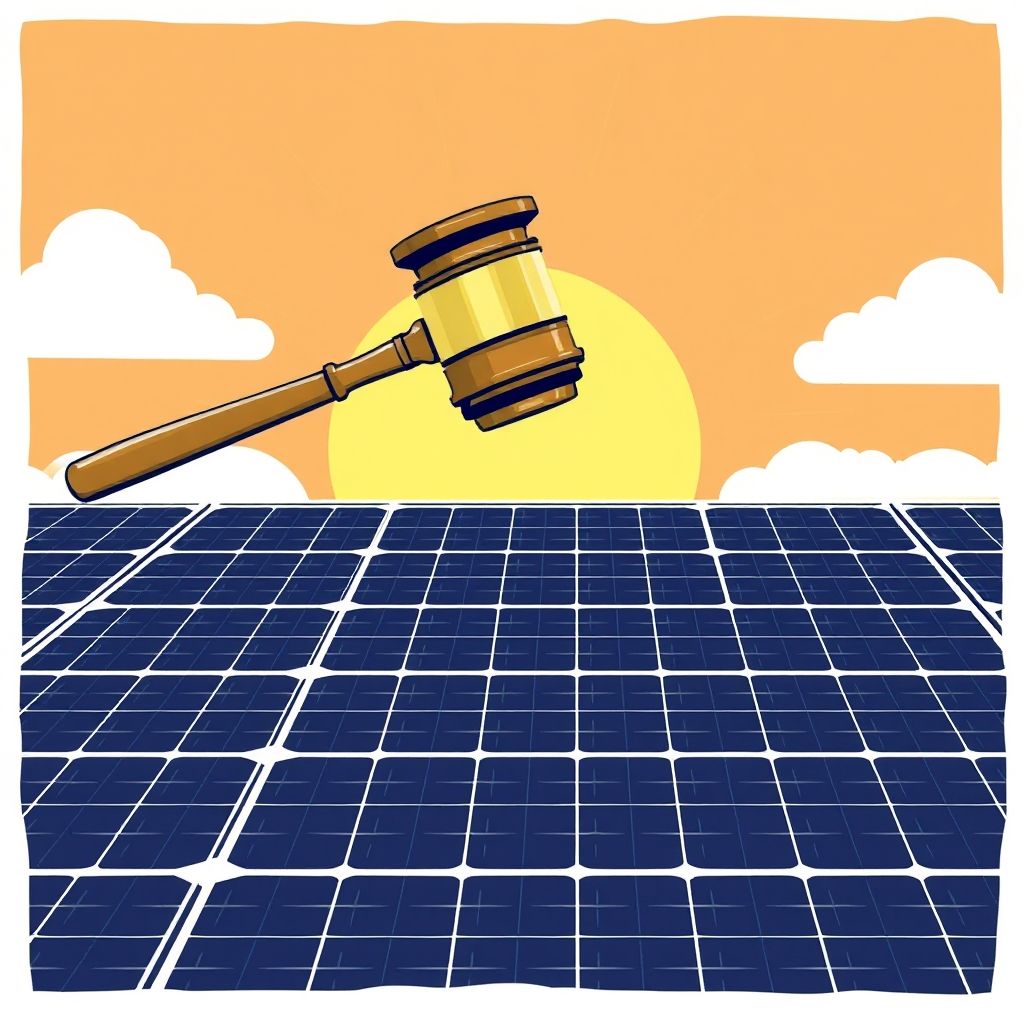
A US District Court judge in Rhode Island invalidated the cancellation of the Solar for All program in a September 2026 decision. This ruling came after the EPA issued termination notices to all 60 recipients of the initiative. The US Department of Energy defines community solar as shared, typically off-site arrays that serve multiple customers.
Legal Reversal
The EPA interpreted the relevant law as repealing its authority to administer Solar for All. Beyond Rhode Island, multiple litigations challenging the program’s termination are currently ongoing in courts nationwide.
Program History
Solar for All operated as a $7 billion competitive grants program aimed at alleviating energy poverty. It was a component of the $27 billion Greenhouse Gas Reduction Fund (GGRF), created under the 2022 Inflation Reduction Act during former President Joe Biden’s tenure.
In March 2025, the program’s course changed as the Trump administration cut $20 billion from GGRF funding. This move eliminated resources assigned to recipients of the National Clean Investment Fund and the Clean Communities Investment Accelerator. Later, the Working Families Tax Cut law enacted in July revoked the rest of the unobligated GGRF funds.
Market Growth
US community solar capacity reached 11.5 GW across more than 4,280 projects as of January 2026, according to data from NLR. New York follows with close to 3 GW currently operational and an additional 400+ MW in the development pipeline.
| State | Operational Capacity | Pipeline Capacity |
|---|---|---|
| US Total | 11.5 GW | N/A |
| Florida | Almost 4 GW | N/A |
| New York | Close to 3 GW | 400+ MW |
State Action
- Community solar legislation has been passed in eighteen states plus Washington DC, specifically New Jersey, Illinois, Maryland, Colorado, Nevada, California, Oregon, Minnesota, Massachusetts, Maine, Rhode Island, Hawaii, Delaware, New Hampshire, Connecticut, New Mexico, and Virginia.
- Kelly Friend, senior vice president for policy and markets at Nexamp, described the market as having "strong demand" for community solar, highlighting that enthusiasm is centered in states featuring stable policies, tangible customer advantages, and functional interconnection procedures.
- Nexamp is presently directing internal efforts to comply with foreign entity of concern (FEOC) regulations.
- Nate Hausman of the Clean Energy States Alliance remarked, "When the program wound down, the landscape changed," further explaining, "The programs had been built, and these were congressionally obligated funds."
- By August 2025, merely a small portion of the $7 billion designated in April 2024 had been spent, given that the awards included a five-year window for implementation.
State laws provide the regulatory stability that federal program volatility has eroded. Even though federal funding channels have stopped, existing state statutes continue to support deployment and market activity in areas with established enabling legislation.
Florida’s Utility-Driven Model and CESA’s Equity Focus
Florida’s nearly 4 GW of community solar capacity is driven by utility programs rather than state-enabling legislation, with Florida Power & Light’s SolarTogether initiative and Duke Energy accounting for the majority of installed capacity. In contrast, Texas, Georgia, and Arkansas are active markets that also lack specific enabling laws. Nate Hausman, who serves as an administrator for one of the Solar for All awardees and leads the Clean Energy States Alliance’s (CESA) virtual power plant initiative, noted that CESA advocates for local voices to reduce reliance on utilities or third-party administrators. CESA’s website catalogs state partner programs, roughly one-quarter of which include equity provisions designed to serve low- and moderate-income communities. Hausman emphasized that the termination disrupted pipelines for developers, lenders, and community organizations that had constructed multi-year project plans around the funding. He stated, “Even when Washington stepped back, we’re still seeing states step up,” adding that despite headwinds, community solar continues to offer opportunities with projects moving forward.
Source: pv magazine. This article is an original Luminity report based on the linked source.