
Study models $7.92 billion perovskite solar value addition in India over 15 years
A joint study by ISMA and P3C Technology projects that perovskite solar manufacturing could generate INR 74,000 crore in domestic value addition in India over the next 15 years. The report highlights potential cost reductions and policy recommendations to support the transition to next-generation photovoltaic technology.
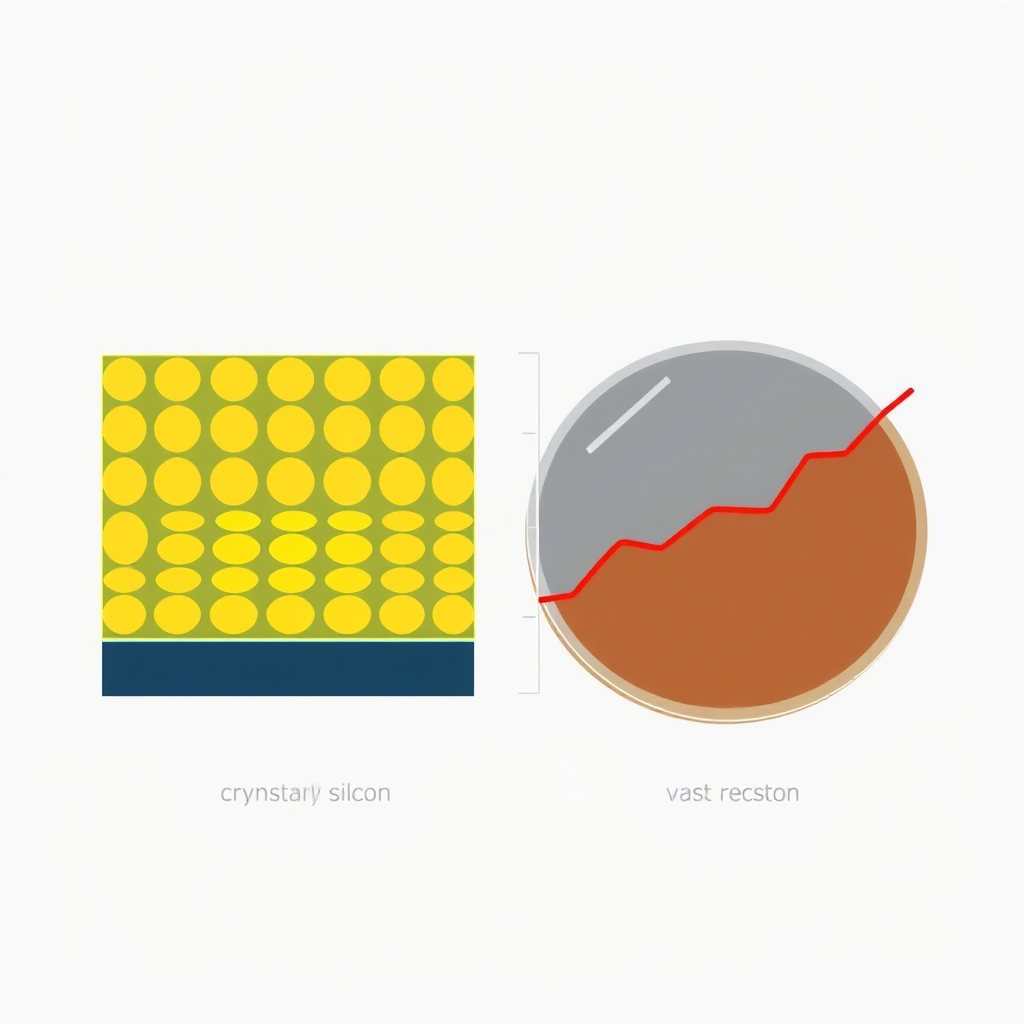
A joint report from the Indian Solar Manufacturers Association (ISMA) and P3C Technology and Solution projects that perovskite solar technology will create INR 74,000 crore, equivalent to $7.92 billion, in local value addition within India over the coming 15 years.
The researchers indicate that implementing perovskite cells can lower manufacturing expenses and decrease reliance on imports. Furthermore, they contend that this technology offers the capacity to stimulate domestic innovation.
Economic and Technical Projections
The ISMA and P3C Technology and Solution study projects that perovskite manufacturing could significantly lower capital requirements and operational costs compared to established crystalline silicon lines. The report estimates that capital expenditure for perovskite facilities could be 70% to 80% lower than for conventional silicon production. This cost advantage, combined with reduced temperature-related performance losses, is projected to raise the capacity utilization factor from approximately 20% to 25%. Consequently, the levelized cost of energy (LCOE) could drop by 30% to 40%, driven by higher annual generation per megawatt and lower upfront investment.
| Metric | Perovskite | Crystalline Silicon |
|---|---|---|
| Manufacturing Capex | INR 22–28/W | INR 38–42/W |
| Annual Generation | 2.19 million units/MW | 1.75 million units/MW |
| Projected LCOE | INR 1.5–1.9/kWh | INR 2.4–2.7/kWh |
| CUF Improvement | 20% to 25% | Baseline |
| Annual Degradation | 0.5%–1% | ~0.5% |
However, the study notes that these economic benefits remain subject to validation through long-term field performance data.
Manufacturing Advantages
Although India has scaled up local cell fabrication and is advancing ingot and wafer production via the PLI scheme, it still relies heavily on imported polysilicon, wafers, and manufacturing equipment. Perovskite technology presents a structural alternative by skipping the polysilicon, ingot, and wafer production stages altogether.
Policy Recommendations and Industry Views
- The study proposes a phased adoption strategy, beginning with single-junction perovskite cells before transitioning to silicon-perovskite tandems using existing TOPCon infrastructure.
- It suggests a provisional two-tier classification under the ALMM scheme with defined stability milestones.
- The report recommends dedicated R&D and pilot project funding via MNRE and ANRF, alongside independent techno-economic assessments to verify commercial viability.
Amit Manohar, ISMA secretary general, noted that manufacturers have invested in backward integration, viewing perovskite as a next step. Sooraj Kumar, P3C Technology and Solutions co-founder and CEO, stated the company is developing its own absorber chemistry and IP in India. He added that modules are undergoing reliability testing at NISE, with a priority on building field data to make the technology bankable.
Background
ISMA has previously outlined broader sectoral goals, notably in a 3 November 2026 report forecasting that India’s total installed solar capacity might hit 2,275 GW by 2047. This document also advised the development of domestic solar manufacturing equipment and the creation of recycling infrastructure to bolster the industry. On 5 November 2026, Luminity noted that ISMA intends to remove reliance on foreign solar parts by 2041, a goal explored in an earlier analysis of agricultural solar demand. That article further highlighted that solar cell production capacity is expected to grow until 2030, whereas wafer output is planned to rise through 2035.
Regarding the ALMM framework, List-III, which addresses ingots and wafers, becomes active on 1 June 2028, as detailed in Luminity’s guide to the scheme. The Renewable Energy Manufacturers Association of India requested Niti Aayog on 2 November 2026 to push back the ALMM cell sourcing deadline to December 2027, a development covered in the same 5 November report. Additionally, China’s Ministry of Commerce and Ministry of Industry and Information Technology suggested prohibiting the export of advanced solar manufacturing technologies on 16 October 2026, per Luminity reporting.
Source: pv magazine. This article is an original Luminity report based on the linked source.