
Telangana tenders 3 GW solar with 6 GWh storage
TGREDCO has launched a competitive bid for 3,000 MW of solar capacity paired with 6,000 MWh of energy storage across India. The build-own-operate projects require developers to meet specific financial thresholds and commence power supply within 24 months.
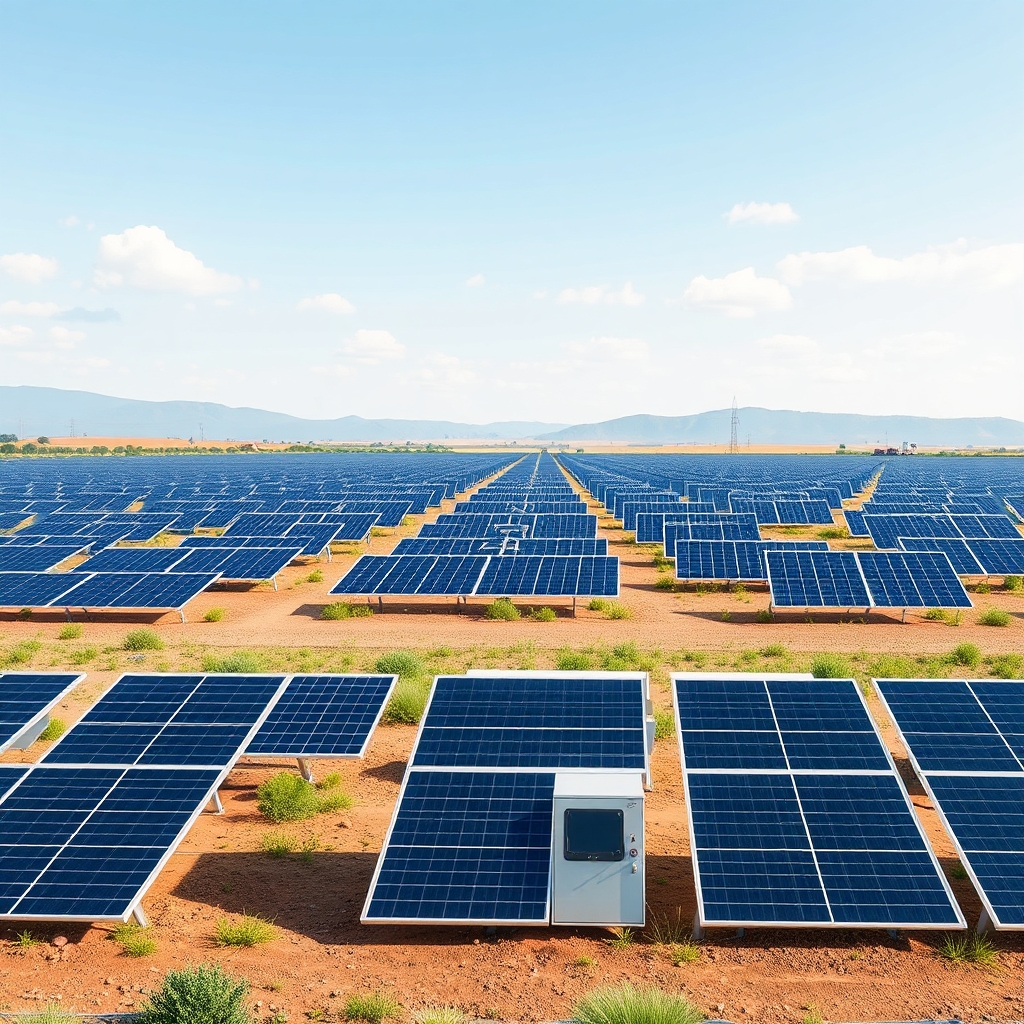
Telangana Generation and Distribution Corporation (TGREDCO) has invited bids for 3,000 MW of solar projects, marking a significant expansion in the state's renewable energy portfolio. According to Renewable Watch, these projects are not limited to the state but are located across India, aiming to leverage national resources for local consumption.
The tender explicitly includes 1,000 MW of capacity paired with 6,000 MWh of energy storage systems. This integration highlights a strategic shift toward ensuring grid stability and reliability through large-scale storage capabilities alongside generation. The scale of the storage component is substantial, representing a key technical requirement for bidders.
Bidding Structure and Terms
TGREDCO will award these contracts through a tariff-based competitive bidding process. Under this model, developers submit bids proposing the lowest price per unit of electricity they can generate and store. The state utility selects the lowest compliant bid, ensuring that consumers benefit from competitive pricing rather than fixed, administratively determined rates. This approach forces bidders to optimize their project costs, from module procurement to balance-of-system expenses, to remain viable in the auction.
The winning bidders will enter into long-term power purchase agreements (PPAs) with a duration of 25 years. Such lengthy contracts provide the financial stability necessary to secure debt financing for large-scale infrastructure. Lenders require this extended timeframe to recover capital expenditures, as solar plants involve high upfront costs but minimal operating expenses. A 25-year horizon aligns with the expected operational life of the underlying hardware, allowing investors to model cash flows with greater confidence over the asset’s productive years.
Beyond the financial structure, the tender imposes a strict performance schedule. Bidders must ensure that power supply commences within 24 months from the PPA effective date. This timeline covers land acquisition, grid connectivity, and construction. Missing this deadline typically triggers liquidated damages, where the developer pays a penalty for each day of delay. This clause protects the utility from prolonged project delays that would disrupt its energy planning, placing the execution risk squarely on the developer’s shoulders.
Technical and Grid Specifications
The tender structure places the full burden of site development and infrastructure on the winning developers. Bidders are responsible for securing land, installing the solar arrays, maintaining ownership of the assets, and arranging all necessary grid connectivity. This build-own-operate model means the utility does not manage the physical plant but relies on the developer to deliver a fully functional, interconnected facility. Consequently, the technical scope extends beyond just the solar panels to include the entire value chain required to get electricity onto the grid.
Grid integration is designed to leverage existing high-voltage infrastructure. The projects will connect to either inter-state transmission networks or Telangana’s state transmission systems. This dual-option approach provides flexibility in routing power, allowing for efficient evacuation of generated energy across broader geographic areas. Connecting to inter-state lines can facilitate the movement of renewable energy to regions with higher demand, while state networks ensure direct local supply. For developers, understanding the specific technical standards and compliance requirements of these transmission networks is essential, as grid synchronization protocols vary between state and national operators.
A key technical constraint is the mandated energy storage system (ESS) ratio. The tender requires 0.333 MW of storage power and 2 MWh of storage capacity for every 1 MW of contracted solar capacity. This specific sizing ensures that the storage component is proportionate to the generation output, providing sufficient buffering to smooth out intermittency and support grid stability. By tying the storage specification directly to the contracted capacity, the utility guarantees that the storage infrastructure scales in tandem with the solar plant, preventing under-capacity issues that could compromise the reliability of the power supply during peak demand periods.
Financial Qualification Criteria
TGREDCO has established specific financial thresholds to ensure only developers with sufficient capital reserves and operational capacity can compete for the solar and storage contracts. The tender framework defines the scale of participation, the cost of entry, and the financial health required of bidders.
- Bid Capacity: Developers must bid in multiples of 10 MW, with a minimum requirement of 50 MW and a maximum cap of 1,500 MW per entity.
- Bid Processing Fee: A non-refundable fee of Rs. 20,000 per MW, plus Goods and Services Tax (GST), is required to submit a bid.
- Earnest Money Deposit (EMD): Bidders must deposit Rs 15.93 million per MW of contracted capacity.
- Net Worth: The developer’s net worth must be at least Rs 16 million per MW.
- Annual Turnover: The entity must demonstrate an annual turnover of Rs 9.16 million per MW.
- Profit: A profit figure of Rs 1.83 million per MW is mandated.
- Credit Line: A credit line of Rs 2.29 million per MW is required.
These criteria serve as a filter to mitigate the financial risks associated with large-scale renewable energy projects. By tying the financial requirements directly to the megawattage of the bid, the utility ensures that the developer’s balance sheet can support the proportional scale of the project. The Earnest Money Deposit acts as a commitment signal, discouraging speculative bidding from entities that lack the immediate liquidity to secure the project.
The specific thresholds for net worth, turnover, profit, and credit lines provide the utility with a clear view of the bidder’s operational stability. High net worth and credit line requirements indicate that the developer has access to sufficient capital and banking relationships to navigate the procurement and construction phases. For a utility managing a 3,000 MW portfolio, verifying that each partner can sustain the financial load of their specific allocation is essential to prevent project abandonment due to cash flow constraints during the 24-month construction window.
What to watch
The immediate milestone for developers is the online bid submission deadline, set for November 4, 2026. This date marks the critical juncture where financial readiness meets strategic execution. Bidders must finalize their consortium structures, secure necessary financing commitments, and prepare detailed technical proposals well in advance to avoid last-minute logistical hurdles. Given the strict financial qualification thresholds, entities that fail to demonstrate adequate net worth or credit lines during the initial screening will be excluded before technical evaluation even begins.
Beyond the submission date, the next phase involves the evaluation of technical compliance and grid connectivity plans. Readers should look closely at how bidders address the 24-month power supply commencement requirement. Delays in land acquisition or transmission line approvals frequently jeopardize this timeline, potentially triggering liquidated damages. Monitoring which developers successfully navigate the inter-state versus state transmission choice will also reveal insights into regional grid stability strategies. Ultimately, the award of contracts will depend not just on price, but on the bidder’s proven ability to deliver integrated solar-storage systems within the mandated window.
Source: Renewable Watch. This article is an original Luminity report based on the linked source.