
Mexico solar pipeline hits 6.86 GW with 42 projects in development
Mexico’s Energy Ministry reports a 6.86 GW solar pipeline alongside significant wind capacity, with CFE holding a dominant share. The country is also advancing major storage procurement and residential solar initiatives to meet 2030 renewable targets.
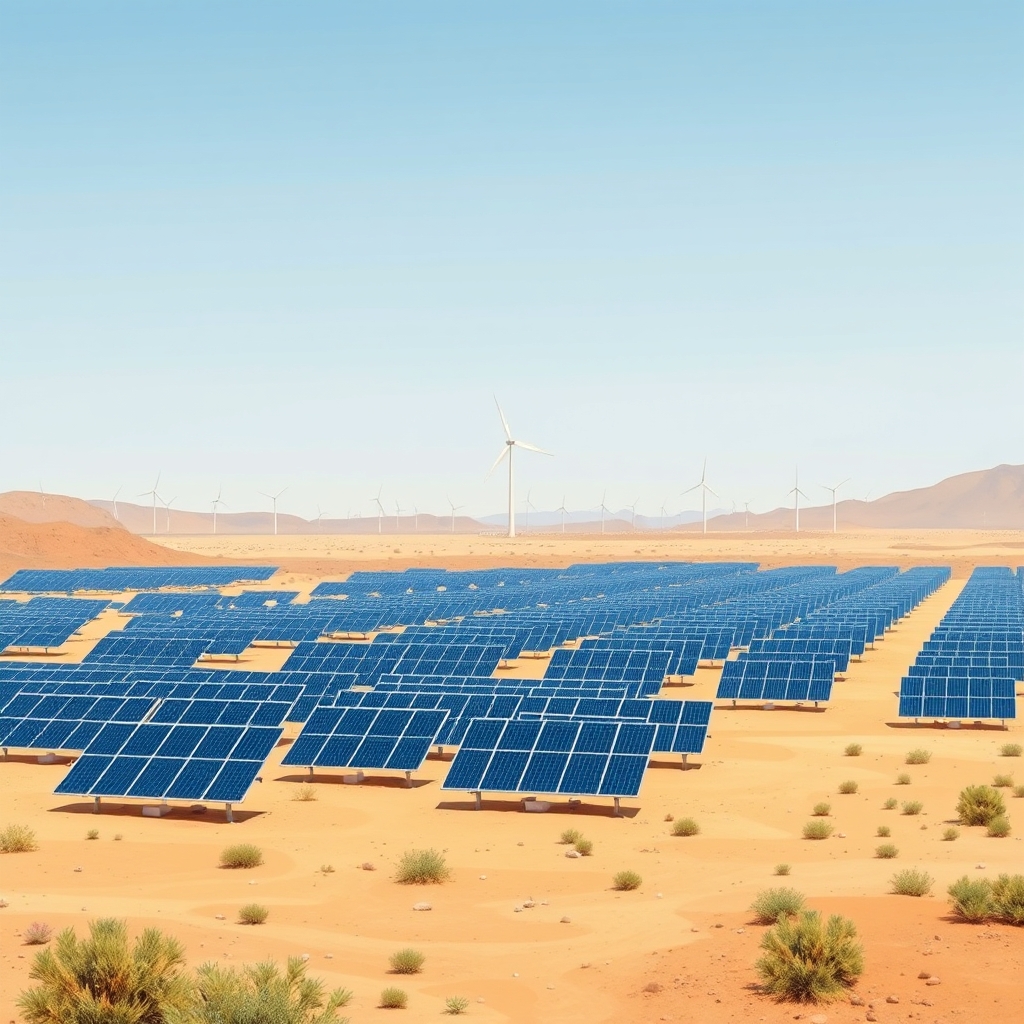
Mexico’s Energy Ministry (Sener) has reported that 42 solar PV projects are currently in the development pipeline, according to pv magazine. The total capacity of these solar initiatives stands at 6,856.4 MW, marking a significant portion of the country's renewable expansion plans.
Beyond solar, the broader pipeline includes 13 wind projects with a combined capacity of 4,027.5 MW. This dual focus highlights the diversified approach to renewable energy integration within the national grid. The figures represent the current status of projects actively moving through development stages.
State-led Portfolio Structure
The Federal Electricity Commission (CFE) anchors the majority of this solar expansion, with the state utility involved in roughly 70% of the current pipeline. This heavy reliance on a single public entity shapes the risk profile for investors and suppliers, as project timelines and execution standards often align with CFE’s internal procurement cycles rather than purely commercial market dynamics. Such dominance ensures that the bulk of new capacity will feed directly into the national grid under state management, influencing how transmission upgrades are prioritized and how power purchase agreements are structured for the remaining independent developers.
Alongside the 42 projects already in development, Sener holds an additional 9,050 MW of generation capacity awaiting allocation. This reserve represents a significant buffer for future grid stability, allowing the ministry to respond to shifting demand or regional generation gaps without initiating entirely new regulatory frameworks. The allocation of these pending megawatts will determine which independent power producers can secure long-term revenue streams, a critical factor for financing large-scale renewable assets.
Sener expects to complete the allocation process by the end of 2026. This deadline provides a concrete timeframe for developers to finalize feasibility studies and secure financing. For the sector, the clarity of this schedule reduces regulatory uncertainty, enabling banks and equity partners to model cash flows with greater confidence. The transition from pipeline to allocated capacity marks the shift from conceptual planning to binding contractual obligations, a phase where technical due diligence and grid connection agreements become the primary focus for project teams.
Rafael Galván Maldonado Expansion
The Rafael Galván Maldonado solar complex in Puerto Peñasco, Sonora, serves as a major anchor for the country’s renewable expansion. The facility currently holds 420 MW of installed capacity, but phases III and IV will add another 580 MW to the site. This expansion illustrates how mature sites often undergo incremental growth rather than relying solely on greenfield developments for new capacity. By building on existing infrastructure, developers can streamline permitting and grid connection processes, reducing the logistical hurdles that frequently delay new projects in remote desert regions.
Phase III, a 300 MW addition, is more than 27% complete. This stage integrates 563,000 solar panels alongside a 103 MW/309 MWh battery system. The inclusion of significant storage capacity is notable, as it allows the plant to shift generation to peak demand periods, enhancing grid stability. Commercial operations for this phase are scheduled for December 2027. Following this, phase IV will contribute 280 MW, with an expected online date of March 2028. The staggered commissioning schedule spreads financial outflows over several years, a common strategy for managing capital intensity in large-scale utility projects.
The total investment in the Rafael Galván Maldonado complex exceeds $1.4 billion. Such substantial capital expenditure reflects the high upfront costs associated with utility-scale solar, particularly when energy storage systems are included. The integration of batteries at this scale suggests a shift toward hybrid models that provide more consistent output, addressing intermittency concerns that have historically complicated the integration of solar power into national grids.
Storage and Residential Initiatives
- CFE aims to deploy 2,216 MW of battery storage by 2030.
- A procurement for 935 MW of standalone battery storage is underway, with an October 30 registration deadline.
- The Solar Roofs for Well-being program has connected 5,140 residential PV systems in Baja California.
- The program involves an investment of MXN 190 million.
CFE’s commitment to 2,216 MW of battery storage by 2030 signals a strategic move to mitigate solar intermittency at the grid level. The ongoing procurement for 935 MW of standalone storage, which requires registration by October 30, represents a substantial portion of this target. Standalone batteries, distinct from those co-located with generation assets, offer grid operators flexible tools for peak shaving and frequency regulation. For suppliers, this tender establishes a clear demand signal, encouraging specialized manufacturing and installation capabilities to scale in response to state-driven requirements.
On the residential front, the Solar Roofs for Well-being program has installed 5,140 systems in Baja California, supported by a MXN 190 million investment. This initiative targets household energy costs and local grid resilience, providing a direct benefit to consumers in a region with high solar irradiation. Residential distributed generation typically reduces transmission losses and eases peak load on local distribution networks. By subsidizing or facilitating these connections, the program lowers the barrier to entry for homeowners, fostering a broader base of renewable adoption beyond utility-scale projects. This dual approach—large-scale centralized storage and decentralized residential solar—addresses both grid stability and consumer-level energy access, creating a more balanced renewable ecosystem.
What to watch
The June report detailed a broader pipeline of 50 solar projects totaling 7,859 MW and 17 wind projects at 4,701 MW, indicating that solar remains the dominant growth engine within the national renewable portfolio. This volume suggests that grid planning must accommodate diverse generation sources simultaneously, requiring robust coordination between state and independent producers to manage transmission constraints. As the sector moves toward the 2030 target of at least 38% renewable electricity, the integration of this mixed portfolio will determine how effectively the grid handles variable output from both solar and wind assets across different regions.
Financial signals are equally critical, with estimated investment for electricity generation projects between 2025 and 2030 reaching MXN 794.11 billion, or $42.9 billion. This capital influx underscores the scale of infrastructure upgrades needed to support the transition. For investors, tracking how these funds are distributed between new build-out and grid reinforcement will reveal the balance between capacity expansion and system reliability. The proximity of the 2030 renewable share goal means that execution speed on current projects will be scrutinized closely, as delays could necessitate accelerated procurement or higher operational costs to meet national energy targets.
Source: pv magazine. This article is an original Luminity report based on the linked source.