
ISMA estimates 116 GW solar module demand from Indian agriculture
The Indian Solar Manufacturers Association projects that agricultural solarisation could drive 116 GW of additional module demand in India. The report highlights current PM-KUSUM progress and recommends policy measures to support domestic manufacturing.
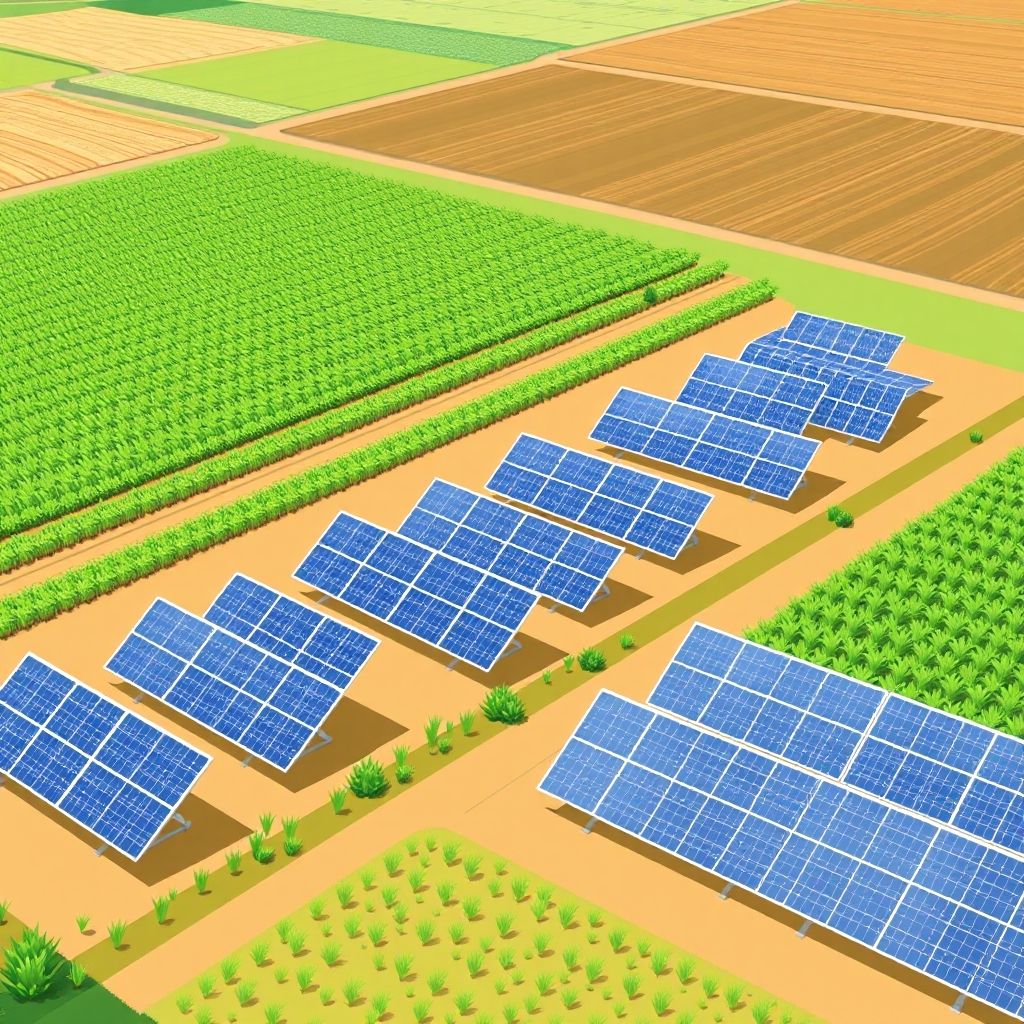
The Indian Solar Module Manufacturers Association (ISMA) estimates that India’s agricultural sector could drive demand for an additional 116 GW of solar modules. ISMA Secretary General Amit Manohar stated that this estimated demand presents a significant opportunity for Indian manufacturers.
Manohar emphasized that sustaining this momentum will require continued policy support, adherence to domestic content requirements, and a predictable project pipeline.
Demand Breakdown
ISMA’s 116 GW estimate splits into two components driven by irrigation infrastructure. Grid-connected pumps account for 100 GW of the projected requirement. The remaining 16 GW stems from diesel pump replacements, specifically in regions not classified as groundwater-stressed. Agriculture currently consumes 17.88% of the country’s electricity, underscoring the sector’s energy intensity. ISMA has not specified a timeline for realizing this full demand, leaving the pace of adoption dependent on future policy and market conditions.
Current Progress
The PM-KUSUM scheme has added 7.6 GW of solar capacity in FY26, with 28 lakh irrigation pumps solarised by July 2026. By October 2026, installations under Components B and C reached 13.8 GW. Meanwhile, DISCOMs received ₹1.21 lakh crore in tariff subsidies in FY20, a financial support mechanism distinct from the solar installation metrics.
Policy Recommendations
- Retain Domestic Content Requirement provisions
- Set state-wise targets and multi-year tender pipelines
- Emphasize upstream manufacturing for wafers and ingots
- Note ₹2.41 lakh crore tariff subsidies for DISCOMs in FY25, up 99.17% from FY20
Background
On 3 November 2026, Luminity published findings indicating that ISMA anticipates $89 billion in solar manufacturing investment and the creation of 32 lakh jobs by 2047. The same analysis highlights ISMA’s objective to eliminate dependence on imported solar components by 2041. The report forecasts that solar cell manufacturing capacity will see expansion up to 2030, whereas wafer production is slated to increase through 2035.
In a distinct update dated 19 October 2026, Luminity noted that Bihar had connected 13 solar power plants to local substations to enable feeder-level solarisation under the PM-KUSUM scheme. At the time of that report, 9,449 farmers in the state were utilizing power from these integrated solar assets.
Concerning regulatory schedules, the Renewable Energy Manufacturers Association of India submitted a petition to Niti Aayog on 2 November 2026, requesting that the ALMM cell sourcing deadline be extended to December 2027. Per Luminity’s ALMM guide, List-III covering ingots and wafers becomes effective on 1 June 2028.
Report Launch and Market Context
ISMA launched the report, titled Powering the Farms, Building the Factory: PM-KUSUM – Solarising Agriculture and Strengthening Domestic Manufacturing, at the Bharat RE Summit. The document notes that India hosts nearly 2.3 crore irrigation pumps. The report argues that solarising agricultural pumps and feeders could reduce this subsidy burden while improving power availability for farmers.
What to watch
ISMA’s original projection for domestic manufacturing demand under PM-KUSUM Components B and C stood at 20.8 GW.
Source: Saur Energy. This article is an original Luminity report based on the linked source.