
European solar module prices face pressure from surplus stock, cancelled projects
Excess production capacity and inventory from a failed large-scale project are intensifying price competition for solar modules in Europe. While current prices remain low, industry leaders expect stability rather than recovery until global manufacturing capacity balances with demand.
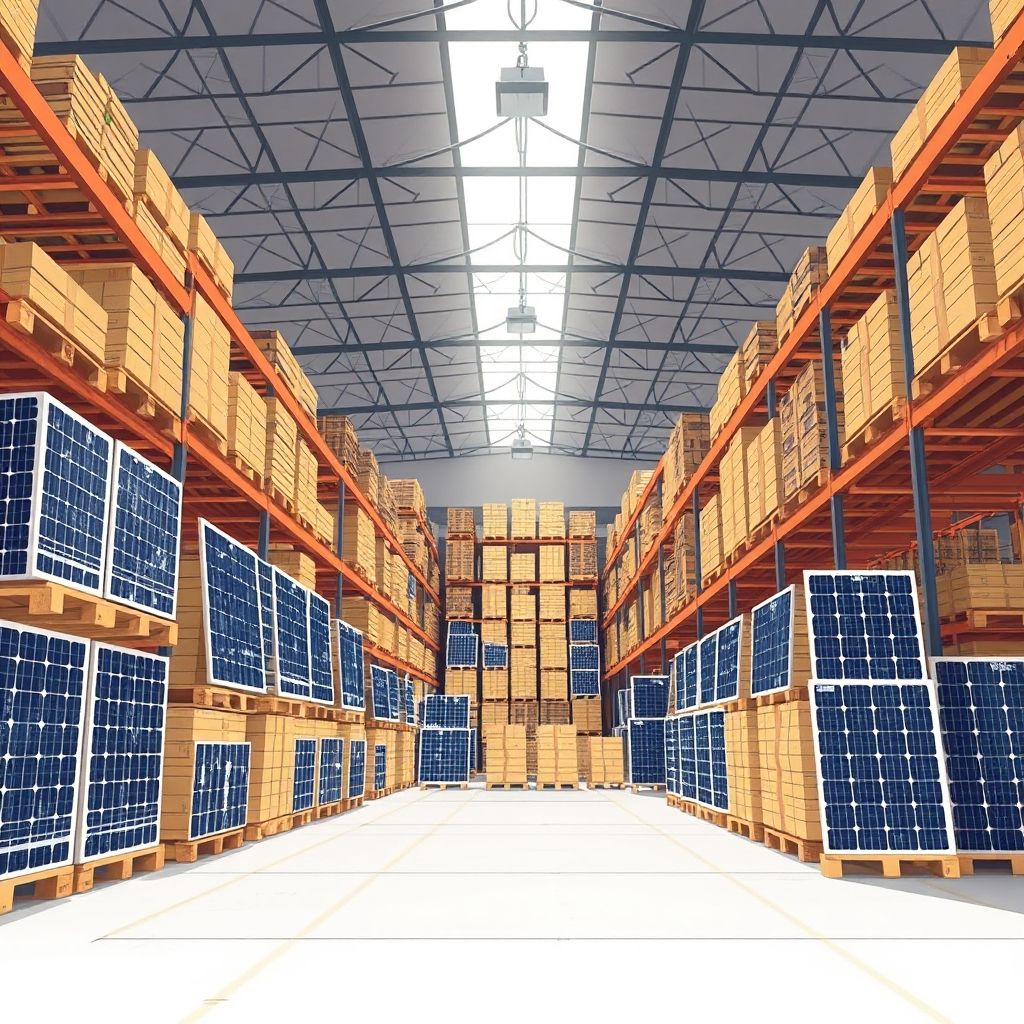
European solar module prices are facing renewed pressure as the market grapples with excess production capacity and intense price competition.
Bart Wansink, CEO of Search4Solar, noted the ongoing strain on the market. "Over the past six months, we have continued to see pressure on module prices, particularly for TOPCon products," Wansink said.
Recent data from the September 2026 European PV Index, compiled by sun.store, illustrates the current pricing environment. The index recorded bifacial TOPCon modules at €0.114 ($0.125) per watt.
Current Market Conditions
The September 2026 European PV Index, compiled by sun.store, recorded monofacial TOPCon modules at €0.120 per watt. While this figure tracks the broader downward trend, actual transaction prices often diverge from index averages based on specific trading conditions. Search4Solar, for instance, offers selected modules at approximately €0.08 per watt, a price point that depends heavily on order volume and specific deal conditions.
Geographic location further influences final pricing. Differences in module costs across France, Germany, the Netherlands, and Spain are driven primarily by logistics and local inventory levels.
Supply Disruptions and Policy Shifts
- Search4Solar is offering 100 MW of Tier 1 modules that were originally procured for a large-scale project which has since failed.
- As of 1 April 2026, China removed VAT export rebates for specific photovoltaic products.
- Search4Solar CEO Bart Wansink noted that this regulatory modification reshapes the financial viability of exporting certain solar items and may exert further downward pressure on manufacturer profit margins.
Outlook and Price Dynamics
Bart Wansink, CEO of Search4Solar, anticipates that manufacturers will adopt a more cautious approach to sales in the coming period. "We expect manufacturers to negotiate more carefully and become more selective about certain large-volume transactions," Wansink said.
Looking ahead, Wansink expects stable European module prices with moderate increases during 2027. However, he cautions that a dramatic price recovery is unlikely without a reduction in global manufacturing capacity or a significant rise in demand. The trajectory of future prices will depend on several interconnected factors, including adjustments to Chinese production capacity, the level of European inventory, and the absorption of surplus stock from cancelled projects.
It is important to note that price trends will not be uniform across the sector.
Transaction Mechanics and Regional Logistics
Wansink highlighted that final deal prices often deviate markedly from index benchmarks, influenced by order size, brand selection, technical specs, stock availability, and shipping terms. He warned that rates secured for full container loads do not typically mirror the costs installers face when buying smaller lots for local delivery.
He pointed out that solar gear originally allocated to one job can reappear on the market, occasionally at rates highly competitive against fresh factory orders. While these deals present buying chances, Wansink noted they can also exert extra price pressure on standard distribution routes. He remarked that the capacity to redistribute large module volumes is growing in importance for makers, developers, and investors aiming to handle excess stock.
On the regulatory side, Wansink separated rising production or export expenses from the actual selling prices realized in Europe. He observed that increased export costs would not automatically lead to higher module prices in Europe, especially given the current abundance of manufacturing capacity and inventory. Looking ahead to 2027, Wansink cited several elements likely to steer European module pricing, such as the slow rationalization of Chinese output, European stock levels, and the presence of surplus modules from postponed or scrapped projects. He added that the speed of European installations, access to project funding, and government policy will ultimately dictate how rapidly current stock is cleared.
Distribution Strategy and Inventory Risks
Wansink contends that maintaining the biggest stockpile does not automatically confer a competitive edge when market values decline and borrowing expenses rise. To thrive, distributors must cultivate robust client relationships, ensure dependable supply chains, and expand their sales operations globally. He emphasized that the capacity to manage stock, secure capital, and leverage cross-border sales channels will become critical factors in establishing the market position of European solar firms.
Source: pv magazine. This article is an original Luminity report based on the linked source.