
South Australia Unveils 13GW Wind and Solar Proposals Near Whyalla
Windlab, Altra Energy, Heron Energy and Neoen have proposed almost 13 GW of wind and solar capacity on pastoral land west of Whyalla, more than quadrupling South Australia’s grid-scale ambitions. The state says the early-stage projects could help power new industry in the Upper Spencer Gulf.
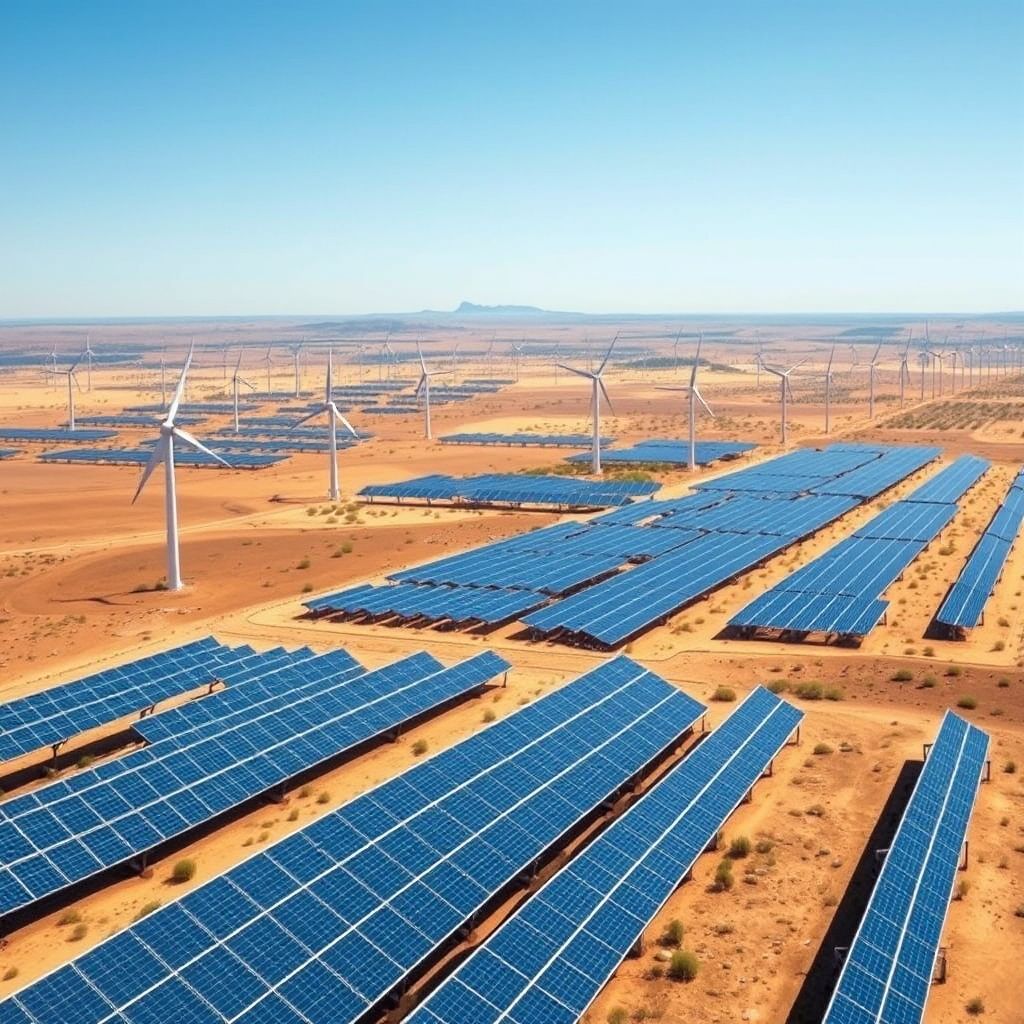
South Australia has unveiled four new renewable energy proposals totalling almost 13 gigawatts of wind and solar capacity on pastoral land west of Whyalla. The proposals came out of a land release announced by the state government on Sunday, and the government says they could underpin the next era of green industrial growth in the Upper Spencer Gulf.
The scale stands out in a state whose installed grid-scale wind and solar fleet is nearly 3 GW: the proposals would more than quadruple its grid-scale ambitions. They come as South Australia works towards 100 per cent “net” renewables by the end of 2027, a goal RenewEconomy notes the state may reach a little late, and after it had to rethink its green hydrogen plans following the failures at Whyalla. Energy minister Tom Koutsantonis stressed that the projects are at an early stage and that “there is significant work ahead”.
Developer Proposals
- Windlab proposed a 6 gigawatt wind and solar development.
- Altra Energy proposed a 4.7 gigawatt wind and solar project.
- Heron Energy proposed a 1.6 gigawatt wind farm.
- Neoen proposed a 360 megawatt solar project.
The four distinct bids illustrate the current scale of land-based renewable energy procurement in Australia. Windlab and Altra Energy have submitted combined wind and solar packages, while Heron Energy focuses exclusively on wind capacity. Neoen’s entry is a solar-only proposal, reflecting the diverse technology mix available to grid operators. These varied configurations allow developers to tailor their offerings to specific land constraints and grid integration requirements.
Windlab, which has been promoting “outback renewables” that tap the strong wind and solar resources of largely uninhabited inland Australia, is behind the largest proposal. Its chief development officer, Nathan Blundell, said the project is at a very early stage and that work with the Barngarla Determination Aboriginal Corporation and host pastoralists has created “a strong foundation for the studies ahead”. Altra Energy director Andrew Newman said the company is already working with major energy users on how the electricity would be used, “so the investment and the jobs stay in the region”, which has suffered since the collapse and closure of the ageing Whyalla Steelworks.
Land and Location
The proposed developments span more than 3,300 square kilometres of pastoral land situated on Barngala country, west of Whyalla. This extensive footprint highlights the spatial reality of modern renewable energy procurement in Australia, where gigawatt-scale installations require vast tracts of terrain to accommodate turbine arrays and solar panels. Unlike urban rooftop installations, these large-scale projects depend on available rural acreage to achieve their stated capacity targets. The selection of pastoral land reflects a common industry practice of utilizing existing agricultural holdings that may face economic pressures, thereby repurposing underutilized rural space for energy generation.
Locating these facilities on Barngala country underscores the intersection of energy infrastructure and Indigenous heritage. In Australia, major renewable projects situated on traditional lands often involve complex negotiations regarding cultural heritage management and land access rights. Developers typically engage with Traditional Owners to establish protocols that respect cultural sites and ensure meaningful participation in project planning. This geographic specificity is critical because the physical location determines not only the environmental impact but also the social license required to proceed. For a region west of Whyalla, the integration of such massive infrastructure into the pastoral landscape will require careful planning to balance energy output with the existing rural character and cultural significance of the area.
Current Grid Context
South Australia’s existing grid-scale infrastructure currently totals nearly 3 gigawatts of installed capacity. This baseline figure provides the immediate physical limit for current renewable generation from large-scale wind and solar farms connected to the transmission network. It represents the operational foundation upon which new proposals are being layered, highlighting the gap between current infrastructure and the additional capacity now proposed.
Beyond these centralized assets, the state’s energy mix is heavily influenced by distributed generation. Rooftop solar installations now account for over 2 gigawatts of capacity, a figure that rivals the total of all existing grid-scale renewable plants. This widespread adoption of small-scale systems has fundamentally altered the shape of daily electricity demand, often reducing midday demand on the grid as households generate their own power.
Together, these sources mean that renewables currently satisfy 75 per cent of the state’s annual electricity needs. This high penetration level indicates a grid that is already predominantly powered by variable sources, requiring sophisticated balancing mechanisms to manage supply fluctuations. As the newly proposed capacity comes online, the grid will face increased complexity in integrating intermittent generation with existing infrastructure. The current dominance of renewable energy sets a high bar for future system stability, as the remaining portion of demand relies on a shrinking share of conventional thermal generation. This transition underscores the technical challenges of maintaining reliability while phasing out fossil fuels, a reality that will define the state’s energy management for the coming decade.
What to watch
The proposals are at an early stage, so the next step is the study and approval work the minister referred to. Energy minister Tom Koutsantonis described the development as an "extraordinary opportunity for Whyalla," and said it could help attract new investment and support existing heavy industry, which puts local industry and jobs at the centre of the plan.
Industry representatives have already voiced strong interest in the site. Windlab’s Nathan Blundell called the area an "especially compelling opportunity," while Altra Energy’s Andrew Newman stated the project could "power the next generation of industry." Both developers tied their projects to local industrial demand rather than to grid supply alone. Readers should watch for the results of the studies Windlab described, for agreements with the major energy users Altra says it is talking to, and for how projects of this size would connect to the grid. If they move from proposal to construction, the focus will shift to how the new assets fit into a system where wind and solar already meet 75 per cent of annual demand.
Source: RenewEconomy. This article is an original Luminity report based on the linked source.