
Spanish study validates vertical agrivoltaics in commercial vineyards
Researchers at the Polytechnic University of Cartagena and Imida conducted the first field-scale validation of low-height vertical agrivoltaic systems in southeastern Spain. The study, published in Renewable Energy Focus, prioritized agronomic compatibility over maximum energy yield, achieving land equivalent ratios between 1.16 and 1.53.
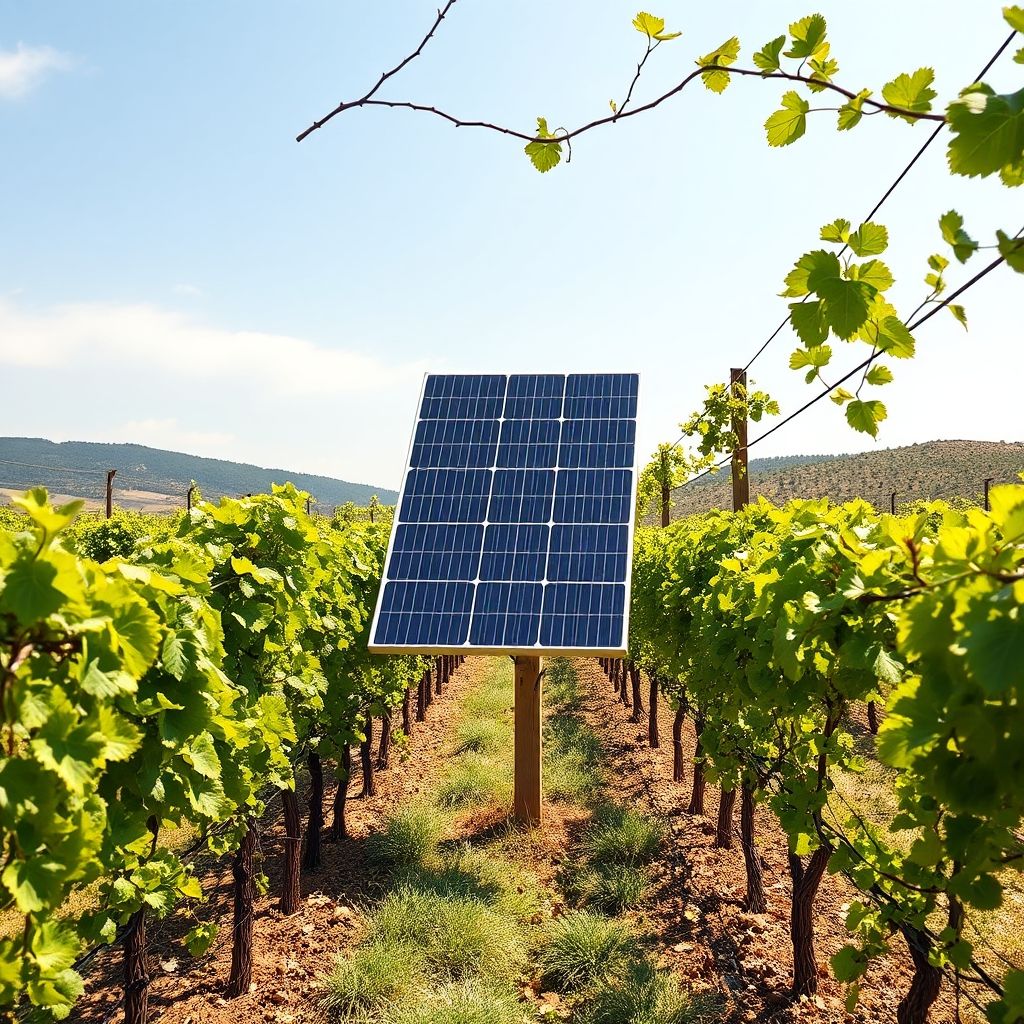
Researchers from the Polytechnic University of Cartagena and Imida have completed a field study on low-height agrivoltaics in southeastern Spain. The team tested the system at three commercial vineyards, marking the first field-scale validation of the vertical agrivoltaic design.
The study confirms the practical application of this specific configuration in real-world agricultural settings. By focusing on vertical structures, the research addresses spatial efficiency and crop compatibility in established viticulture.
This work provides empirical data on how vertical panels interact with vine growth and solar exposure. The findings offer a baseline for understanding the performance of such systems in commercial environments.
System configurations and design
The field trial deployed three distinct agrivoltaic setups across the commercial vineyards to test structural and optical variations. Key parameters for each site include:
- Bodegas San Isidro installed a 2.34 kW vertical bifacial system oriented at -63°.
- Bodegas Carchelo utilized a 1.56 kWp Venetian blind-style monofacial system with a -8° orientation.
- Bodegas Evine featured a 2.4 kW vertical monofacial system positioned at +8°.
- All modules measured either 0.6 m × 1.1 m or 0.3 m × 1.1 m.
- The structural framework required 141 kg to 161 kg of steel per kWp.
These configurations highlight the diversity in panel technology and alignment used to optimize light distribution for grapevines. Bifacial modules capture radiation from both sides, while monofacial units rely on the front surface, making orientation adjustments critical for balancing energy yield with crop shading needs. The Venetian blind design at Carchelo introduces slats that mimic natural dappled light, potentially reducing heat stress on vines compared to solid vertical arrays.
Structural weight matters significantly for installation costs and soil compaction risks. Using 141 to 161 kg of steel per kWp indicates a robust framework necessary to withstand wind loads and support the panels securely. For vineyard operators, this steel requirement influences foundation depth and equipment needs during setup. The varying orientations, such as the steep -63° at San Isidro versus the near-vertical +8° at Evine, demonstrate how site-specific adjustments can tailor the microclimate for different vine varieties or soil conditions.
Agronomic performance and land use
The study quantified land efficiency using the Land Equivalent Ratio, a metric that compares the total yield of a shared land system against the sum of yields from separate, dedicated plots. An LER above 1.0 indicates that the combined system produces more than the land area would generate if used for either crop alone. In this trial, measured LER values ranged from 1.16 to 1.53. This range suggests that the vertical configurations successfully maintained or enhanced vine productivity while simultaneously generating electricity, rather than sacrificing agricultural output for energy capture. The variation across sites likely reflects how specific panel orientations and module sizes interacted with local vine growth patterns and shading requirements.
Researchers identified a potential LER of 1.95 for higher installation densities. This projection implies that tighter spacing could further increase the return per unit of land, though such adjustments would require careful management to avoid excessive shading that might suppress grape quality or yield. The findings reinforce the concept that agrivoltaics is not merely a dual-use arrangement but a synergistic one, where the physical structure modifies the microclimate to benefit the crop. For landowners in Mediterranean regions, these ratios offer a tangible financial argument for adopting such systems, as they demonstrate that energy generation does not necessarily come at the expense of agricultural viability.
The research team explicitly stated that energy production was considered secondary and constrained by agronomic and structural design. This prioritization is critical for understanding the project’s developmental trajectory. Instead of maximizing kilowatt-hours, the design process focused on ensuring the panels did not hinder vine health or complicate harvest operations. Such an approach aligns with broader trends in commercial agriculture, where crop integrity remains the primary revenue driver, and energy output serves as a complementary income stream. By subordinating electrical yield to biological needs, the system avoids the common pitfall of over-shading, which can reduce sugar accumulation in grapes and alter fermentation profiles. This design philosophy ensures that the agrivoltaic installation supports, rather than disrupts, the existing viticultural practices of the participating estates.
Energy output and monitoring
The research team tracked electrical performance for 14 months, encompassing the 2024 harvest season to capture seasonal variations in solar irradiance and system efficiency. This extended monitoring period is essential for validating long-term viability, as short-term data often fails to account for winter shading or summer thermal degradation. The resulting annual electricity production figures vary significantly across the three sites, reflecting the distinct structural and optical configurations deployed earlier. Bodegas San Isidro recorded the highest yield at 555,905 kWh per hectare. Bodegas Evine generated 383,764 kWh per hectare, while Bodegas Carchelo produced 304,716 kWh per hectare.
These disparities highlight the trade-offs inherent in agrivoltaic design. The higher output at San Isidro likely correlates with its bifacial module technology and specific orientation, which maximizes light capture from multiple angles. Conversely, the lower production at Carchelo reflects the shading impact of its Venetian blind-style slats, a design choice intended to prioritize crop health over maximum energy extraction. For commercial operators, these figures provide a realistic benchmark for revenue modeling, demonstrating that energy yield is not uniform but highly dependent on the balance between structural density and agricultural requirements. The data confirms that while vertical systems can generate substantial power, the specific configuration dictates the final kilowatt-hour count, necessitating careful site-specific planning to align with both energy targets and viticultural goals.
What to watch
The peer-reviewed publication in Renewable Energy Focus signals that this research has cleared rigorous academic scrutiny, a key milestone for commercial adoption. For developers, this validation moves vertical agrivoltaics from a conceptual pilot to a bankable engineering standard. The next critical step involves translating these 14-month monitoring results into long-term durability data. Specifically, stakeholders should monitor how the steel frameworks perform over multiple harvest cycles, as soil compaction and wind fatigue can erode the initial land efficiency gains. The industry will look for standardized guidelines on module orientation that balance the high energy yields seen at San Isidro with the crop-protective shading of Carchelo. Investors will likely scrutinize whether the potential Land Equivalent Ratio improvements at higher densities hold up in commercial-scale trials without compromising grape quality. Ultimately, the sector needs to define clear performance benchmarks that satisfy both utility grid requirements and viticultural best practices, ensuring that energy generation remains a complementary, not disruptive, element of vineyard management.
Source: pv magazine. This article is an original Luminity report based on the linked source.