
Brazil’s new curtailment rules unlikely to revive utility-scale solar investment
Brazil’s 2026 solar sector saw 40.6 GW of capacity lost as 923 projects surrendered, erasing BRL 134 billion in planned investment. New compensation rules and curtailment allocation measures are unlikely to trigger significant greenfield development, according to industry analysis.
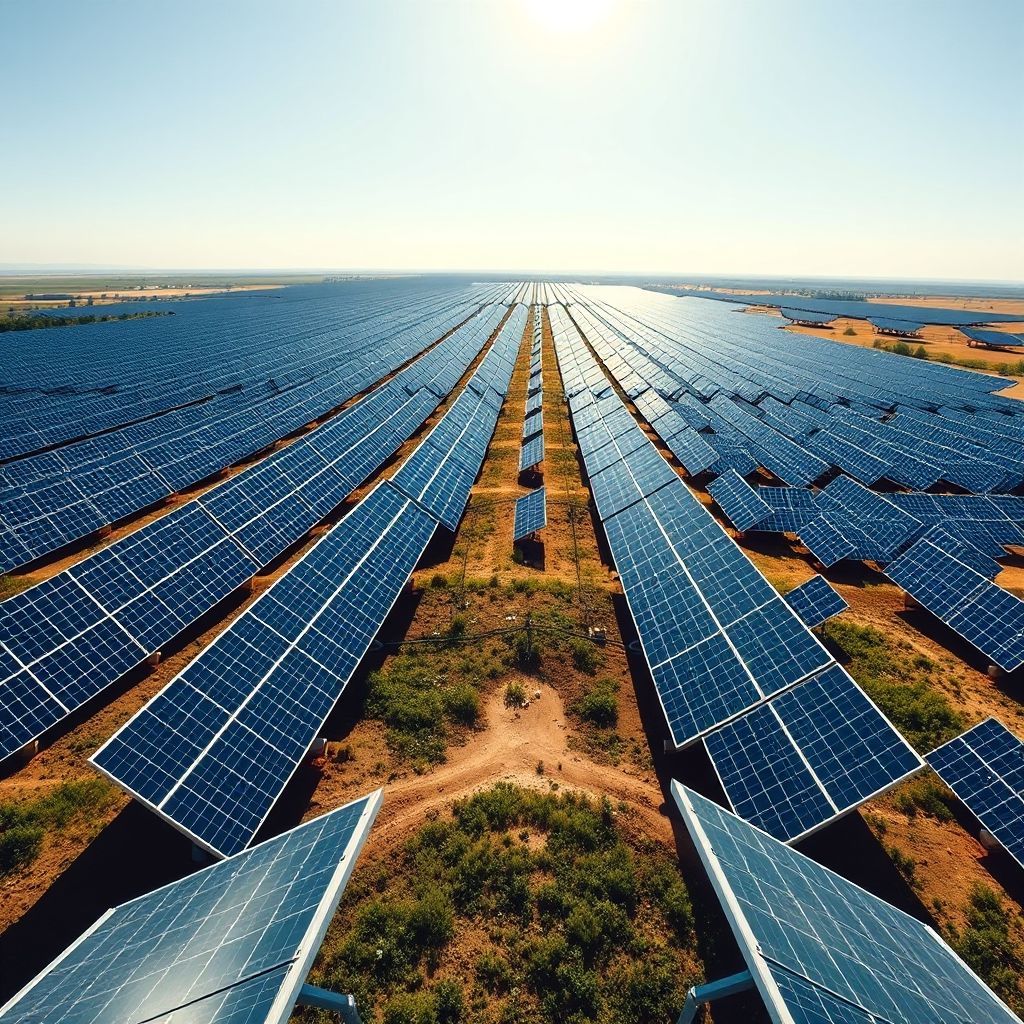
Brazil’s renewable energy sector has faced a sharp contraction, with 923 solar projects surrendered in 2026. According to data reported by pv magazine, these cancellations resulted in the loss of 40.6 GW of capacity. The scale of the retreat is substantial, marking a significant reduction in the country’s planned utility-scale solar infrastructure.
The financial implications of these withdrawals are equally stark. Investors have pulled out of projects representing BRL 134 billion, or $26.3 billion, in lost capital. This outflow underscores the fragility of the market environment, as developers exit commitments that were previously part of Brazil’s expansion strategy.
Despite recent regulatory adjustments, the sheer volume of abandoned projects suggests that new curtailment rules may not be enough to restore confidence. The data indicates a deep-seated hesitation among stakeholders, raising questions about whether the sector can recover its momentum in the near term.
The Scale of Withdrawal
The physical reality of these cancellations is starkly illustrated by the gap between planned infrastructure and operational assets. In January 2026, Aneel reported that Brazil held 110 GW of solar capacity. By the end of the year, current authorized capacity had fallen to 60 GW. This drop of 50 GW reflects the magnitude of the retreat from the market. Such a reduction in authorized capacity signals a fundamental restructuring of the supply pipeline. It indicates that a large portion of the projected growth never materialized into buildable assets. The difference between the initial report and the final authorized figure quantifies the extent of the withdrawal.
This contraction occurred alongside severe operational constraints on the remaining fleet. In 2026, the average solar curtailment reached 1.4 GW. This figure represents 25.3% of total solar generation curtailed that year. Curtailment occurs when grid operators limit the amount of renewable energy that can be fed into the system, often due to transmission bottlenecks or an oversupply of power at specific times. For investors, such high percentages of lost output directly impact project economics. When a quarter of generated power cannot be sold, the revenue stream shrinks considerably. This operational friction, combined with the massive loss of authorized capacity, paints a picture of a sector under intense pressure. The simultaneous loss of future potential and present output highlights the depth of the current market dislocation.
Compensation Mechanics
- Ordinance 140 covers compensation for curtailment events occurring between September 1, 2023, and November 25, 2025.
- A total of 682 solar plants qualify for financial relief under this framework.
- These eligible facilities represent a combined capacity of 25.5 GW.
- To receive payments, affected companies are required to withdraw any ongoing legal actions.
- The compensation scheme explicitly excludes losses resulting from electricity oversupply.
The new ordinance establishes a narrow window for financial recovery, addressing only curtailment incidents that occurred over the two-year period ending in late 2025. By restricting eligibility to 682 specific plants, the regulation targets a subset of the broader 40.6 GW capacity loss previously reported. This limited scope means that many projects experiencing similar grid constraints may fall outside the eligible group, leaving their revenue shortfalls unaddressed by this specific mechanism. The requirement for companies to drop legal actions serves as a condition for payment, effectively trading potential litigation outcomes for guaranteed compensation. This procedural hurdle forces developers to forgo their right to pursue judicial remedies, which can complicate long-term strategy for firms managing multiple disputes.
A critical limitation lies in the exclusion of curtailment caused by electricity oversupply. In many markets, grid operators limit renewable input when total generation exceeds demand, a scenario distinct from transmission bottlenecks. By omitting this common cause, the ordinance leaves a significant portion of potential losses uncompensated. For project developers, this distinction matters because oversupply curtailment can be frequent in regions with high renewable penetration. The exclusion suggests that the compensation package does not fully cover all operational risks associated with grid integration. Consequently, even eligible plants may face revenue gaps that the ordinance does not fill, maintaining pressure on project economics despite the availability of some financial relief.
Regulatory Framework
The regulatory response to the sector’s contraction centers on Normative Resolution 1,170, issued on October 6. This instrument marks a shift from retrospective compensation to prospective management of grid constraints. While the earlier ordinance addressed past financial losses, Resolution 1,170 focuses on establishing the rules for how future curtailment events will be distributed among connected assets. Defining curtailment allocation is a complex technical and legal challenge for grid operators, as it determines which specific plants must reduce output when system stability or transmission limits are breached.
In most mature renewable markets, allocation mechanisms follow established technical criteria, such as the proximity of a plant to a congestion point or its dispatch priority within the grid hierarchy. These rules provide the certainty that developers and lenders require to model project cash flows accurately. Without a clear, predictable allocation method, investors face heightened risk premiums because they cannot reliably forecast how much of their potential generation will be curtailed in any given year. The resolution’s role is to codify these operational procedures, thereby reducing ambiguity in the regulatory environment.
By defining future allocation, the regulation attempts to address one of the primary sources of investor hesitation. When curtailment rules are opaque or subject to ad hoc adjustments, project bankability suffers. Banks and insurers often demand robust regulatory clarity before financing new utility-scale installations. A standardized allocation framework helps restore a baseline of predictability, allowing developers to integrate curtailment risks into their financial models with greater confidence. This structural clarity is essential for any recovery in investment activity, as it transforms an unquantifiable risk into a manageable variable within project economics.
What to watch
The immediate horizon for the Brazilian solar sector hinges on whether regulatory clarity translates into actual capital deployment. While the new allocation rules aim to stabilize project economics, industry voices suggest a more cautious outlook. Eduardo Tobias states that the new rules are unlikely to trigger significant greenfield investment. This assessment highlights a persistent disconnect between improved regulatory frameworks and immediate market confidence. For lenders and developers, the absence of a clear investment surge implies that other structural barriers remain unresolved.
Readers should monitor subsequent tender outcomes to verify if this skepticism holds true. If upcoming auctions continue to see low participation or high bid prices, it will confirm that curtailment mechanics alone cannot revive the market. Conversely, any unexpected spike in bids would challenge the prevailing narrative. The coming months will test whether the shift from retrospective compensation to prospective management actually reduces risk premiums enough to attract new capital. Until then, the sector remains in a state of cautious observation, waiting for concrete financial signals to validate the new regulatory environment.
Source: pv magazine. This article is an original Luminity report based on the linked source.