
Solar Sunshot Round Three Allocates $250 Million to Accelerate Low-Cost Solar Construction
The Australian government has released $250 million in the third round of the Solar Sunshot program to drive down construction costs. Funding targets include prefabricated units, advanced robotics, and module manufacturing to meet ambitious efficiency and cost goals.
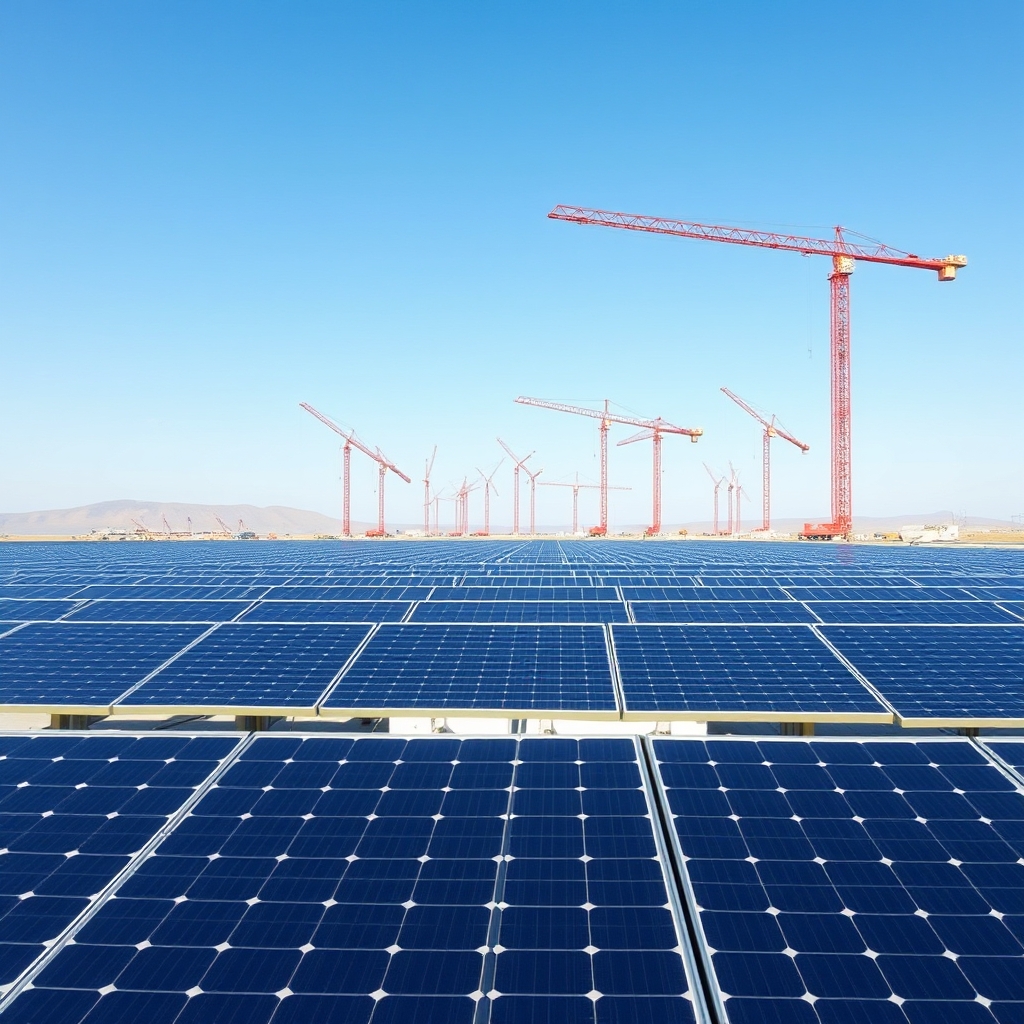
The Australian government has committed $850 million to the Solar Sunshot program, with the latest tranche releasing $250 million for round three. According to RenewEconomy, this specific funding round is designed to target cheaper and faster large-scale solar construction and operation.
This investment forms part of a broader strategy to transform the solar industry’s economics. The program aims to drastically lower the levelised cost of electricity for solar power.
By focusing on construction efficiency, the government hopes to unlock new levels of affordability for renewable energy projects across the country.
The 30-30-30 Ambition
Arena unveiled its 30-30-30 vision in 2023, setting a specific trajectory for ultra-low cost solar deployment. The initiative targets two primary benchmarks to be reached by 2030: module efficiency must hit 30 percent, while the cost of solar modules needs to drop to 30 cents per watt. These figures represent a significant shift in how the industry measures progress, moving beyond simple capacity additions to focus on the fundamental economics of the hardware itself.
For developers and investors, these targets address the core financial drivers of large-scale renewable projects. Module cost is a major component of the total capital expenditure for a solar farm. When the price per watt decreases, the upfront investment required for a project of a given size falls. This directly impacts the return on investment and the speed at which a project can recoup its initial outlays. In a competitive tender environment, lower hardware costs can translate into more aggressive electricity price bids, making solar increasingly attractive against other generation sources.
The second pillar of the ambition focuses on the end-user metric: the levelised cost of electricity. Arena aims to reduce this figure to below $20 per megawatt-hour. The levelised cost of electricity represents the average net present cost of electricity generation over a project's lifetime, accounting for all fuel, capital, and operating costs. It is the standard metric used to compare the price of electricity from different sources. By targeting a levelised cost below $20/MWh, the vision seeks to make solar power a baseline, baseline-cost energy source rather than a premium option. This shift is essential for integrating high volumes of solar into the grid without straining consumer budgets or requiring excessive subsidies. Achieving such low costs relies on sustained technological improvement in module performance and manufacturing efficiency, ensuring that the energy produced per unit of hardware is maximized while the cost per unit is minimized. This dual approach creates a virtuous cycle where better technology drives down prices, which in turn accelerates adoption and further drives down costs through scale.
Manufacturing and Robotics Funding
The $250 million allocation in the latest funding round is being split among four distinct projects, each targeting a specific bottleneck in the solar supply chain. The investments prioritize both the physical production of photovoltaic components and the automation of on-site construction processes.
- 5B has secured $46 million to develop prefabricated Maverick solar units.
- Tindo Solar received $34.5 million for PV module manufacturing capabilities.
- Luminous Robotics was awarded $17.8 million to establish a robot manufacturing facility in Melbourne.
- Built Robotics obtained $13.3 million for an autonomous piling hub in Brisbane.
These grants address two critical phases of solar farm development: hardware fabrication and site preparation. Prefabricated units and dedicated module manufacturing aim to standardize production, which typically reduces waste and improves quality control compared to on-site assembly. For investors, standardized hardware lowers technical risk and simplifies supply chain logistics. Meanwhile, the funding for robotics targets the labor-intensive aspects of construction. Autonomous piling and robotic assembly can accelerate project timelines, a key factor in meeting grid connection schedules and reducing financing costs. By supporting both the creation of the solar modules and the machines that install them, this tranche of funding seeks to compress the overall cost curve. This dual approach ensures that savings are realized not just in the price of the panels, but in the speed and efficiency with which they are deployed. Such efficiencies are vital for making large-scale solar projects financially viable in competitive energy markets, where time-to-completion directly impacts profitability.
Industry Context and Capacity
The recent investment in solar hardware and construction automation sits within a broader national effort to build domestic manufacturing resilience. While Australia has historically relied on imported modules for the majority of its renewable energy expansion, growing interest in local production seeks to shorten supply chains and retain economic value within the country. This shift matters for developers because domestic or nearby manufacturing can reduce lead times and mitigate geopolitical supply risks that frequently disrupt global energy markets. For investors, a more robust local supply base signals greater project certainty, as reliance on long-distance logistics introduces volatility in pricing and delivery schedules that can erode profit margins.
A recent Silicon to Solar Study provides a baseline for this potential growth, suggesting that Australia possesses the foundational capacity to produce 10GW of poly-silicon and 5GW of value chain components. These figures indicate a substantial manufacturing footprint that could support significant future deployment if scaled appropriately. However, translating raw material capacity into finished, competitive modules requires efficient processing and integration, which is where the current funding focus on prefabrication and robotics becomes relevant.
Arena CEO Darren Miller noted that "Australia is already a world leader in deploying solar." This observation highlights the country’s strong track record in installing renewable infrastructure, which creates a ready market for any new manufacturing capabilities. For the sector, the combination of proven deployment experience and emerging local production capacity suggests a maturing industry structure. As the grid integrates higher volumes of variable renewable energy, the ability to source hardware locally and deploy it efficiently becomes a key differentiator for project viability. This context underscores why government support is currently directed toward both the creation of the physical products and the methods used to install them, aiming to align manufacturing output with the pace of grid connection.
What to watch
With the Sunshot program having launched in March 2024, the immediate focus shifts from capital allocation to tangible progress on the ground. Readers should monitor whether the four funded projects can translate their grants into operational milestones within their respective timelines. For 5B, the key indicator is the successful development and testing of the prefabricated Maverick units, moving from concept to physical prototypes. Tindo Solar’s progress will be judged by its ability to establish functional PV module manufacturing capabilities, demonstrating that local production can meet quality standards required for grid-scale deployment.
In the construction sector, Luminous Robotics and Built Robotics face the challenge of proving that autonomous systems can operate reliably in complex field environments. The establishment of Luminous’ facility in Melbourne and Built’s piling hub in Brisbane marks the start of a critical validation phase. Success here depends on whether these robotic solutions can consistently reduce installation times without compromising structural integrity.
Beyond individual project updates, the broader market will watch for evidence of supply chain integration. If these domestic manufacturing and automation efforts successfully lower costs and shorten lead times, they may influence how developers structure future bids. Investors will likely look for signs that these innovations are being adopted in new project pipelines, signaling a shift toward more resilient and cost-efficient solar development models. The next steps involve verifying that the allocated funds are being deployed as intended to address the specific bottlenecks identified in the solar value chain.
Source: RenewEconomy. This article is an original Luminity report based on the linked source.